
In today’s digital landscape, affiliate partnerships demand more than one-off promotions or isolated campaigns. Omnichannel affiliate marketing has emerged as a transformative strategy, weaving together email, social media, SEO, paid ads and mobile touchpoints into a unified experience. By aligning every touchpoint—from the first ad impression to the final shopping cart click—brands can foster trust, enhance engagement and drive higher conversion rates. As affiliate managers and content creators navigate saturated markets and evolving consumer behaviors, adopting an integrated methodology is no longer optional; it’s essential for maximum return on investment (ROI).
Currently, brands leveraging omnichannel affiliate marketing report faster purchase cycles and stronger brand recall, because prospects receive consistent messaging across each platform. This year (2026), more marketers are prioritizing central analytics and automated workflows to coordinate cross-channel efforts, track interactions and optimize budgets in real time. Whether you’re a seasoned publisher or a growing influencer, mastering this holistic approach ensures that every piece of content, every ad spend dollar and every email invitation contributes to a seamless buyer journey.
In this comprehensive guide, we’ll explore why omnichannel affiliate marketing matters, unpack the core channels you need to integrate, reveal best practices for cohesive execution and share the essential metrics you must measure to scale efficiently. Throughout the article, we’ll reference authoritative research from institutions like the FTC and the National Institute of Standards and Technology, enabling you to build compliant, transparent and high-performance affiliate networks. Let’s dive into the strategies that will help you maximize ROI across channels today.
Why Omnichannel Affiliate Marketing Is Crucial for ROI
Omnichannel affiliate marketing transcends the traditional single-channel model by orchestrating seamless interactions across multiple platforms. Instead of viewing email campaigns, paid ads and social media posts as separate initiatives, an omnichannel approach synchronizes messaging, timing and targeting to guide prospects fluidly from awareness to purchase. This synergy boosts trust and delivers a cohesive brand experience that resonates with today’s multitasking consumers.
First, omnichannel affiliate marketing elevates engagement. When audiences encounter consistent content—whether they open an email, scroll their social feed or click a search ad—they recognize your brand promise and are more inclined to explore offers. Repetition across channels shortens the path to conversion, because prospects don’t have to rediscover context with each interaction. They retain key messages and are nudged forward faster.
Second, ROI accelerates through improved attribution. With integrated analytics platforms such as Google Analytics 4 and Adobe Analytics, marketers can trace each affiliate click and subsequent touchpoint. This transparency lets you allocate budgets to the highest-performing channels and eliminates guesswork. Instead of lumping all credit on the last click, data-driven attribution models highlight the sequences driving real value, enhancing your long-term strategy.
Third, omnichannel methods amplify brand recall. Consistent visuals, tone and calls to action build familiarity. When prospects finally decide to buy, they instinctively choose affiliates who have delivered uniform messaging. This recall effect not only improves conversion rates but encourages repeat visits and loyalty, boosting lifetime value (LTV).
Finally, scalability becomes more efficient. Adding a new channel—like push notifications or webinars—only requires slotting it into your existing architecture, rather than starting from scratch. You can replicate successful campaigns, adjust creatives for each platform and maintain a centralized data dashboard for swift performance monitoring. In an environment where consumer expectations evolve rapidly, omnichannel affiliate marketing ensures you remain agile, compliant and ROI-focused.
Key Channels in an Integrated Affiliate Strategy
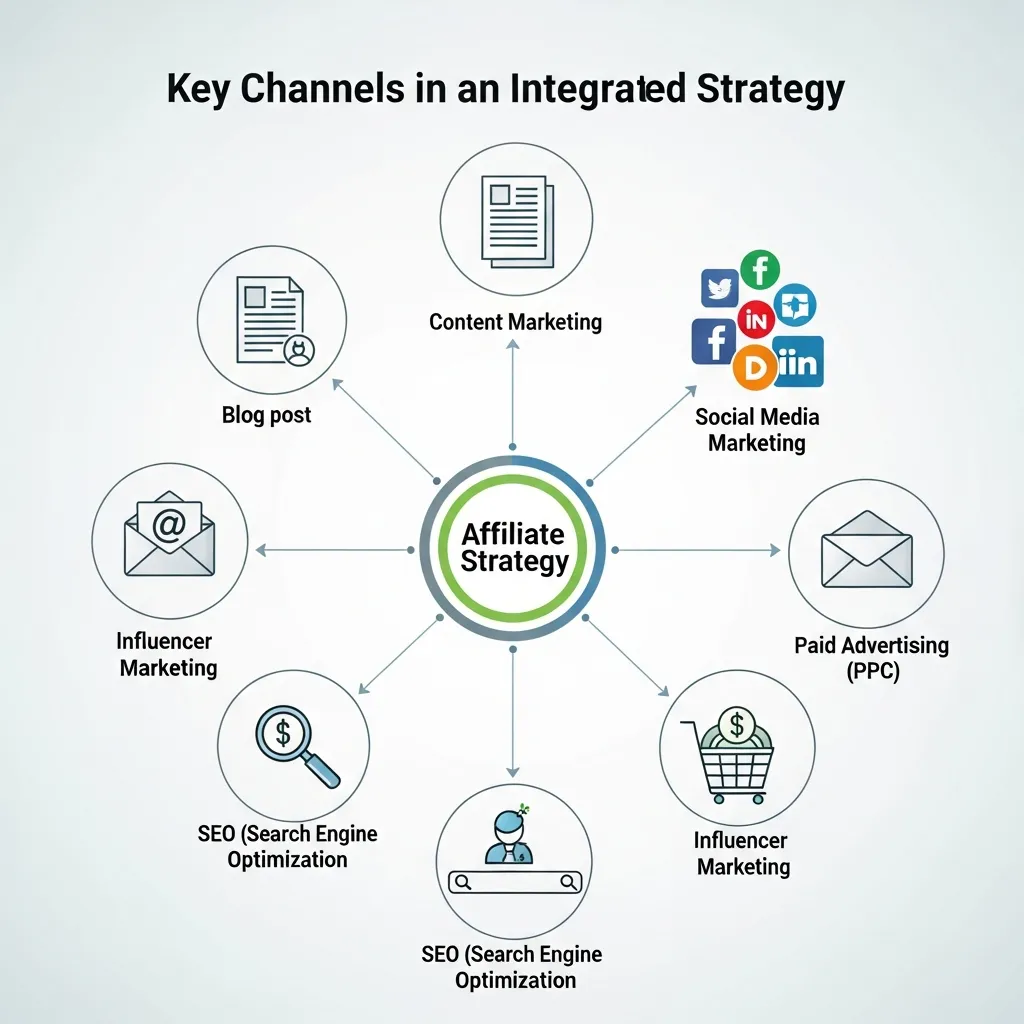
Email Marketing Tactics
Email remains a cornerstone of omnichannel affiliate marketing, delivering personalized messages directly to subscribers’ inboxes. Segmenting lists by demographics or browsing behavior allows you to tailor product recommendations and convert high-intent prospects. Create drip sequences—like welcome series, cart-abandonment reminders and targeted reactivation campaigns—to re-engage dormant subscribers. Dynamic content blocks and personalized subject lines can boost open rates by up to 50%, according to recent studies from the Harvard Business School.
Social Media Engagement
Social platforms enable authentic interactions and viral content sharing. Deploy short-form videos on TikTok or Instagram Reels to demonstrate affiliate products in action, and complement these with carousel posts or in-depth LinkedIn articles. Features like swipe-up links, shoppable tags and Instagram Lives streamline the purchase process. Encourage user-generated content and reviews to build social proof, amplifying trust in your recommendations.
SEO and Content Hub
High-value blog posts, detailed product reviews, and comprehensive comparison guides form the backbone of SEO-driven traffic and play a crucial role in omnichannel affiliate marketing success. Start by conducting thorough keyword research to identify high-intent search queries that match your audience’s needs. Optimize on-page elements such as meta titles, descriptions, headings, and image alt texts to improve visibility in search engines.
Interlink related articles and guides to keep visitors engaged longer on your site, reduce bounce rates, and encourage deeper exploration of affiliate offerings. Evergreen content—articles that remain relevant over time—provides a steady stream of organic traffic and consistent affiliate revenue, while simultaneously positioning your website as an authority within your niche.
Incorporate advanced SEO techniques like schema markup to enhance search results with rich snippets, including ratings, product availability, and pricing. Maintain a structured content calendar to plan regular updates, refresh outdated content, and align posts with seasonal trends or promotional campaigns. By integrating your SEO and content hub strategy with other channels such as email, social media, and paid ads, you create a cohesive omnichannel affiliate marketing experience that maximizes reach, engagement, and conversions.
Paid Advertising and Mobile Touchpoints
Paid search and social ads accelerate traffic and provide immediate results when budgets allow. Retargeting campaigns remind users of products they viewed but haven’t purchased. Mobile-specific tactics—such as in-app banners, SMS promos and push notifications—capture users on the go. Ensure ads direct prospects to responsive landing pages with clear CTAs for seamless conversions.
Crafting Cohesive Messaging, Automation & Compliance
Mapping the Buyer’s Path
Building an effective omnichannel affiliate campaign starts with mapping every touchpoint where prospects may interact with your brand. Chart the journey from initial awareness to final purchase, noting common drop-off points. Use this map to design targeted content at each stage: educational blog posts for early research, email quizzes for mid-funnel engagement and retargeting ads for late-stage decision-making.
Unifying Brand Voice
Consistency in tone, visuals and calls to action strengthens brand recall. Develop a style guide outlining voice parameters, color schemes and image guidelines. Whether a user encounters your brand on Twitter, in their inbox or via a paid ad, they should experience recognizable branding that instills confidence and encourages action.
Leveraging Marketing Automation
Automation platforms like HubSpot, ActiveCampaign or Klaviyo can orchestrate cross-channel workflows. For example, when a subscriber downloads a lead magnet via email, trigger a series of social ads showcasing an affiliate offer and follow up with personalized SMS reminders. Automated triggers save time, reduce errors and ensure timely follow-ups—critical factors in this year’s competitive landscape.
Additionally, chatbots and conversational AI can deliver real-time recommendations when visitors land on your site. Tools such as ManyChat or Drift integrate with affiliate networks to suggest relevant products based on user queries, enhancing onsite engagement and boosting affiliate click-through rates.
Optimizing User Experience
User experience directly impacts conversion rates. Ensure your website and landing pages load within three seconds, maintain mobile responsiveness and feature uncluttered designs. Fast loading times and intuitive layouts prevent drop-offs, particularly on mobile devices where half of all web traffic originates.
Transparency and Disclosure
Building trust demands clear disclosure of affiliate relationships. Prominently include disclaimers or disclosure statements in emails, blog posts and social captions to comply with FTC requirements. The FTC offers guidelines on proper disclosure practices, ensuring you maintain credibility and avoid penalties.
Legal and Regulatory Considerations
Affiliates must navigate GDPR, CCPA and other privacy regulations when capturing user data. Obtain explicit consent for tracking cookies and email subscriptions, provide easy opt-outs and safeguard personal information with encryption standards recommended by institutions like the National Institute of Standards and Technology. Staying compliant not only avoids legal risks but also enhances brand reputation.
Measuring and Scaling Your Multifaceted Affiliate Efforts

Tracking Key Performance Indicators
Effective omnichannel affiliate marketing hinges on data. Monitor click-through rate (CTR), conversion rate, average order value (AOV) and customer acquisition cost (CAC) across each channel. Use unified dashboards—Google Analytics 4 or Adobe Analytics—to compare performance and spot trends. Consistent measurement helps you fine-tune budgets and creatives.
Advanced Attribution Models
Move beyond last-click attribution by implementing data-driven or position-based models. These approaches allocate credit across multiple touchpoints, revealing how early-stage blog posts or mid-funnel emails contribute to final conversions. This granular insight uncovers hidden opportunities, enabling you to optimize each channel’s budget share for maximum ROI.
Continuous Testing and Expansion
Test subject lines, ad creatives and landing page layouts through A/B and multivariate experiments. Analyze which combinations of touchpoints—email followed by social ad, or SEO landing page plus retargeting SMS—drive the highest engagement. Double down on successful sequences and gradually introduce new channels like webinars or voice commerce. Scaling in this iterative manner ensures sustainable growth without overspending.
Conclusion
Omnichannel affiliate marketing offers a powerful framework for maximizing ROI by harmonizing every digital touchpoint. In today’s competitive environment, prospects demand seamless experiences and consistent messaging across email, social media, search and beyond. By mapping the buyer’s journey, unifying brand voice, leveraging automation and adhering to compliance standards, you can guide audiences effortlessly from awareness to purchase.
Implement rigorous tracking and advanced attribution to identify top-performing channels, then continuously test and refine your campaigns. This year (2026), deploying data-driven strategies and scalable workflows will distinguish high-growth affiliate programs from stagnant efforts. Start by integrating just two channels—perhaps email and social—and expand gradually. With patience and precision, you’ll build a robust omnichannel affiliate engine that thrives today and into the future, delivering sustained engagement and superior ROI every step of the way.
FAQ
1. What is omnichannel affiliate marketing?
Omnichannel affiliate marketing is a strategy that integrates multiple digital channels—such as email, social media, SEO, paid ads, and mobile touchpoints—to deliver a seamless and consistent affiliate experience that drives higher engagement and conversions.
2. Why is omnichannel affiliate marketing important for businesses?
By using omnichannel affiliate marketing, brands ensure consistent messaging across all platforms, improving trust, accelerating purchase cycles, and boosting overall ROI.
3. How does omnichannel affiliate marketing differ from single-channel affiliate marketing?
Unlike traditional single-channel strategies, omnichannel affiliate marketing synchronizes multiple touchpoints, allowing for unified campaigns that guide prospects smoothly from awareness to purchase.
4. Which channels are most effective in an omnichannel affiliate marketing strategy?
Key channels include email campaigns, social media engagement, SEO-optimized content, paid advertising, mobile notifications, and retargeting efforts—all coordinated under omnichannel affiliate marketing principles.
5. How can businesses measure the success of omnichannel affiliate marketing?
Success can be measured using KPIs such as click-through rates, conversion rates, average order value, and customer acquisition cost. Omnichannel affiliate marketing relies on centralized analytics for precise tracking across all channels.
6. Can small businesses benefit from omnichannel affiliate marketing?
Yes. Even small businesses can leverage omnichannel affiliate marketing to maximize reach, ensure consistent branding, and scale campaigns efficiently across multiple touchpoints.
7. How does automation support omnichannel affiliate marketing?
Automation platforms help orchestrate workflows in omnichannel affiliate marketing, triggering emails, social ads, and push notifications at the right time for maximum engagement.
8. What role does content play in omnichannel affiliate marketing?
High-quality content like blog posts, product reviews, and video tutorials is crucial. In omnichannel affiliate marketing, consistent messaging across all content formats strengthens brand recall and conversions.
9. How do attribution models enhance omnichannel affiliate marketing?
Advanced attribution models, such as data-driven or position-based models, allow marketers to evaluate the impact of each touchpoint within omnichannel affiliate marketing, optimizing budgets for maximum ROI.
10. How can brands maintain consistency in omnichannel affiliate marketing?
Consistency in tone, visuals, and calls-to-action is achieved through brand guidelines and centralized workflows, which are essential elements of effective omnichannel affiliate marketing.
11. Are there legal considerations in omnichannel affiliate marketing?
Yes. Compliance with FTC disclosure rules, GDPR, and CCPA is critical when executing omnichannel affiliate marketing, especially when collecting user data or running automated campaigns.
12. What are the best practices to scale omnichannel affiliate marketing?
Start with two channels, integrate automation, test campaigns regularly, and expand gradually. Following these practices ensures a robust omnichannel affiliate marketing engine that drives engagement and ROI across platforms.