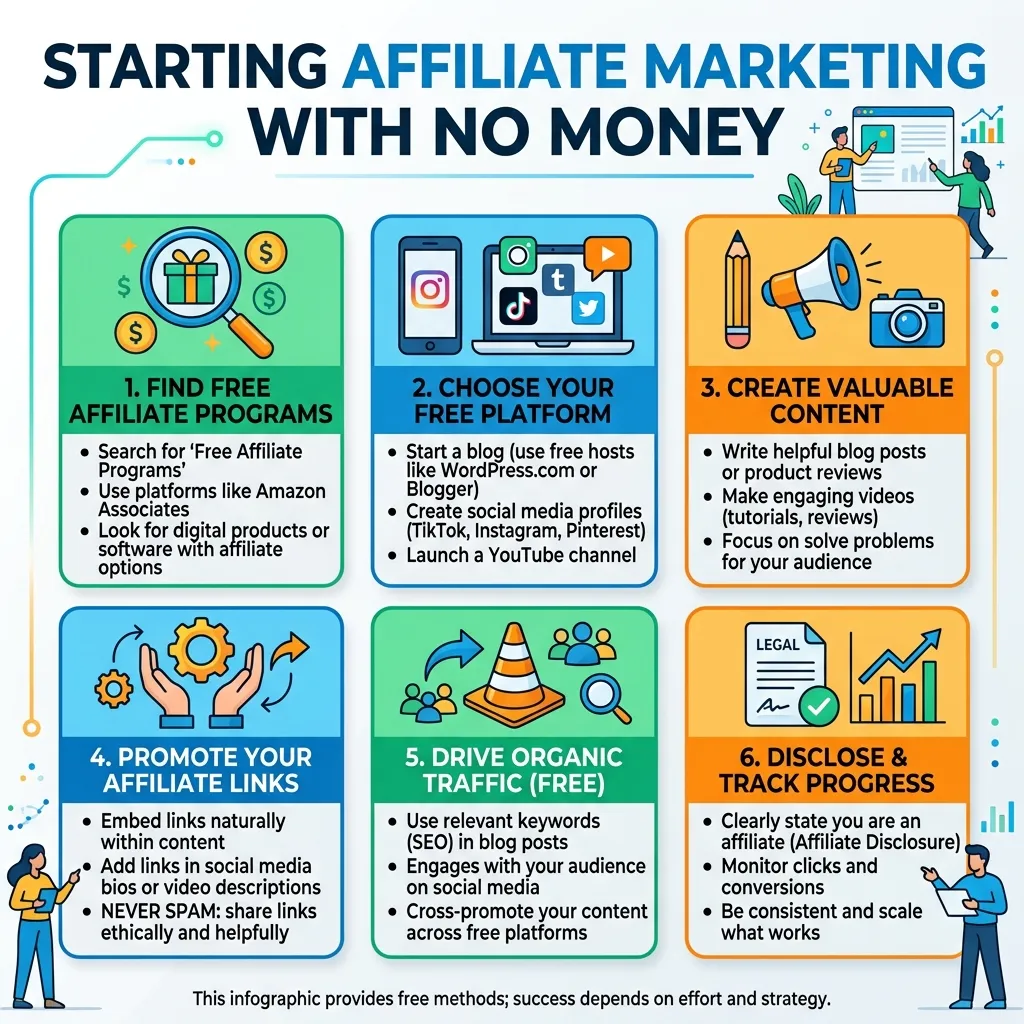
You can start affiliate marketing with no money by choosing a niche, joining free affiliate programs, and building an audience on free platforms like Instagram, TikTok, YouTube, or Medium. Create value-driven content, drive traffic using SEO and social media, then reinvest your first earnings to grow faster.
Most people assume you need a fancy website, paid ads, and a marketing budget to earn money online. That belief stops countless beginners before they ever begin. The truth is simpler: many successful affiliate marketers launched with zero dollars and nothing more than a free account and a willingness to learn.
This guide breaks down exactly how to start affiliate marketing with no money, step by step. You’ll learn how to pick a profitable niche, find affiliate programs that pay, build a platform for free, and create content that turns readers into buyers. We’ll also cover free traffic strategies, smart ways to track results, and the common mistakes that trip up new marketers.
By the end, you’ll have a clear, practical roadmap you can act on today—no credit card required. Whether you have ten minutes a day or several hours, the strategies here meet you where you are.
What Is Affiliate Marketing?
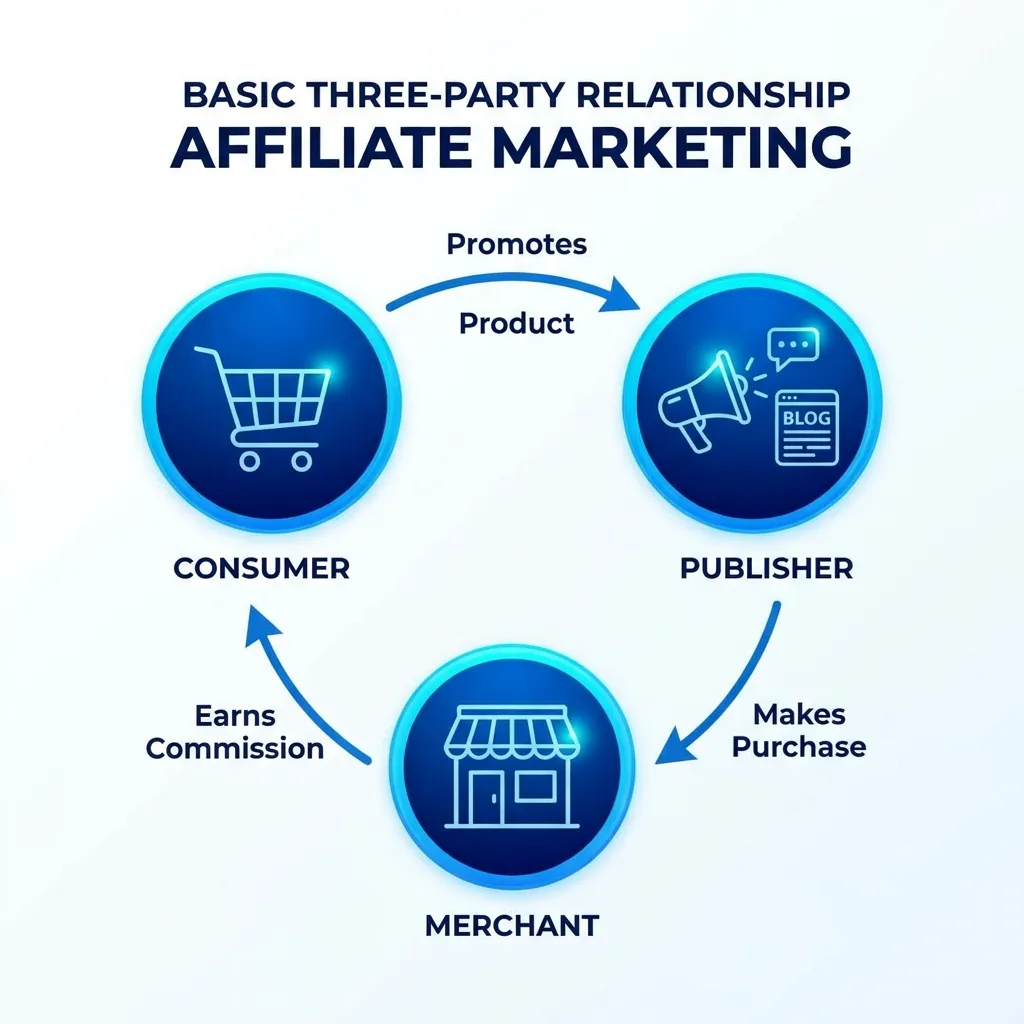
Affiliate marketing is a performance-based model where you earn a commission for promoting another company’s products or services. You share a unique tracking link, and when someone buys through it, you get paid a percentage of the sale.
Think of yourself as a digital recommender. You don’t handle inventory, ship products, or manage customer support. Your job is to connect the right people with the right products—and earn a cut when they buy.
Why Start Affiliate Marketing with No Money?
Starting with no money forces you to focus on the fundamentals: audience, trust, and content. These are the same skills that separate long-term earners from quick-burnout marketers.
Low risk is the biggest advantage. You’re not gambling savings on ads that may not convert. Instead, you invest time and effort, learning what works before you spend a single dollar. Once you understand your audience and see commissions roll in, reinvesting becomes a calculated decision rather than a gamble.
How to Start Affiliate Marketing with No Money: The Basics
The free path follows a clear sequence. Pick a niche, choose products worth promoting, build a free platform, create helpful content, and drive traffic to your offers. Each step builds on the last. Skip the foundation, and the rest gets shaky—so work through them in order.
Step 1: How Do You Choose the Right Niche?
Your niche is the topic you’ll build your content and audience around. Get this right, and everything else gets easier.
Understanding Your Passion and Expertise
Choose a niche you genuinely care about or know well. Affiliate marketing takes consistency, and you’ll create dozens of pieces of content before you see real results. Passion keeps you going during the slow early months. Expertise builds trust faster, since you can speak with authority instead of repeating what everyone else says.
Market Research: Identifying Profitable Niches
Passion alone won’t pay the bills—demand must exist too. Use free tools like Google Trends, Answer the Public, and Reddit to see what people search for and discuss. Profitable niches usually share three traits: a passionate audience, problems people pay to solve, and products with recurring or high-value commissions. Popular evergreen examples include personal finance, fitness, tech gadgets, and online education.
How to Find Affiliate Programs in Your Niche
Once you’ve settled on a niche, find programs that pay. Start with major affiliate networks like Amazon Associates, ShareASale, CJ Affiliate, and Impact. Many brands also run their own programs—just search “[brand name] + affiliate program.” Most networks are free to join, so signing up costs nothing but a few minutes.
Step 2: How Do You Select High-Converting Affiliate Products?
Not every product is worth promoting. The right ones convert well, pay fairly, and genuinely help your audience.
Criteria for Choosing Products
Promote products you’d recommend to a friend. Look for solid reviews, clear value, and a commission structure that rewards your effort. Relevance matters most—a product must fit your niche and solve a real problem for your audience.
Researching Product Demand and Reviews
Before promoting anything, check the demand. Read existing reviews, scan customer ratings, and look at how the product performs on platforms like Amazon or Trustpilot. Strong demand plus positive sentiment is a green light. Lots of complaints or low ratings? Walk away—your credibility is worth more than one commission.
High-Paying vs. High-Volume Products
High-paying products offer big commissions but often sell less frequently, like software subscriptions or online courses. High-volume products sell constantly but pay smaller commissions, like everyday items on Amazon. A balanced approach works well: combine a few high-ticket offers with steady high-volume products to create both quick wins and bigger paydays.
Step 3: How Do You Build a Platform for Free?
You don’t need a paid website to start. Several free platforms let you build an audience from scratch.
Social Media Marketing (Instagram, Facebook, TikTok)
Social platforms are powerful and completely free. Instagram suits visual niches like fashion and fitness. TikTok rewards short, engaging videos and offers huge organic reach for beginners. Facebook groups let you build tight-knit communities around your topic. Pick one or two platforms and focus there rather than spreading yourself thin.
Blogging on Free Platforms (Medium, Blogger, WordPress.com)
Free blogging platforms like Medium, Blogger, and WordPress.com let you publish written content without hosting costs. Medium has a built-in audience, which means readers can discover you faster. Blogging works especially well for detailed reviews, tutorials, and comparison posts that earn traffic over time.
YouTube: Creating Video Content for Free
YouTube is the second-largest search engine in the world, and uploading is free. Video builds trust quickly because viewers see and hear you. Product reviews, tutorials, and “best of” roundups perform especially well. You can record with just a smartphone—polished gear can come later.
Email Marketing: Building a List from Scratch
Email remains one of the highest-converting channels in marketing. Free tiers from providers like Mailchimp or MailerLite let you collect subscribers at no cost. An email list is an asset you own outright—unlike social followers, no algorithm can take it away. Start collecting emails early, even if your list is small.
Step 4: How Do You Create Content That Converts?

Content is the engine of free affiliate marketing. A strong affiliate content strategy for beginners centers on one thing: value first, sales second.
Affiliate Content Strategy for Beginners: Value-Driven Content
People can smell a sales pitch from a mile away. The winning approach is to help first and sell second. Answer real questions, solve real problems, and weave your affiliate links in naturally. When readers trust your advice, they’re far more likely to buy through your links.
Product Reviews and Comparisons
Reviews and comparisons attract buyers who are ready to purchase. Someone searching “Product A vs. Product B” is close to a decision—your honest comparison can tip the scale. Be balanced. Mention drawbacks too. Honesty builds the trust that drives long-term commissions.
How-To Guides and Tutorials
How-to guides pull in people actively trying to solve a problem. If you naturally recommend a product as part of the solution, the affiliate link feels helpful rather than pushy. These guides also tend to rank well in search and keep earning traffic long after you publish them.
Addressing Pain Points and Offering Solutions
The best affiliate content starts with a problem your audience already feels. Identify their pain points, explain the solution clearly, and position the product as part of that solution. This approach builds connection and makes your recommendations feel genuinely useful.
Step 5: How Do You Drive Free Traffic to Your Offers?
Great content needs an audience. These free strategies bring readers and viewers to your offers.
SEO Basics for Free Platforms
Search engine optimization helps people find your content through search. Use keywords your audience actually types, write clear titles, and answer questions thoroughly. Even on free platforms like Medium or Blogger, basic SEO—relevant keywords, descriptive headings, and internal links—can pull steady organic traffic over time.
Engaging on Social Media: Hashtags and Interaction
On social media, engagement beats broadcasting. Use relevant hashtags so new people discover your posts, then reply to comments and join conversations. Active engagement signals the algorithm to show your content to more people—and builds real relationships that turn followers into buyers.
Leveraging Online Communities and Forums
Communities like Reddit, Quora, and niche Facebook groups are full of people asking the exact questions your content answers. Provide genuine, helpful answers and link to your content only when it truly adds value. Spammy self-promotion gets you banned, so lead with help.
CPA Marketing for Beginners: An Introduction
CPA marketing for beginners offers another low-cost entry point. CPA stands for Cost Per Action, meaning you earn when someone completes a specific action—signing up for a free trial, filling out a form, or downloading an app—not just when they buy. Because the action is often free for the user, conversions can come more easily. Join a reputable CPA network, follow their rules carefully, and promote offers that genuinely match your audience.
Step 6: How Do You Optimize and Scale Your Efforts?
Once content is live, the goal shifts from creating to improving. Small, data-driven tweaks compound into big gains over time.
Tracking Your Performance (Even Without Paid Tools)
You don’t need expensive software to track results. Most affiliate networks offer free dashboards showing clicks, conversions, and earnings. Free tools like Google Analytics and Bitly reveal which links and content perform best. Watch the numbers, then do more of what works.
Understanding Analytics on Free Platforms
Free platforms come with built-in analytics. YouTube Studio shows watch time and traffic sources. Instagram and TikTok offer insights on reach and engagement. Medium tracks reads and views. Learn to read these numbers—they tell you what your audience loves and where to focus next.
Programmatic SEO for Affiliate Sites: A Glimpse
Programmatic SEO for affiliate sites is an advanced tactic where you create many pages at scale, each targeting a specific long-tail keyword, often using templates and structured data. For example, a travel affiliate might generate hundreds of “best hotels in [city]” pages. It usually requires a self-hosted website and some technical know-how, so treat it as a growth strategy for later—once you’ve earned enough to reinvest.
When to Consider Reinvesting (Once You Make Money)
The smartest move is to reinvest your first earnings back into your business. Once commissions arrive, you can put money toward a custom domain, better email tools, or paid ads. Reinvesting accelerates growth—but only after free strategies prove your niche and audience are profitable.
Advanced Strategies (Once You Have Some Capital)
When you’ve built momentum and earned your first commissions, a few paid strategies can speed things up.
Paid advertising: Platforms like Facebook Ads and Google Ads can drive targeted traffic fast. Start small, test carefully, and scale only the ads that turn a profit.
Building your own website: A self-hosted site gives you full control over design, SEO, and branding. It becomes the long-term home for your content and unlocks advanced tactics like programmatic SEO.
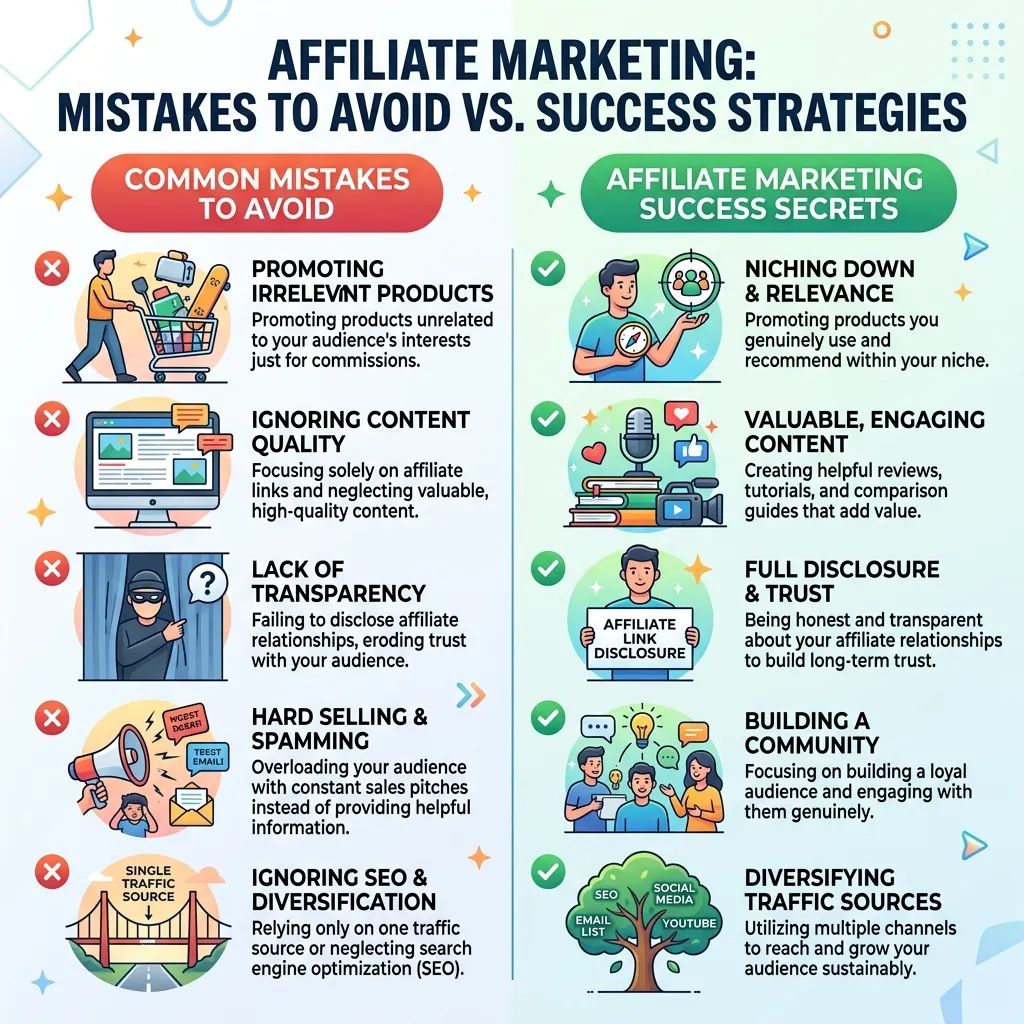
Knowing what not to do is just as valuable as knowing what to do.
Patience and Persistence
Affiliate marketing is not a get-rich-quick scheme. Most beginners quit before results arrive. Real income usually takes months of consistent effort. Stay patient, keep publishing, and trust the process.
Avoiding Spammy Tactics
Blasting affiliate marketing links everywhere damages your reputation and gets you banned from platforms and networks. Always lead with value. Place links where they genuinely help, not wherever you can squeeze them in.
Focusing on Value Over Sales
The affiliate marketers who win think long-term. They prioritize helping their audience over chasing quick commissions. When you consistently deliver value, sales follow naturally—and so does a loyal audience that buys from you again and again.
Conclusion
Starting affiliate marketing with no money is not only possible—it’s how many of today’s top earners began. By choosing a focused niche, joining free affiliate programs, building on free platforms, and creating genuinely helpful content, you can launch a real online business without spending a cent.
The key is to start now and stay consistent. Pick your niche today, join one affiliate program, and publish your first piece of content this week. As commissions start to flow, reinvest wisely into tools and strategies that scale your results. Patience, value, and persistence turn a no-budget start into a sustainable income stream.
Your first step costs nothing but time. Take it.
FAQs
1. Can I really start affiliate marketing with no money?
Yes. You can join free affiliate programs, build an audience on free platforms like Instagram, TikTok, YouTube, or Medium, and create content at no cost. Your only investments are time and effort.
2. What is the fastest way to make money with Start Affiliate Marketing with No Money?
The fastest route is usually creating content on platforms with built-in audiences, like TikTok, YouTube, or Medium, and promoting products your audience already wants. Comparison posts and product reviews tend to convert quickly because they target buyers ready to purchase.
3. How do affiliate marketers get paid?
Affiliate marketers earn a commission when someone buys or completes an action through their unique tracking link. Networks typically pay via bank transfer, PayPal, or check once you reach a minimum payout threshold.
4. What are the best free platforms for affiliate marketing?
Top free options include Instagram, TikTok, Facebook, and YouTube for social and video content, plus Medium, Blogger, and WordPress.com for blogging. Free email tools like Mailchimp and MailerLite help you build a subscriber list too.
5. How long does it take to see results in affiliate marketing?
Most beginners see meaningful results within three to six months of consistent effort. Timelines vary based on your niche, content quality, and how often you publish. Patience and persistence are essential.
6. Do I need a website to start Start Affiliate Marketing with No Money?
No. You can succeed using social media, YouTube, or free blogging platforms. A website helps with control and advanced tactics like programmatic SEO, but it’s optional when you’re starting out.
7. What is CPA marketing and how does it relate to affiliate marketing?
CPA (Cost Per Action) marketing is a type of affiliate marketing where you earn when someone completes an action—like a sign-up or download—rather than only when they buy. CPA marketing for beginners can be easier to convert because the user’s action is often free.
8. How important is content creation in free affiliate marketing?
Content is essential. Without a budget for ads, your content is what attracts and converts your audience. A value-driven affiliate content strategy for beginners builds the trust that turns readers into buyers.
9. Can I use social media exclusively for affiliate marketing?
Yes, many marketers earn through social media alone. Just check each platform’s rules on affiliate links and disclosures. Building an email list alongside social media is wise, since you own your list while platforms control your followers.
10. What are some common pitfalls for beginners?
The biggest pitfalls are impatience, spamming affiliate links, and prioritizing sales over value. Avoid these by staying consistent, leading with helpful content, and giving your efforts time to grow.
11. How do I choose the right niche?
Pick a niche that combines your passion or expertise with proven demand and profitable products. Use free tools like Google Trends and Reddit to confirm people are searching for and discussing the topic before you commit.
12. What is Programmatic SEO for Affiliate Sites?
Programmatic SEO for affiliate sites is an advanced strategy that creates many pages at scale, each targeting a specific long-tail keyword using templates and structured data. It usually requires a self-hosted website, so it’s best suited for marketers ready to reinvest in growth.