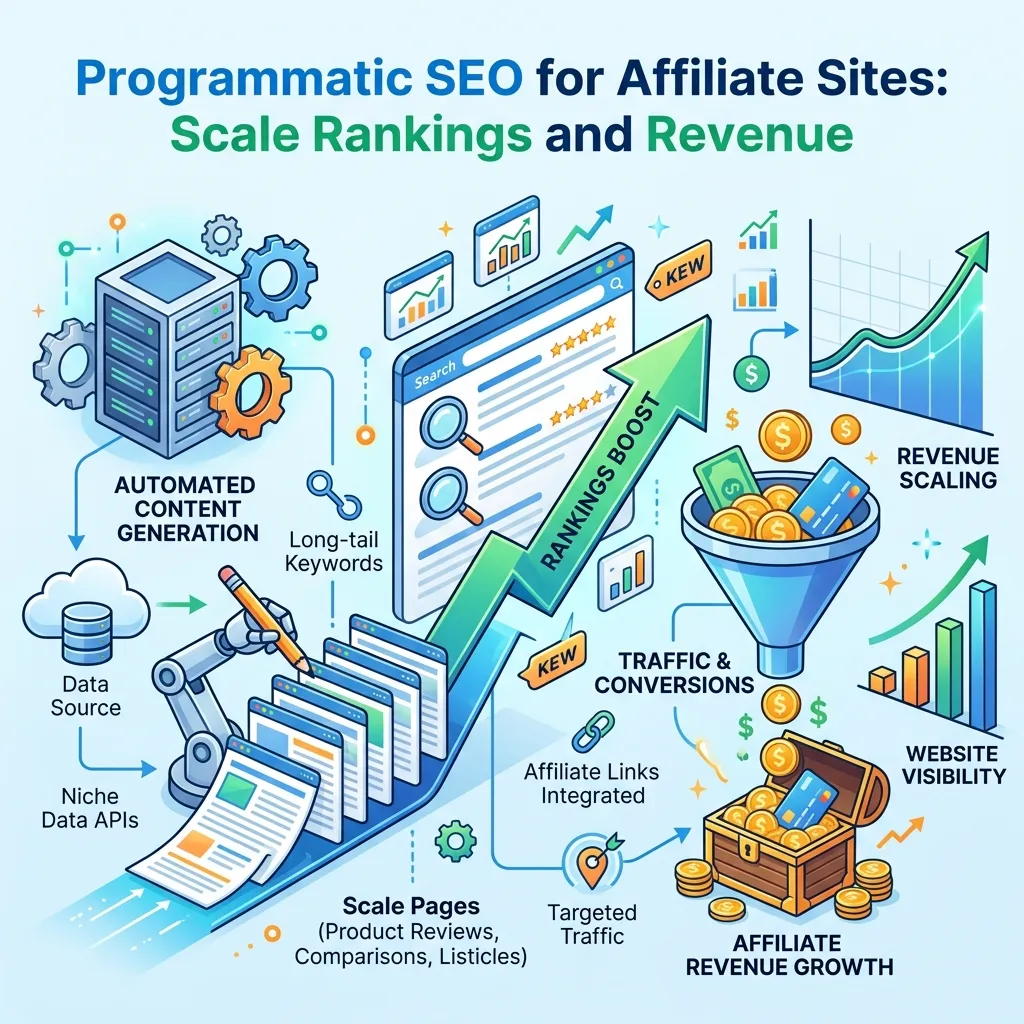
Programmatic SEO for Affiliate Sites is one of the most practical growth models for publishers who need scale without sacrificing clarity. Instead of writing every page from scratch, you build structured templates, data inputs, and internal rules that can generate many pages around buyer intent. Done well, Programmatic SEO for Affiliate Sites creates a library of pages that help readers compare, choose, and act. Done poorly, it becomes thin content at scale, which is exactly why strategy matters more than automation.
The most important mindset shift is this: Programmatic SEO for Affiliate Sites is not about flooding the web with pages. It is about matching real search demand with a repeatable content system that serves a specific audience. When a site understands the intent behind each query, it can produce pages that feel genuinely useful. That is how Programmatic SEO for Affiliate Sites becomes a traffic engine rather than a spam machine.
Affiliate sites succeed when they answer commercial questions at the exact moment people are deciding. That is why Programmatic SEO for Affiliate Sites can be powerful for comparisons, location-based affiliate offers, product directories, calculators, and “best for” pages. These formats work because they reduce friction. Readers want a shortcut to relevance, and Programmatic SEO for Affiliate Sites can deliver that shortcut at scale when the underlying research is strong.
A common mistake is assuming automation replaces judgment. It does not. Programmatic SEO for Affiliate Sites still needs editorial quality control, source evaluation, thoughtful page design, and a user-first structure. The goal is to make each page feel like the best possible answer for a specific long-tail search, not a recycled block of text. That is why successful teams treat Programmatic SEO for Affiliate Sites as a publishing system, not just a technical workflow.
What Programmatic SEO Really Means
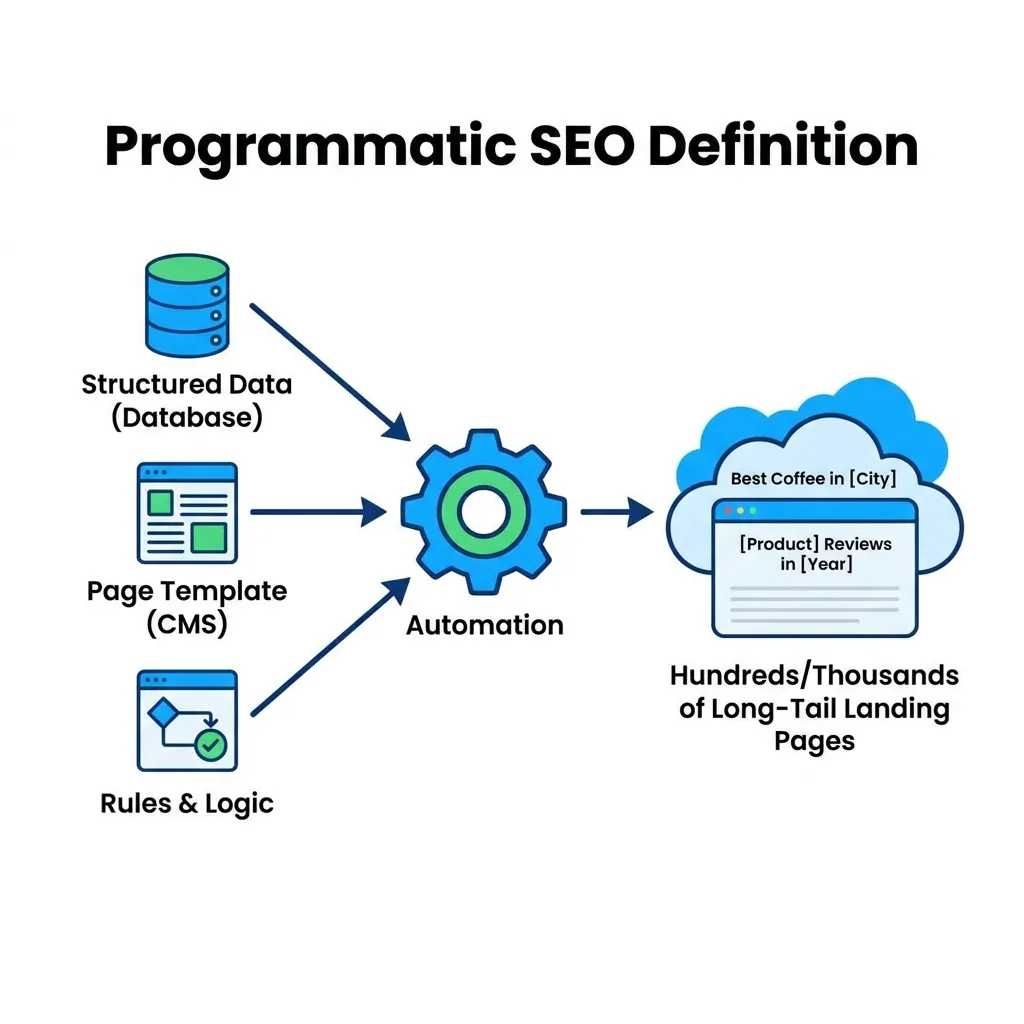
Programmatic SEO for Affiliate Sites begins with data. You identify repeatable page types, gather structured inputs, and use templates to create pages that align with search demand. The pages may target cities, products, features, categories, brands, use cases, or comparisons. The strength of Programmatic SEO for Affiliate Sites lies in its ability to turn a single content model into hundreds or thousands of relevant assets.
In practice, Programmatic SEO for Affiliate Sites works best when the page template matches how people search. If users want comparisons, the page should compare. If they want recommendations, the page should recommend. If they want definitions, the page should define. The closer the structure is to the query, the better the likelihood of ranking and converting. Programmatic SEO for Affiliate Sites rewards relevance before volume.
Not every affiliate niche is ready for this strategy. Programmatic SEO for Affiliate Sites is strongest in markets where the product set is large, the attributes are measurable, and the search language repeats across many combinations. Travel, software, home improvement, tools, and consumer products often fit well. In those spaces, Programmatic SEO for Affiliate Sites can create a clean path from query to answer to affiliate click.
One reason this model works is that search engines love specificity when it is useful. A page built for one exact use case can satisfy intent better than a generic overview. Programmatic SEO for Affiliate Sites capitalizes on that pattern by separating broad topics into focused landing pages. Instead of writing one weak page for everyone, you create many strong pages for people who are already close to a decision.
Why Affiliate Sites Benefit So Much
Affiliate sites need scale because they usually compete in crowded markets with limited brand equity. Programmatic SEO for Affiliate Sites solves that problem by helping small teams cover more queries than a manual publishing strategy could realistically support. That does not mean shortcuts; it means structure. A good template can support a wide range of topics without losing usefulness.
One advantage of Programmatic SEO for Affiliate Sites is speed. When you discover an opportunity, you do not need to wait months to create each page individually. You can build a repeatable system, review the data, and launch at pace. That speed matters because affiliate opportunities change quickly, especially when products, prices, and search behavior shift.
Another advantage is consistency. Programmatic SEO for Affiliate Sites makes it easier to keep formatting, comparison criteria, and conversion elements aligned across the site. That consistency improves trust. A reader who lands on one page and then another should feel the same logic and tone. Consistency also helps you improve more efficiently because you are testing patterns, not random one-off pages.
There is also a psychology advantage. Programmatic SEO for Affiliate Sites lets you meet readers at the exact stage where they are evaluating options. That stage is valuable because the user is already expressing intent. They are not browsing casually; they are looking for help making a choice. When your pages feel useful at that moment, the affiliate model becomes a service rather than an interruption.
Starting With Intent, Not Templates
Before building anything, Programmatic SEO for Affiliate Sites must begin with intent mapping. You need to know what the searcher wants to accomplish, what they already know, and what would make them trust your recommendation. A template without intent is just a mold. Intent turns that mold into a helpful experience.
This is where many teams go wrong. They start with page volume and only later ask whether the pages make sense. Programmatic SEO for Affiliate Sites should work the other way around. You choose the question first, then design the format, then connect the page to a monetization path. When the logic is correct, the system scales more safely.
Intent also determines page depth. Some queries need short, direct answers. Others need context, tradeoffs, and proof. Programmatic SEO for Affiliate Sites should match that depth to the searcher’s stage of awareness. If the intent is early, a simple explainer may work. If the intent is late, a comparison chart, review summary, or ranking table may be more persuasive.
A useful discipline is to categorize queries by commercial value. Some pages are informational but still valuable because they introduce users to products, categories, or brands. Others are much closer to a click. Programmatic SEO for Affiliate Sites performs best when the site understands which pages deserve education and which pages deserve conversion elements.
How to Find the Right Keyword Patterns
Research is the backbone of Programmatic SEO for Affiliate Sites. You are not simply finding individual keywords; you are finding patterns that can generate many pages from one template. That means looking for repeatable modifiers such as best, cheap, top, near me, for beginners, for small spaces, in [city], under [price], and by feature.
A strong process starts with clustering. Group queries by intent, shared entities, and common outcomes. Then ask whether a single page type can satisfy many of those variations. Programmatic SEO for Affiliate Sites becomes much more efficient when every page is part of a structured cluster rather than a standalone guess.
This is also where Low Competition Affiliate Keywords can reveal opportunities that larger sites ignore. Long-tail phrases often carry clearer intent and lower difficulty, especially when the site can build pages around a defined pattern. The real goal is not just to find easy keywords; it is to find scalable keyword families that fit a page template.
When teams practice Affiliate Marketing Keyword Research well, they uncover not only search volume but also commercial realism. Some phrases look promising but attract visitors who are too early in the journey. Others may have modest volume but much stronger conversion potential. Programmatic SEO for Affiliate Sites works best when research focuses on buyer-minded patterns instead of vanity numbers.
It is also smart to validate SERPs before building. Look at the current result types, page formats, content quality, and presence of affiliate competitors. If the top results already show lists, directories, or comparison pages, the market may be signaling that a programmatic format is acceptable. Programmatic SEO for Affiliate Sites gains leverage when the existing SERP supports structured answers.
Building Pages That Search Engines and People Trust

The best pages are not the longest pages; they are the clearest. Programmatic SEO for Affiliate Sites should use a page structure that is predictable, skimmable, and transparent. Readers want to know what the page covers, how you chose the recommendations, and what makes one option better than another.
That means every template should include a clear headline, a short introduction, comparison logic, and a decision-friendly layout. If a page recommends products, explain the criteria. If it ranks options, say why. If it targets a location, explain what makes that area relevant. Programmatic SEO for Affiliate Sites earns trust when it makes its judgment process visible.
You also need enough uniqueness in each page to avoid sounding automated. Programmatic SEO for Affiliate Sites can use dynamic content blocks, entity-specific summaries, feature comparisons, user scenarios, local details, and editorial notes. These elements help each page feel grounded in the specific query rather than in a generic outline.
Strong templates also respect scanner behavior. Most users will not read every sentence. They will jump to headings, tables, and highlighted points. Programmatic SEO for Affiliate Sites should make those elements easy to find. When the structure reduces effort, the page feels more helpful and more polished.
Using Templates Without Creating Thin Content
Templates are powerful, but they can also create repetitive pages that add little value. Programmatic SEO for Affiliate Sites must be selective about what gets automated. Not every combination deserves a page. If a page cannot offer a distinct answer, it may be better left out.
A good rule is to ask whether the page can answer a specific question better than a generic category page. If the answer is yes, build it. If the answer is no, skip it. Programmatic SEO for Affiliate Sites gets stronger when the site publishes fewer weak pages and more precise pages that deserve links, clicks, and engagement.
Avoid the temptation to stuff every page with the same intro, the same phrasing, and the same affiliate pitch. Readers notice repetition quickly. Search engines also learn when a site is generating sameness at scale. Programmatic SEO for Affiliate Sites should use templates as frameworks, not as copy-paste machines.
Human review remains essential. A lightweight editorial pass can catch awkward phrasing, mismatched data, bad recommendations, and misleading claims. Even a highly automated workflow benefits from a final quality check. Programmatic SEO for Affiliate Sites succeeds when automation handles the repetitive work and people handle the judgment.
Site Architecture and Internal Linking
A strong information architecture can make Programmatic SEO for Affiliate Sites feel organized instead of sprawling. Pages should live in logical clusters with clear hierarchy. That means parent pages, category pages, subcategory pages, and supporting guides should all reinforce one another. A clean structure helps both users and crawlers understand the site.
Internal links are not just for SEO mechanics. They help readers continue their journey. Programmatic SEO for Affiliate Sites should move users from broad educational pages to narrower commercial pages in a natural way. When a user starts with a general question and then clicks into a specific recommendation page, the site feels coherent and useful.
Think in pathways, not isolated pages. A category hub can lead to comparison pages. A comparison page can lead to product pages. A product page can lead to a buying guide. Programmatic SEO for Affiliate Sites becomes much more powerful when every page supports discovery and decision-making.
Breadcrumbs, related links, and topical hubs are especially useful. They signal structure and make navigation easier. They also help distribute authority across the site. If one page performs well, related pages can benefit. Programmatic SEO for Affiliate Sites scales better when links are designed as part of the system, not added later as an afterthought.
Designing for Conversions Without Hurting SEO
Affiliate pages must convert, but they also need to satisfy search intent. Programmatic SEO for Affiliate Sites should therefore balance monetization and usefulness. Too many affiliate calls to action can damage trust. Too few, and the page may inform without earning.
The right balance depends on the query. High-intent pages can support stronger product placement, comparison tables, and recommendation blocks. Lower-intent pages may need more educational framing before the affiliate link appears. Programmatic SEO for Affiliate Sites should match monetization intensity to user readiness.
Clarity matters more than urgency. When users understand why a recommendation is there, they are more likely to trust it. Programmatic SEO for Affiliate Sites should explain criteria, show differences, and reveal the thinking behind each choice. That transparency is often what turns a casual visitor into a buyer.
Content Marketing can support this process by attracting readers earlier in the journey, then guiding them toward more commercial pages. When the informational layer and the affiliate layer work together, the whole site becomes stronger. Programmatic SEO for Affiliate Sites benefits when educational content builds trust before the sale page ever appears.
Content Quality, Expertise, and Trust Signals

Search engines increasingly reward pages that demonstrate real usefulness. Programmatic SEO for Affiliate Sites should therefore include signals of expertise, experience, and editorial care. That can mean author information, tested criteria, product data sources, update dates, and clear explanations of why certain recommendations appear.
A trust-first page reduces anxiety. Readers want to know whether the recommendations are current, whether the ranking logic is fair, and whether the site has a real basis for judgment. Programmatic SEO for Affiliate Sites should answer those questions quietly through structure and transparency.
It also helps to include scenario-based guidance. Not everyone needs the same recommendation. A beginner, a budget buyer, and a power user all care about different things. Programmatic SEO for Affiliate Sites becomes more valuable when it helps readers self-select the best choice for their situation.
The best affiliate content is not trying to manipulate the reader. It is trying to shorten the decision process. That is a major difference. Programmatic SEO for Affiliate Sites works when the page reduces uncertainty, not when it creates artificial pressure.
What “Good Enough” Is Not
A page can be technically generated and still fail. Programmatic SEO for Affiliate Sites should never confuse output speed with performance. If a page has no distinct purpose, no meaningful comparison logic, and no reason to exist, it will struggle no matter how many URLs you publish.
Another failure mode is over-automation in the wrong places. Titles, meta descriptions, summaries, and product blocks can be templated, but the message still has to feel relevant. Programmatic SEO for Affiliate Sites should automate structure and data while preserving thoughtful editorial decisions.
Avoid making the site feel like a directory without insight. Readers can find raw lists elsewhere. What they want from Programmatic SEO for Affiliate Sites is interpretation: which option fits whom, why one choice beats another, and what tradeoff they should expect.
A useful standard is this: if a page disappeared, would users lose something specific? If the answer is no, the page probably was not strong enough. Programmatic SEO for Affiliate Sites should publish with intention, not just with scale in mind.
Ranking the Pages You Build
Many people ask How to Rank Affiliate Blog Posts on Google, but the answer usually begins before publishing. Ranking is easier when the page is relevant, well-structured, and aligned with the searcher’s goal. That is why Programmatic SEO for Affiliate Sites should be built around demand and competition rather than hope.
On-page relevance still matters a great deal. Titles, headings, copy blocks, entity mentions, tables, and supporting links all help search engines understand the page. Programmatic SEO for Affiliate Sites should make that understanding as easy as possible without sounding robotic.
Technical quality also matters. Fast loading, mobile-friendly design, crawlable internal links, clean indexing rules, and sensible URL patterns all support visibility. Programmatic SEO for Affiliate Sites is much more likely to succeed when the technical foundation is stable.
Links still help too, especially for harder terms. But the goal is not to chase links for every page equally. Programmatic SEO for Affiliate Sites should prioritize the pages with the strongest strategic value, then support the cluster as a whole with useful references, mentions, and internal authority flow.
Measurement and Iteration
One of the biggest strengths of Programmatic SEO for Affiliate Sites is that it can be improved systematically. Because the pages follow a pattern, you can test titles, layouts, product order, CTAs, comparison formats, and page depth across the cluster.
Track more than rankings. Measure impressions, clicks, scroll depth, outbound affiliate clicks, conversion behavior, and revenue by page type. Programmatic SEO for Affiliate Sites becomes smarter when the team understands which page formats bring visitors and which page formats convert them.
Watch for content drift. If pages begin to perform poorly, the issue may be duplication, weak differentiation, or outdated data. Programmatic SEO for Affiliate Sites should include regular refresh cycles so the site does not slowly degrade as competitors improve.
The best operators think in loops. Research leads to templates, templates lead to pages, pages lead to data, data leads to better templates. Programmatic SEO for Affiliate Sites rewards that loop because every cycle improves both scale and quality.
Common Mistakes to Avoid
One mistake is building too many pages too fast. Programmatic SEO for Affiliate Sites should scale in stages. Start with a small cluster, learn from performance, then expand with better confidence. A controlled rollout makes it easier to catch structural issues early.
Another mistake is targeting keywords that look easy but have no commercial value. Traffic alone is not the goal. Programmatic SEO for Affiliate Sites should aim for traffic that can influence affiliate revenue, email signups, or return visits. Otherwise the work may not compound.
A third mistake is ignoring user trust. If the site feels like it exists only to push affiliate links, readers leave quickly. Programmatic SEO for Affiliate Sites should demonstrate fairness, practical advice, and a real effort to help the user choose wisely.
A fourth mistake is skipping editorial maintenance. Product data changes, categories evolve, and search intent shifts. Programmatic SEO for Affiliate Sites needs refreshes to stay useful. The best systems are not just efficient at publishing; they are disciplined about upkeep.
Practical Page Types That Often Work
Comparison pages are often excellent for Programmatic SEO for Affiliate Sites because they align with decision intent. A visitor comparing options is already close to acting, so the page can help by clarifying differences.
“Best for” pages are also strong. They allow the site to match products or services to specific scenarios. Programmatic SEO for Affiliate Sites performs well here because each page can focus on one use case rather than trying to cover everything at once.
Directory-style pages can work when the data is rich enough. If the page offers filters, sorting, and helpful summaries, Programmatic SEO for Affiliate Sites can turn a large database into a useful decision tool.
Location-based pages can perform well too, especially in niches where local relevance matters. Programmatic SEO for Affiliate Sites can help users compare options across cities, regions, or service areas as long as the page offers actual local value.
Choosing the Right Monetization Angle

Affiliate pages do not all monetize in the same way. Some rely on direct product links, others on lead capture, and others on hybrid pathways. Programmatic SEO for Affiliate Sites should match monetization to the intent of the page.
For educational pages, soft conversion often works better than hard selling. For high-intent comparison pages, stronger purchase prompts may be appropriate. Programmatic SEO for Affiliate Sites becomes more efficient when the monetization model matches the stage of the user journey.
Price sensitivity also matters. Some readers want the cheapest solution, others want the most reliable, and others want the easiest. Programmatic SEO for Affiliate Sites should reflect these differences in page structure and recommendation logic.
The more precise the page, the better the conversion opportunity. A page that helps one type of buyer is usually more persuasive than a generic page that tries to serve everyone.
Conclusion
Programmatic SEO for Affiliate Sites works best when strategy comes before automation and usefulness comes before volume. The strongest pages are built from clear intent, structured data, and a genuine understanding of what the reader is trying to decide. When you combine thoughtful templates, careful keyword mapping, and honest recommendations, the site can grow in a way that feels natural instead of forced. Programmatic SEO for Affiliate Sites is not just a traffic tactic; it is a publishing system that rewards relevance, consistency, and trust. The more closely each page matches real search behavior, the more likely it is to earn clicks, build confidence, and convert that attention into measurable affiliate value.
FAQ
1. What is Programmatic SEO for Affiliate Sites?
It is a method of creating many affiliate pages from one structured framework so the site can cover repeated search patterns at scale while staying organized and useful.
2. Is Programmatic SEO for Affiliate Sites good for beginners?
Yes, if the beginner starts small and focuses on one clear page type. The key is to build around real intent rather than publishing large volumes blindly.
3. Do programmatic pages need unique content?
Yes. Even when a template is reused, each page should contain unique data, context, recommendations, or comparisons so the result feels specifically helpful.
4. What kind of keywords work best?
Long-tail phrases with repeatable patterns usually work best because they are easier to organize into page clusters and often align with stronger user intent.
5. How do I avoid thin content?
Use only page types that can answer a real question better than a generic page. Add useful comparisons, scenario guidance, and trust signals to every template.
6. Can affiliate pages still rank if they are commercial?
Yes. Commercial intent is not a problem by itself. The page just needs to be genuinely useful, technically sound, and aligned with the searcher’s goal.
7. How important is internal linking?
Very important. Internal links help users move through the site and help search engines understand the relationship between page clusters and supporting guides.
8. Should I use AI for these pages?
AI can help with drafting and pattern generation, but the final content still needs human review, fact checking, and editorial judgment.
9. What metrics matter most?
Look at impressions, clicks, affiliate link clicks, conversion behavior, revenue, and page-level engagement. Rankings alone do not tell the full story.
10. Is this strategy only for big sites?
No. Smaller sites can benefit too, especially when they focus on a narrow niche, clear page structure, and a manageable set of search patterns.