AI content creation has become a core part of how affiliate marketers scale their sites, letting solo creators and small teams produce far more content than manual writing alone would allow. This guide covers how to use AI content creation responsibly for affiliate sites — from research and drafting to SEO and quality control — without sacrificing the trust and originality that keep affiliate content ranking and converting.
Why AI Content Creation Matters for Affiliate Sites
Affiliate marketing has always been a volume game to some degree — more well-targeted content generally means more chances to rank, more chances to get clicked, and more chances to convert. AI content creation has changed the math on how much content a single person or small team can realistically produce, compressing what used to take weeks of research and drafting into hours.
That said, AI content creation for affiliate sites isn’t just about speed. Search engines have gotten better at identifying thin, low-value content regardless of whether a human or a model wrote it, so the sites winning with AI content creation today are the ones using it to support genuinely useful content rather than to mass-produce filler pages.
How AI Content Creation Fits Into the Affiliate Workflow

AI content creation tools can support nearly every stage of building an affiliate site, but they work best when treated as an assistant rather than a full replacement for editorial judgment.
Research and outlining. AI tools can quickly summarize competitor content, pull out common subtopics, and draft an outline based on what’s already ranking, saving hours of manual research before writing even begins.
First-draft generation. Many affiliate publishers use AI content creation to produce a rough first draft, which a human then edits, fact-checks, and infuses with first-hand experience or opinion — the parts a model can’t genuinely provide.
Product comparisons and data tables. AI content creation is particularly useful for structuring comparison content, pulling specifications into tables, and drafting pros-and-cons lists that would otherwise take significant manual formatting time.
Meta descriptions and on-page SEO elements. Generating dozens of meta titles and descriptions by hand is tedious; this is one of the lowest-risk, highest-efficiency uses of AI content creation on an affiliate site.
Content refreshes. Updating older posts with new pricing, product availability, or statistics is a repetitive task that AI content creation handles well, keeping evergreen affiliate content accurate without a full rewrite.
The Risk of Relying Too Heavily on AI Content Creation
While AI content creation offers real efficiency gains, affiliate sites face a specific risk that other content categories don’t: trust. Readers rely on affiliate content to make purchasing decisions, often involving real money, so content that reads as generic, unverified, or clearly templated tends to underperform even if it’s technically well-optimized.
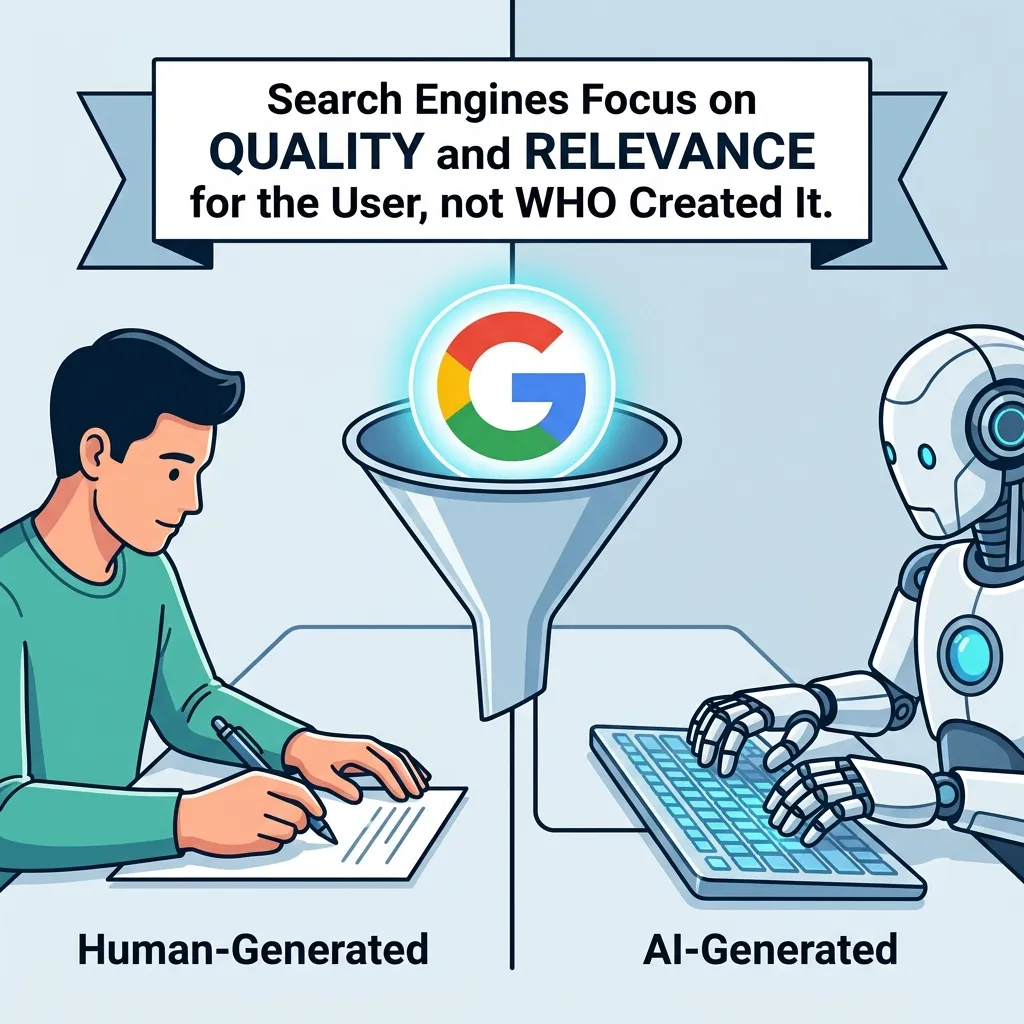
Search engines have also adjusted their guidance around this exact issue. Rather than penalizing AI-assisted content outright, most current guidance focuses on whether content demonstrates genuine expertise and firsthand experience — something raw AI content creation, used without human input, typically fails to deliver on its own.
The affiliate sites that get burned by AI content creation are usually the ones publishing unedited model output at scale, without adding real product testing, personal experience, or fact verification. The ones that succeed treat AI content creation as a drafting tool inside a larger editorial process, not a replacement for it.
Best Practices for Using AI Content Creation on Affiliate Sites
1. Always fact-check pricing, specs, and claims. AI models can produce outdated or simply incorrect product details, which is especially damaging on affiliate content where accuracy directly affects a reader’s purchase decision.
2. Add first-hand experience wherever possible. If you’ve actually used a product, say so, and include details a generic AI content creation tool couldn’t know — how it felt in daily use, what surprised you, what you’d change.
3. Avoid publishing unedited AI output. Treat AI content creation as a first draft, not a final product. A human editing pass should adjust tone, verify claims, and add specificity the model likely missed.
4. Disclose AI involvement where relevant. Being transparent about how content is produced builds trust with readers and helps affiliate sites stay ahead of evolving disclosure expectations.
5. Use AI content creation for structure, not the whole piece. Outlines, tables, and FAQ sections are lower-risk applications than full opinion-based reviews, which benefit more from genuine human input.
6. Keep a consistent editorial voice. Heavy AI content creation use across a large site can flatten a site’s voice into something generic; maintaining style guidelines helps keep content recognizable and distinct from competitors doing the same thing.
AI Content Creation and SEO for Affiliate Sites
AI content creation and SEO are deeply linked for affiliate publishers, since content that doesn’t rank rarely gets read regardless of how well it’s written. A few SEO-specific considerations matter here:
- Don’t skip keyword research. AI content creation tools can draft around a keyword, but the keyword itself still needs proper research to confirm real search demand and manageable competition.
- Structure content for featured snippets and AI overviews. Clear headers, direct answers near the top of sections, and well-formatted comparison tables tend to perform better in both traditional rankings and AI-generated search summaries.
- Avoid duplicate or near-duplicate content across pages. A common pitfall of scaling AI content creation quickly is producing multiple pages that are too similar to each other, which can dilute rankings rather than help them.
- Internal linking still matters. AI content creation makes it easy to produce more pages, but those pages still need a thoughtful internal linking structure to distribute authority and help readers navigate the site.
For affiliate sites specifically built around programmatic scale, this guide on programmatic SEO for affiliate sites goes deeper into building large content libraries around structured keyword patterns, which pairs naturally with an AI-assisted production workflow.
Choosing the Right AI Tools for Affiliate Content
Not every AI content creation tool is built for the same job, and affiliate publishers typically end up using a mix of tools rather than a single platform.
- General-purpose writing assistants work well for drafting, outlining, and rewriting sections, and are usually the starting point for most affiliate content workflows.
- SEO-focused AI platforms combine content generation with keyword and competitor data, which can speed up the research phase specifically.
- Image and product-shot generation tools help fill visual gaps for affiliate reviews when original product photography isn’t available, though original photos generally build more trust when possible.
- Automation and workflow tools connect AI content creation to publishing pipelines, letting teams batch-produce and schedule content updates at scale.
The right combination depends heavily on site size and team structure — a solo affiliate marketer typically needs a leaner toolkit than a team managing dozens of sites.
Scaling AI Content Creation Without Losing Quality
Scaling content production is one of the most common reasons affiliate marketers turn to AI content creation in the first place, but scale without quality control tends to backfire. A sustainable approach usually involves:
- Setting a clear content brief and style guide before generating anything, so output stays consistent even across a large volume of pages
- Building a human review step into every piece of content, even short ones like buying guides or comparison posts
- Batching similar content types together (for example, all product comparison pages in one sprint) so editorial review can move efficiently without sacrificing thoroughness
- Tracking performance data on AI-assisted content separately from fully human-written content, to identify whether quality is holding up as volume increases
If you’re earlier in the process and still building out a broader content strategy before layering in AI content creation, this guide on affiliate content strategy for beginners is a useful starting point for structuring a site before scaling production.
Automating the Repetitive Parts of Affiliate Publishing
Beyond writing itself, AI content creation increasingly overlaps with broader automation across an affiliate business — updating price data, flagging out-of-stock products, generating alt text for images, and drafting email newsletters from published content. Automating these repetitive tasks frees up more time for the parts of affiliate publishing that genuinely benefit from human judgment, like testing products, building relationships with brands, and developing a distinct editorial voice that AI content creation alone can’t replicate. For a broader look at where automation fits into an affiliate business beyond writing, this guide on automation in affiliate marketing covers the wider toolkit affiliate publishers are adopting alongside AI content creation.
How Search Engines View AI-Generated Content

Affiliate publishers understandably worry about how search engines treat AI content creation, given how central organic traffic is to the business model. Current public guidance from major search engines focuses less on how content is produced and more on whether it’s genuinely helpful, accurate, and demonstrates real expertise — meaning well-edited AI content creation can perform just as well as human-written content, while low-effort, unedited output tends to underperform regardless of its origin. For the most current, official guidance on this topic, Google’s Search Central documentation on AI-generated content is a reliable source, since search engine policies in this area continue to evolve.
Conclusion
AI content creation has permanently changed how affiliate sites are built, making it possible for small teams to produce far more content than manual writing alone would allow. The publishers getting real value from AI content creation are treating it as a powerful drafting and research tool inside a human-led editorial process, not as a shortcut around genuine expertise, fact-checking, and first-hand product experience. Used that way, AI content creation can help an affiliate site scale sustainably without sacrificing the trust that ultimately drives clicks and conversions.
Frequently Asked Questions
1. Is AI content creation safe to use for affiliate sites?
Yes, when used as a drafting and research tool alongside human editing, fact-checking, and genuine product experience. AI should support the editorial process rather than completely replace it.
2. Will Google penalize affiliate sites for using AI content?
Search engines generally focus on content quality, usefulness, and originality rather than simply how the content was produced. Well-edited AI Content Creation for Affiliate Sites can perform well when it provides genuine value to readers.
3. What parts of affiliate content are safest to generate with AI?
Outlines, meta descriptions, comparison tables, content structures, and research summaries are generally useful AI applications. Opinion-based reviews require more human input because they benefit from firsthand product experience.
4. Should I disclose that I use AI content on my affiliate site?
Disclosure can help build reader trust and transparency. If you use AI Content Creation for Affiliate Sites, consider following the disclosure requirements and editorial policies that apply to your website and audience.
5. Can AI content creation replace human writers entirely?
It is generally better to combine AI with human expertise rather than replace writers completely. A strong workflow uses AI for drafting and research while humans handle fact-checking, editing, and adding firsthand insights.
6. How do I avoid thin or duplicate content when scaling with AI?
Use detailed content briefs, target different search intents, avoid creating repetitive pages, and include a human review process. Every article should offer original information and meaningful value to readers.
7. What AI tools are best for affiliate content creation?
Many publishers use a combination of general AI writing assistants, SEO platforms, research tools, and automation software. The right tools depend on your content goals, budget, and workflow.
8. Does AI content creation help with keyword research?
Yes. AI can generate keyword ideas, related topics, search-intent variations, and content outlines. However, dedicated SEO tools should still be used to verify search volume, competition, and actual search demand.
9. How much editing does AI-generated affiliate content need?
AI output should generally be treated as a first draft. AI Content Creation for Affiliate Sites often requires fact-checking, tone adjustments, originality improvements, and the addition of useful firsthand information before publication.
10. Can AI content creation help update old affiliate posts?
Yes. AI can help identify outdated pricing, product information, statistics, and other details that need refreshing. Human review is important to confirm that all updated information is accurate.
11. Is it better to use AI for product reviews or comparison pages?
AI is particularly useful for organizing comparison pages, specifications, tables, and structured information. Product reviews require more human involvement because authentic opinions and firsthand testing are important.
12. How do I know if my AI-assisted content is actually ranking well?
Track organic rankings, traffic, engagement, and affiliate conversions over time. Measuring the performance of AI Content Creation for Affiliate Sites can help you identify which topics and content workflows produce the best results.