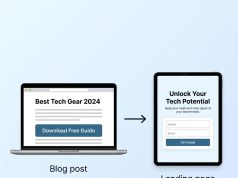
Affiliate landing page optimization is the process of refining your landing pages to convert more visitors into buyers or leads. From page speed and mobile design to compelling CTAs and trust signals, every element affects your conversion rate—and ultimately, your affiliate income.
Affiliate marketing is a performance-driven game. You can have the best offer, a generous commission structure, and a steady stream of traffic—but if your landing page fails to convert, none of it matters. That’s where affiliate landing page optimization becomes the difference between a campaign that breaks even and one that scales.
This guide covers everything you need to build, test, and refine high-converting affiliate landing pages. Whether you’re just getting started or looking to improve an existing campaign, you’ll find practical strategies for every stage of the process—from understanding your audience to implementing advanced personalization techniques.
By the end, you’ll have a clear framework for turning clicks into conversions, boosting your passive income with affiliate marketing, and building a sustainable long-term affiliate business.
What Is an Affiliate Landing Page?
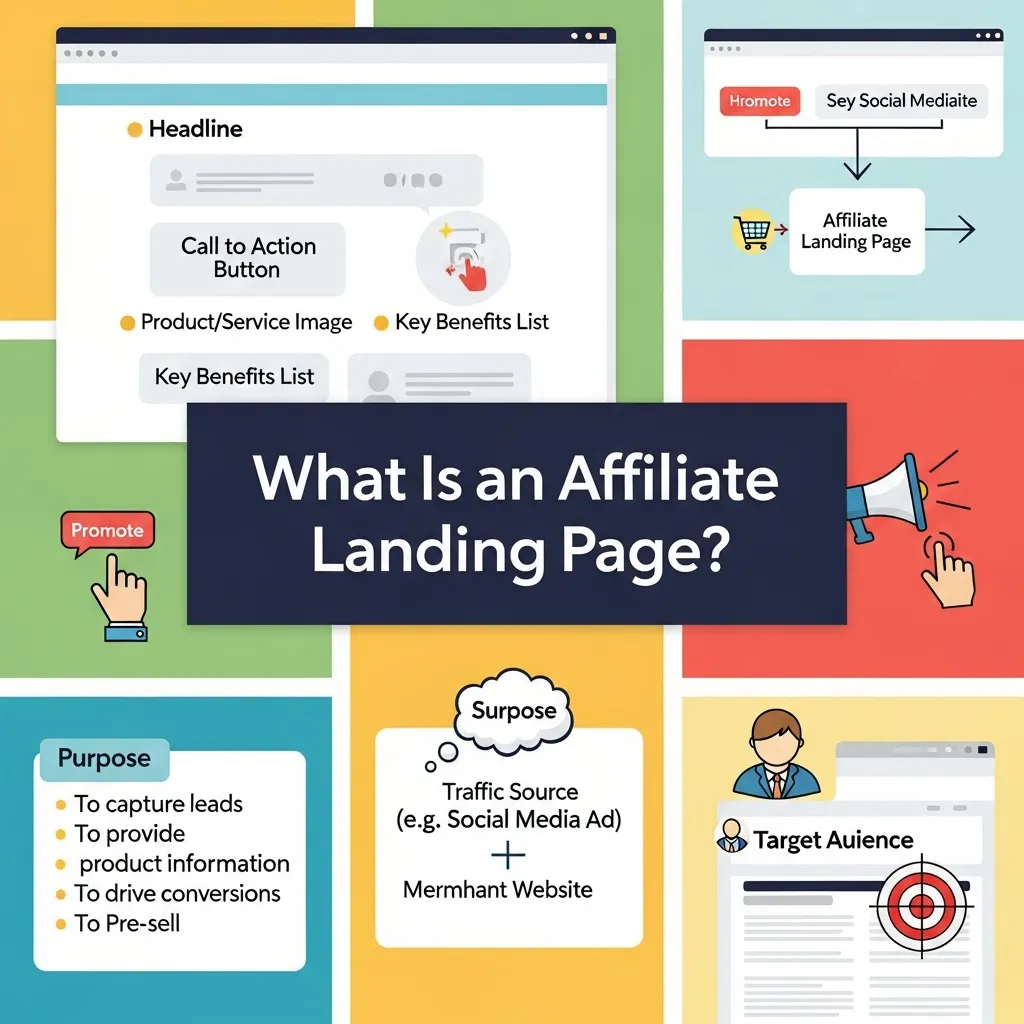
An affiliate landing page is a standalone web page designed with a single goal: to move a visitor toward a specific action. That action might be clicking through to an offer, submitting an email address, or making a purchase. Unlike a general website, a landing page removes distractions and focuses entirely on conversion.
In affiliate marketing, landing pages serve as the bridge between your traffic source (an ad, a blog post, a social media link) and the merchant’s offer. A well-optimized page pre-sells the visitor, builds trust, and delivers them to the offer in a buying mindset.
Why Optimization Is Crucial for Affiliate Marketing Success
A small improvement in conversion rate can have an outsized impact on revenue. If your page converts at 2% and you improve it to 4%, you’ve doubled your earnings without spending an extra dollar on traffic. This is the core logic behind affiliate landing page optimization—maximizing the return on every visitor.
Optimization also matters because traffic costs money, whether you’re paying for ads or investing time in content creation. Every unoptimized element is essentially wasted spend.
The Role of Landing Page Conversion Ads in Affiliate Strategies
Landing page conversion ads—paid campaigns on platforms like Google, Meta, or TikTok designed to drive traffic to a landing page—work best when the page and the ad are tightly aligned. The message, visuals, and offer in the ad should match exactly what the visitor sees when they land. This alignment, known as message match, reduces bounce rates and improves Quality Scores on paid platforms, which can lower your cost per click.
Understanding Your Audience and Niche
How Do You Identify Your Target Demographics for Affiliate Marketing?
Effective affiliate landing page optimization starts before you write a single word. You need to know who you’re talking to—their age, income level, pain points, goals, and where they spend their time online.
Use tools like Google Analytics, Meta Audience Insights, and niche forums to build a clear picture of your audience. Look at competitor landing pages, read product reviews, and pay attention to the language your audience uses to describe their problems.
Tailoring Content for Specific Audiences
Once you understand your audience, tailor every element of your landing page to them. The headline should speak directly to their primary pain point. The body copy should use the vocabulary they use. The visuals should reflect their world.
A landing page for a weight-loss supplement targeting women over 50 will look and sound very different from one targeting college athletes—even if the product is the same.
The Connection to a High Ticket Affiliate Marketing Guide
High ticket affiliate marketing—promoting products with commissions of $500 or more per sale—requires a more sophisticated approach to landing page optimization. The stakes are higher, the buying decision takes longer, and trust becomes the central conversion driver. A strong high ticket affiliate marketing guide will emphasize multi-step funnels, longer-form copy, and robust social proof. These principles apply to your landing pages too.
Key Elements of a High-Converting Affiliate Landing Page
What Makes a Compelling Headline for an Affiliate Landing Page?
Your headline is the first thing a visitor reads. It has one job: keep them on the page. The most effective headlines are specific, benefit-driven, and immediately relevant to why the visitor clicked.
Compare “Discover the Power of Keto” with “Lose 15 Pounds in 30 Days Without Giving Up Carbs.” The second version is specific, credible, and speaks directly to a desire. That specificity is what drives engagement.
Engaging Visuals and Media
Visuals process faster than text. A hero image or video that immediately shows the product in use—or the result it delivers—can do more in two seconds than three paragraphs of copy. Use high-quality images that are relevant to the offer, and consider adding a short explainer video above the fold. Pages with video have been shown to increase conversion rates significantly compared to static pages.
Clear and Concise Copywriting
Affiliate landing page optimization depends heavily on copy quality. Keep sentences short. Use bullet points to break up dense information. Write in the second person (“you”) to keep the reader engaged. Every sentence should serve the conversion goal—if it doesn’t, cut it.
Avoid technical jargon unless your audience specifically responds to it. Aim for a Flesch reading-ease score of 60 or higher to ensure maximum readability.
Strategic Call-to-Actions (CTAs)
Your CTA is where the conversion happens. Make it visually prominent, specific, and action-oriented. “Get My Free Trial” outperforms “Submit” every time. Test CTA placement above the fold, at the midpoint, and at the bottom of the page. Many high-performing pages include multiple CTAs that use slightly different phrasing to capture visitors at different stages of engagement.
Technical Aspects of Optimization
How Does Page Load Speed Affect Affiliate Landing Page Optimization?
Page speed is a conversion variable, not just a technical one. According to Google, the probability of a bounce increases by 32% as page load time goes from 1 second to 3 seconds. For affiliate landing pages running paid traffic, every second of delay is money lost.
Compress images, use a fast hosting provider, enable browser caching, and minimize third-party scripts. Tools like Google PageSpeed Insights and GTmetrix will show you exactly where your page is losing speed.
Mobile responsiveness is equally non-negotiable. More than 60% of web traffic now comes from mobile devices. A landing page that looks great on desktop but breaks on a smartphone is leaving the majority of potential conversions on the table.
A/B Testing Strategies for Continuous Improvement
A/B testing is the engine of affiliate landing page optimization. It removes guesswork by letting data decide what works. Test one variable at a time—headline, CTA color, hero image, lead form length—and run each test until you reach statistical significance.
Tools like Google Optimize, VWO, and Optimizely make it straightforward to set up and monitor split tests. Over time, incremental improvements compound into significant conversion gains.
Tracking and Analytics: Measuring Success
You can’t optimize what you don’t measure. Set up conversion tracking using Google Analytics 4 or a dedicated affiliate tracking platform like Voluum or ClickMagick. Track key metrics including conversion rate, bounce rate, time on page, scroll depth, and cost per conversion.
Review your data weekly. Look for patterns—pages where visitors drop off, traffic sources that convert at different rates, and devices that underperform. Each data point is an optimization opportunity.
Content Optimization for Search Engines and AI Visibility
How Should You Use Keywords in Affiliate Landing Page Optimization?
Keyword integration in affiliate landing page optimization should feel natural, not forced. Use your primary keyword—affiliate landing page optimization—in the headline, the first paragraph, and at least one subheading. Distribute it throughout the content at a density that supports SEO without disrupting readability.
Relevant keywords like landing page conversion ads, passive income with affiliate marketing, and high ticket affiliate marketing guide should appear contextually—woven into sections where they genuinely add value.
Structuring Content for Readability and AI Understanding
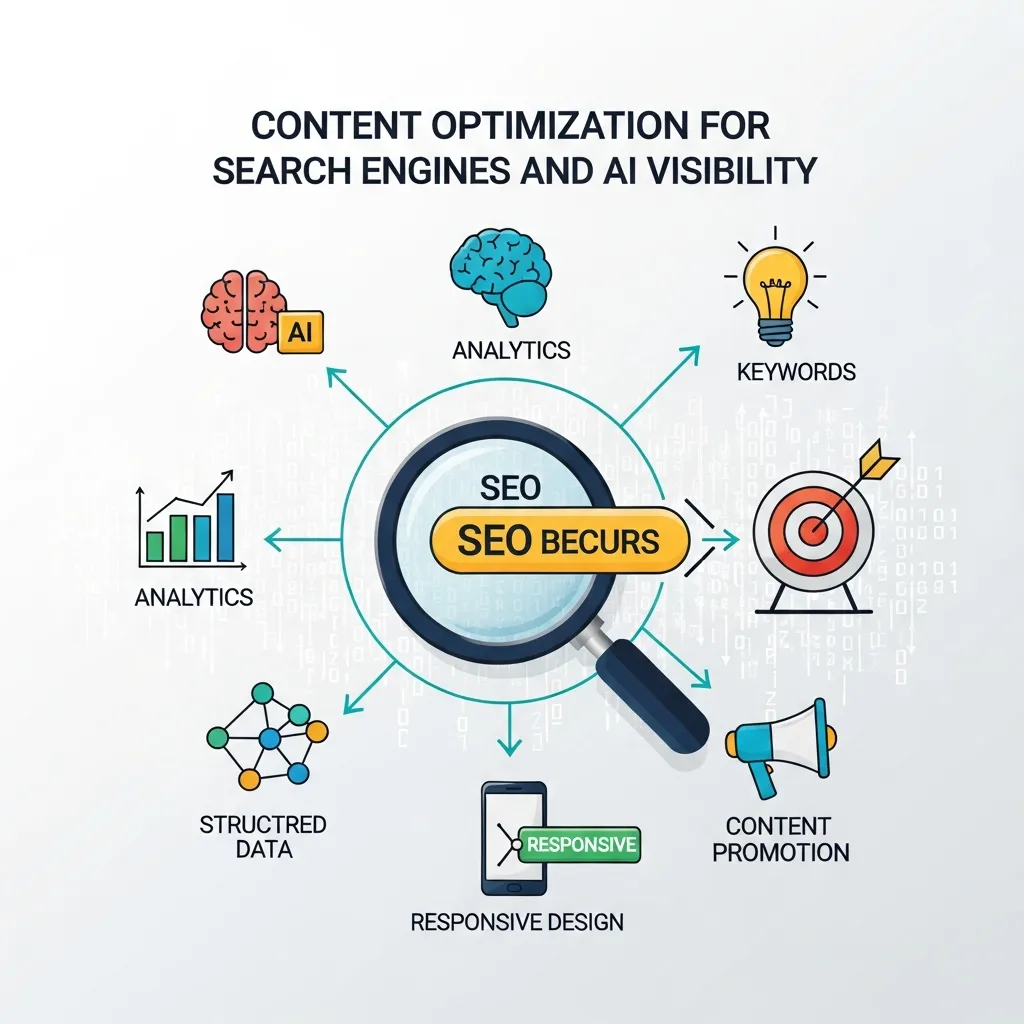
AI-powered search tools—like Google’s AI Overviews, ChatGPT, and Perplexity—increasingly surface answers from well-structured content. Use clear H2 and H3 headings phrased as questions or specific statements. Write answer-first paragraphs where the key point appears in the first sentence. Keep paragraphs short and focused.
This structure helps both human readers and AI systems extract accurate, useful information from your content—improving your visibility across traditional and AI-driven search.
Building Trust and Credibility
How Do Customer Testimonials and Social Proof Improve Conversions?
Visitors arriving at an affiliate landing page have no prior relationship with you. Trust is earned quickly or not at all. Customer testimonials, star ratings, review counts, and case studies provide the social proof that reassures uncertain visitors.
Use real, specific testimonials that mention outcomes (“I made $1,200 in my first month” is more credible than “This program is great”). Video testimonials are even more persuasive. Position social proof near your CTA so it’s visible at the moment of decision.
Transparency and Disclosure in Affiliate Marketing
The Federal Trade Commission (FTC) requires affiliates to clearly disclose when they receive compensation for promoting products. This isn’t just a legal requirement—it’s a trust signal. Visitors who see a clear disclosure and choose to stay are more qualified and more likely to convert.
Ethical affiliate marketing practices build long-term audience trust, reduce refund rates, and protect your business from regulatory risk.
Advanced Strategies for Affiliate Landing Page Optimization
What Is Personalization in Affiliate Landing Page Optimization?
Dynamic content personalization tailors the landing page experience based on the visitor’s source, location, device, or behavior. For example, if a visitor arrives from a Facebook ad targeting dog owners, the headline and imagery can automatically reflect that context.
Platforms like Unbounce and Instapage offer dynamic text replacement that can align your landing page copy with the specific ad or keyword that drove the click—boosting message match and conversion rates simultaneously.
Retargeting and Follow-Up Campaigns
Most visitors won’t convert on their first visit. Retargeting campaigns—ads served to people who previously visited your landing page—bring warm traffic back at a fraction of the cost of cold acquisition. Pair retargeting with email follow-up sequences for leads who opted in but didn’t purchase.
Leveraging Video Content for Higher Engagement
Video is one of the highest-leverage tools in affiliate landing page optimization. An explainer video that walks a visitor through the product’s benefits, addresses common objections, and ends with a clear CTA can dramatically increase time on page and conversion rate. Keep videos under three minutes and include captions for viewers who watch without sound.
Common Mistakes to Avoid
What Are the Most Common Pitfalls in Affiliate Landing Page Optimization?
Over-optimization and keyword stuffing make copy feel unnatural and can trigger search engine penalties. Write for your reader first; optimize for search engines second.
Ignoring mobile users is a critical error. Test every landing page on multiple devices before launching, and prioritize mobile layout decisions given the volume of mobile traffic.
Poor user experience (UX) includes slow load times, confusing navigation, overwhelming content, and unclear CTAs. Every friction point reduces conversions. Audit your pages regularly from a fresh perspective—or better yet, watch real users interact with them through tools like Hotjar.
Monetization and Income: Affiliate Marketing Income Examples
How Do Different Commission Structures Affect Your Earnings?
Commission structures vary widely across affiliate programs. Pay-per-sale programs offer a percentage or flat fee for each completed purchase. Pay-per-lead programs pay for email signups or form completions. Recurring commission programs—common in SaaS—pay every month a referred customer remains subscribed.
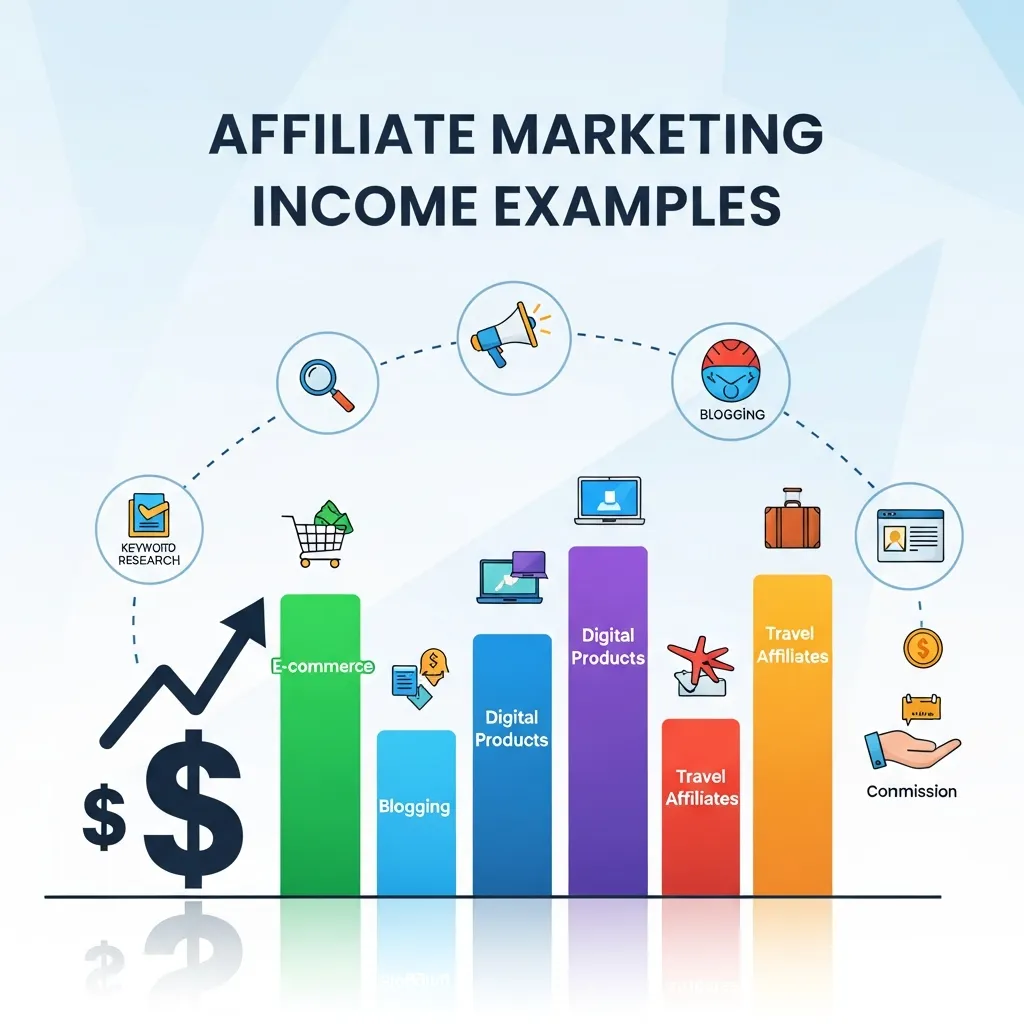
Affiliate marketing income examples range from a beginner earning $300–$500 per month through a single content blog to advanced affiliates generating $50,000+ monthly through paid traffic campaigns and high-ticket offers.
Scaling Your Affiliate Business
Once a landing page and offer combination is proven—consistent positive ROI over a statistically significant volume of traffic—scale by increasing your ad budget, expanding to new traffic sources, and building additional landing page variants targeting different audience segments.
The Potential for Passive Income with Affiliate Marketing
The appeal of passive income with affiliate marketing lies in the compounding nature of optimized systems. A well-built landing page, paired with evergreen traffic (organic search, email lists, or retargeted audiences), can generate revenue continuously with minimal ongoing input. Reaching this stage requires upfront investment in optimization—but the long-term payoff is substantial.
Conclusion
Affiliate landing page optimization is one of the highest-return activities in digital marketing. The principles are straightforward: know your audience, build pages that speak directly to them, remove friction, establish trust, and let data guide every decision.
The strategies covered in this guide—from A/B testing and mobile optimization to personalization, video content, and ethical disclosure practices—apply whether you’re promoting low-ticket products or following a high ticket affiliate marketing guide to build a premium income stream.
Start with one page, one test, one improvement at a time. Consistent, incremental optimization is how affiliate marketers build pages that generate passive income with affiliate marketing for months and years to come.
Frequently Asked Questions
What is the primary goal of affiliate landing page optimization?
The primary goal of affiliate landing page optimization is to increase the percentage of visitors who take a desired action—clicking through to an offer, submitting a lead form, or making a purchase. Higher conversion rates mean more revenue from the same volume of traffic.
How do landing page conversion ads contribute to affiliate success?
Landing page conversion ads drive targeted traffic to your affiliate landing page from paid platforms like Google or Meta. When the ad message matches the landing page content precisely, visitors arrive primed to convert, which improves both conversion rates and ad performance metrics like Quality Score.
What are the most important elements of a high-converting landing page?
The most important elements are a benefit-driven headline, clear and concise copy, engaging visuals, strong social proof, and a specific call-to-action. Each element must work together to guide the visitor toward the conversion goal without distraction.
Why is mobile responsiveness crucial for affiliate landing pages?
More than 60% of web traffic comes from mobile devices. A landing page that isn’t optimized for mobile delivers a poor user experience, increases bounce rates, and loses a significant portion of potential conversions—directly reducing affiliate revenue.
How can A/B testing improve my affiliate landing page optimization efforts?
A/B testing removes guesswork by letting you compare two versions of a page element—headline, CTA, image—and measure which performs better. Over time, consistent testing compounds small gains into meaningful conversion rate improvements.
What role does content play in affiliate landing page optimization for SEO and AI?
Well-structured, keyword-rich content helps landing pages rank in traditional search results and surface in AI-generated answers. Clear headings, answer-first paragraphs, and naturally integrated keywords like affiliate landing page optimization signal relevance to both search engines and AI systems.
How can I build trust with visitors on my affiliate landing page?
Use specific customer testimonials, display trust badges, include FTC-compliant affiliate disclosures, and ensure your page looks professional and loads quickly. Trust is built through transparency, credibility signals, and a polished user experience.
What are some common pitfalls to avoid in affiliate landing page optimization?
The most common mistakes include keyword stuffing, ignoring mobile users, slow page load speeds, weak or vague CTAs, and poor UX design. Each of these issues reduces conversions and wastes traffic investment.
Can affiliate landing page optimization really lead to passive income with affiliate marketing?
Yes. A well-optimized landing page, once established and paired with consistent traffic—whether paid or organic—can generate revenue continuously. Reaching a passive income level requires initial optimization work, but ongoing earnings can grow with minimal maintenance.
What are some realistic affiliate marketing income examples?
Affiliate marketing income examples vary widely by niche, traffic volume, and commission structure. Beginners typically earn $300–$1,000 per month. Intermediate affiliates with established traffic sources may earn $5,000–$20,000 per month. Advanced affiliates running scaled paid campaigns can exceed $50,000 monthly.
How does a high ticket affiliate marketing guide relate to landing page optimization?
High ticket affiliate marketing involves promoting products with large commissions, which means higher acquisition costs and longer decision cycles. A high ticket affiliate marketing guide will emphasize trust-building, detailed copy, and multi-step funnels—all of which require more sophisticated landing page optimization compared to low-ticket campaigns.
What tools are essential for effective affiliate landing page optimization?
Key tools include landing page builders (Unbounce, Instapage, or ClickFunnels), analytics platforms (Google Analytics 4), A/B testing tools (VWO, Google Optimize), affiliate tracking software (Voluum, ClickMagick), and page speed tools (Google PageSpeed Insights, GTmetrix).