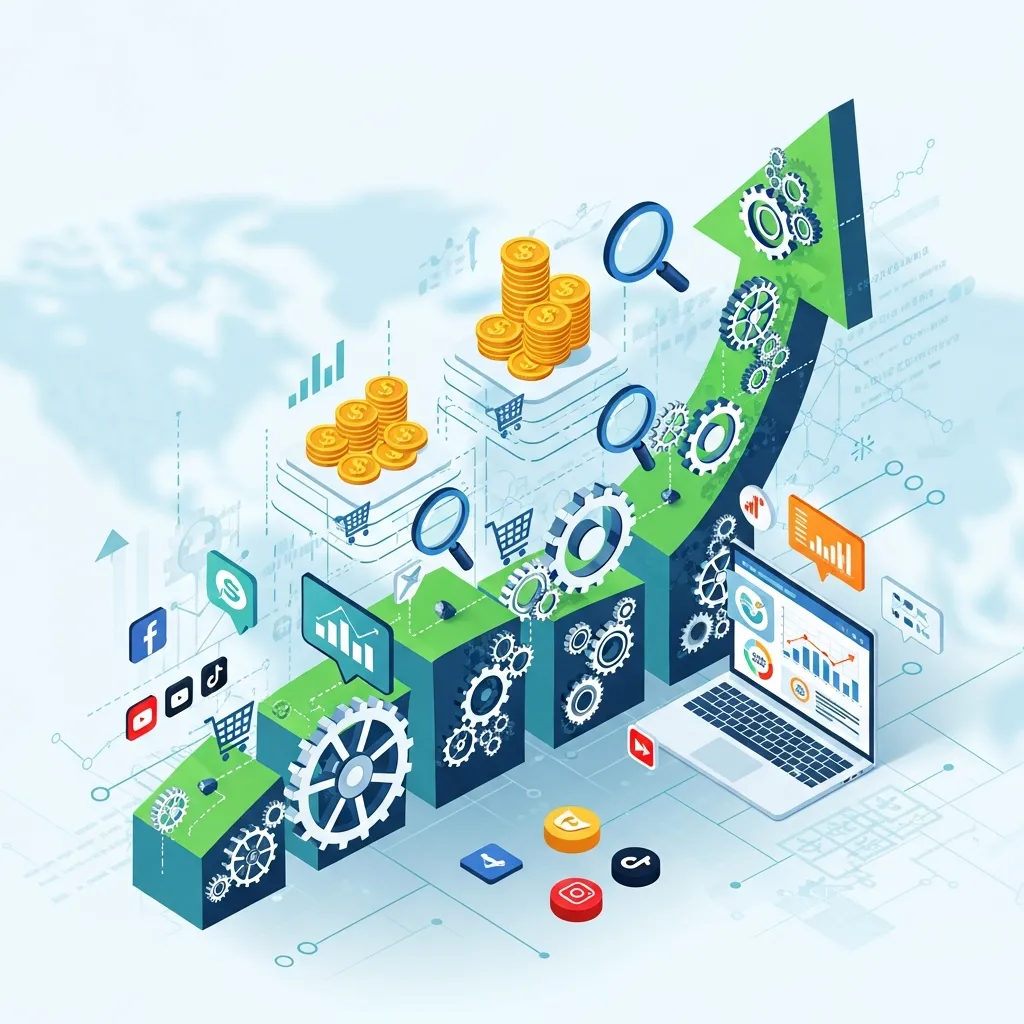
Automation in affiliate marketing is completely reshaping how marketers operate. By using software and tools to handle repetitive tasks, marketers can focus on high-level strategy and relationship building. Automation in affiliate marketing streamlines operations, boosts overall efficiency, and allows campaigns to run around the clock without constant human supervision. From scheduling social media posts to triggering personalized email sequences, this approach helps marketers scale their efforts faster and more reliably than manual methods. If you want to increase your revenue while working fewer hours, embracing automation in affiliate marketing is the clearest path forward.
The Evolution of Affiliate Marketing
Affiliate marketing has grown from a simple referral system into a massive global industry. Years ago, affiliates manually placed links on basic websites and hoped for the best. Tracking was unreliable, and managing multiple campaigns required endless hours of tedious work.
As the digital landscape expanded, the increasing need for efficiency and scalability became obvious. Marketers managing hundreds of links, multiple traffic sources, and growing email lists quickly realized that manual labor was a major bottleneck. There are only so many hours in a day to write content, analyze data, and optimize ads.
This pressing need introduced the concept of automation in affiliate marketing. Marketers started seeking ways to put their campaigns on autopilot. Technology stepped in to fill the gap, offering specialized software that could handle the heavy lifting. Now, automation in affiliate marketing is not just a luxury; it is a fundamental requirement for anyone serious about scaling their business and competing at a high level.
Understanding Automation in Affiliate Marketing
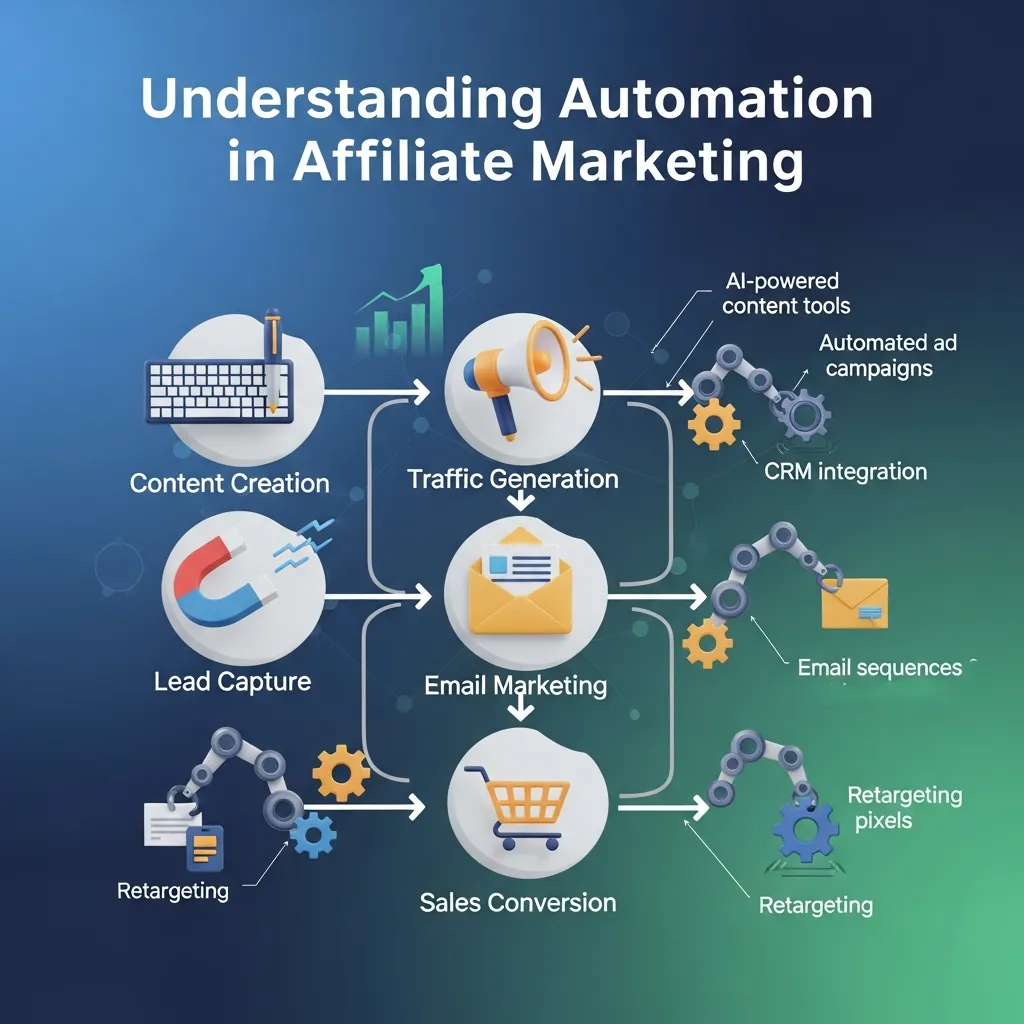
What exactly is automation in this context? Automation in affiliate marketing refers to the use of software, artificial intelligence, and digital tools to execute marketing tasks automatically. Instead of clicking every button yourself, you set up rules, workflows, and triggers that allow systems to do the work for you.
There are several key areas where automation can be applied. You can automate how you capture leads, how you communicate with your audience, how you track sales, and even how you generate content.
This represents a massive shift from manual tasks to automated workflows. Marketers no longer need to wake up at 3 AM to send an email to a different time zone. They do not have to manually calculate their return on investment at the end of every week. Automation in affiliate marketing handles the repetitive actions so marketers can dedicate their mental energy to creative strategies and partnership development.
Core Components of Automation for Affiliates
To fully leverage automation in affiliate marketing, you must understand its core components. These distinct areas work together to build a well-oiled machine.
Automated Content Creation and Curation
Content is the fuel for any marketing campaign. Tools for generating blog posts, social media updates, and email content have become incredibly sophisticated. Marketers now use content curation tools to automatically discover and share relevant industry news with their audience. Furthermore, leveraging AI for content ideation and optimization helps affiliates overcome writer’s block. Artificial intelligence can suggest high-performing headlines, optimize articles for search engines, and even draft entire outlines, speeding up the production process immensely.
Traffic Generation Automation
Driving eyes to your offers is critical. Automated social media posting and scheduling allow you to maintain an active presence across multiple platforms without being glued to your phone. You can load a month’s worth of content into a scheduler and let it run.
PPC campaign automation is another powerful tool. Software can automatically adjust bids, rotate ads to fight ad fatigue, and pause underperforming campaigns to save your budget. SEO automation also plays a major role. Tools can automatically track keyword rankings, monitor backlinks, and alert you to technical site errors, keeping your organic traffic flowing smoothly.
Email Marketing Automation
Email remains one of the highest-converting channels. Through autoresponders, drip campaigns, and careful segmentation, affiliates can nurture leads on autopilot. When someone joins your list, they immediately receive a welcome sequence designed to build trust. As they interact with your emails, the system can automatically segment them based on their interests. This allows for personalization at scale, ensuring your subscribers only receive offers they actually care about.
Tracking and Analytics Automation
You cannot improve what you do not measure. Automated performance reports and dashboards give you a real-time view of your business. Instead of downloading spreadsheets from five different affiliate networks, automated dashboards pull all your data into one screen. This makes identifying trends and optimizing campaigns significantly easier. You can instantly see which traffic sources are profitable and which ones are draining your budget.
Lead Management and CRM Automation
Capturing, nurturing, and converting leads automatically is the ultimate goal. Integration with CRM (Customer Relationship Management) systems ensures no potential customer falls through the cracks. When a lead takes a specific action, the CRM can automatically score that lead, tag them, and trigger the next step in the sales funnel.
Advantages and Disadvantages of Affiliate Marketing
When evaluating your business strategy, you must look at the complete picture. The Advantages and Disadvantages of Affiliate Marketing become even more pronounced when you introduce automated systems.
Advantages:
Increased efficiency and productivity are the most immediate benefits of automation in affiliate marketing. Software works 24/7 without taking breaks. This leads directly to massive scalability and growth potential. You can manage ten times the volume of campaigns without needing to hire a massive team.
Automation also results in reduced human error. A machine will not forget to include your affiliate link in an email or accidentally delete a tracking code. Furthermore, you gain better data analysis and decision-making capabilities because the data is collected and organized flawlessly. Ultimately, this leads to significant cost savings in the long run, as software subscriptions are generally much cheaper than human payroll.
Disadvantages:
On the flip side, there are challenges. Initial setup complexity and cost can deter beginners. Building complex automated workflows takes time, technical skill, and an upfront financial investment. There is also a distinct risk of losing the “personal touch.” If your emails read like they were written by a robot, your audience will disengage.
Over-reliance on technology is another danger. If your automation tool goes offline or experiences a bug, your entire income stream could temporarily halt. Finally, automation is not a “set it and forget it” solution. There is a constant need for continuous monitoring and adjustment to ensure campaigns remain profitable and relevant.
Affiliate Marketing Models Enhanced by Automation
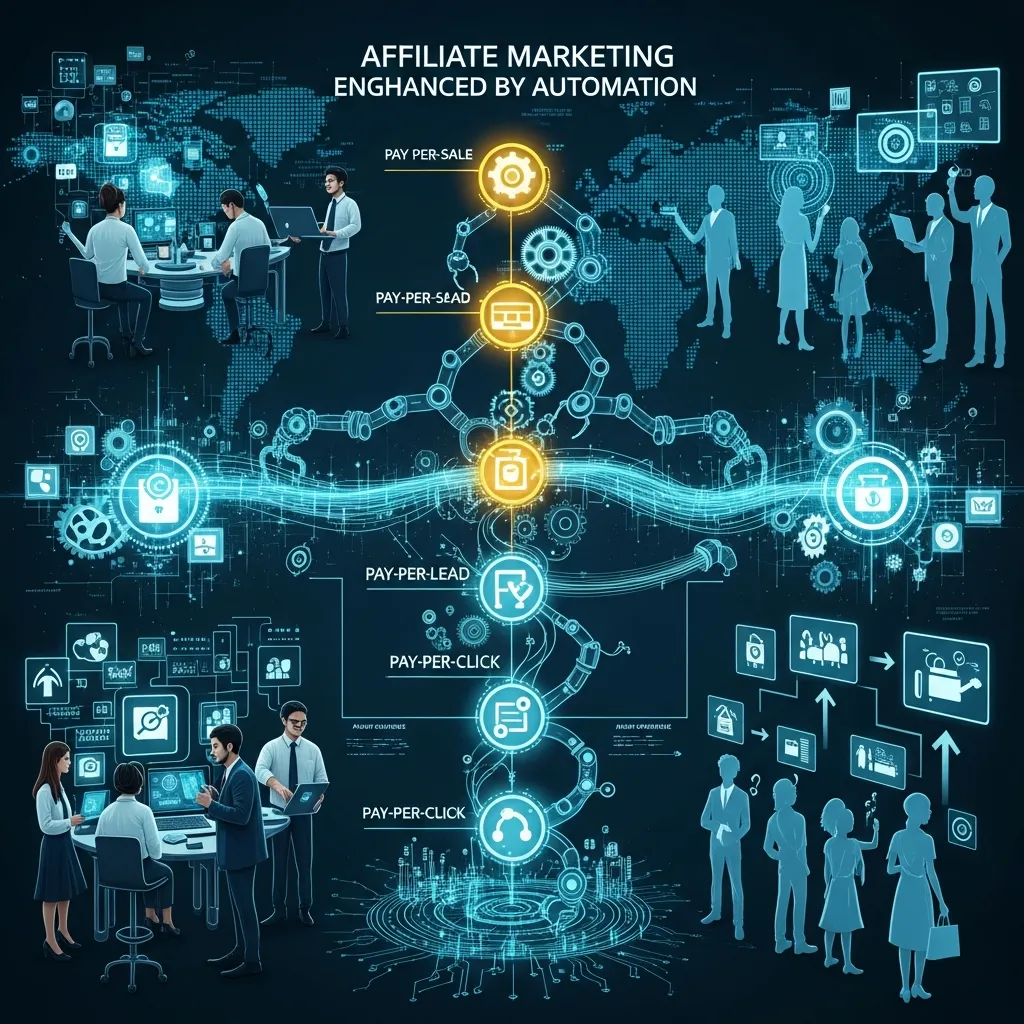
Different strategies benefit from technology in unique ways. Let us look at how specific Affiliate Marketing Models are enhanced by these tools.
Niche Websites and Blogs
For content creators, automation in affiliate marketing is a lifesaver. Automated content updates can keep older posts fresh. SEO tools can automatically crawl the site to find broken affiliate links and suggest internal linking opportunities, ensuring maximum visibility and user experience.
Email Marketing
This model relies heavily on automation. Affiliates use automated sequences to promote different products over a multi-week span. Segmentation tools automatically move buyers to a different list so they stop receiving promotional emails for a product they already purchased.
Social Media Marketing
Influencers and social media marketers use automated posting tools to hit optimal publishing times across the globe. Engagement tools can automatically reply to common questions or send a direct message containing an affiliate link when a follower comments a specific keyword.
PPC and Paid Ads
Media buyers running paid traffic rely on automated bidding rules. If an ad’s cost-per-acquisition gets too high, the system automatically pauses it. If a specific demographic is converting incredibly well, the system automatically allocates more budget to that audience.
Coupon and Deal Sites
Running a deal site manually is nearly impossible today. These Affiliate Marketing Models use automated deal aggregation software to scrape the internet for the latest discount codes, automatically updating their site without human intervention.
Tools and Technologies for Automation in Affiliate Marketing
Having the right software stack is crucial. There are countless popular tools for different automation aspects.
- Email Platforms: ActiveCampaign, ConvertKit, and GetResponse are leaders in creating complex, automated email workflows.
- Social Media Schedulers: Buffer, Hootsuite, and Later allow you to map out your social strategy months in advance.
- SEO Tools: Ahrefs and SEMrush offer automated site audits and rank tracking.
- Analytics Dashboards: Voluum and ClickMagick automatically track every click and conversion across all your active campaigns.
The discussion of AI and machine learning in current automation trends cannot be ignored. AI is now predicting consumer behavior, automatically generating ad creatives, and optimizing landing pages on the fly based on user interactions.
Implementing Automation: Best Practices and Strategies
Diving headfirst into automation in affiliate marketing without a plan is a recipe for disaster.
Start small and scale up. Do not try to automate your entire business in one weekend. Begin by automating your most repetitive task, such as social media posting or email welcome sequences. Once that runs smoothly, move on to the next task.
Define clear goals for automation. Are you trying to save time, increase conversion rates, or improve data accuracy? Knowing your goal helps you choose the right software.
Regularly review and optimize automated processes. Consumer habits change, and software updates frequently. Check your workflows monthly to ensure they are still functioning correctly.
Maintain a human element where necessary. Use automation to handle the heavy lifting, but use your actual voice to write the emails and engage with your community. People buy from people they trust.
Finally, keep data security and privacy considerations top of mind. Ensure your tools comply with regulations like GDPR, and protect your subscribers’ information rigorously.
Case Studies of Successful Automation in Affiliate Marketing
Many successful marketers rely heavily on automation in affiliate marketing to achieve massive numbers.
Consider a health and fitness blogger who integrated an automated email quiz on their homepage. Based on the user’s answers regarding their fitness goals, the CRM automatically assigned them a specific tag. The user then received a highly targeted, automated email sequence promoting the exact affiliate products they needed. This automated segmentation increased their conversion rate by over 40%.
Another example involves a media buyer running Facebook ads for software products. By implementing automated rules that instantly paused ads with a low click-through rate and scaled the budget on winning ads, they reduced their daily ad spend waste to near zero, doubling their overall profit margin while spending less time monitoring the account.
The Future of Automation in Affiliate Marketing

The landscape is always changing. Emerging technologies and trends point toward a landscape where AI handles almost all data analysis and split-testing automatically.
We will see increased personalization and AI integration. Future automation in affiliate marketing will likely involve hyper-personalized landing pages that automatically change their headlines, images, and copy based on the specific user’s browsing history and demographic data. Marketers who adopt these advanced automation tools early will dominate their respective niches.
Mastering Your Automated Strategy
Automation in affiliate marketing is the definitive key to scaling a profitable online business. By understanding the Core Components, studying different Affiliate Marketing Models, and carefully weighing the Advantages and Disadvantages of Affiliate Marketing, you can build a highly efficient revenue engine. Start integrating these tools today, optimize your workflows continuously, and watch as your business grows beyond what manual efforts could ever achieve.
12 Frequently Asked Questions
1. What is automation in affiliate marketing?
Automation in affiliate marketing involves using software and tools to perform repetitive marketing tasks automatically, such as sending emails, posting on social media, or tracking conversions, freeing up the marketer’s time.
2. Do I need technical skills to use automation in affiliate marketing?
While some complex setups require technical knowledge, most modern automation platforms feature user-friendly, drag-and-drop interfaces that are accessible to beginners.
3. Will automation make my marketing feel robotic?
It can if done poorly. The goal is to use automation to deliver the right message at the right time, while writing the actual content in your authentic, human voice.
4. How much does it cost to automate my affiliate campaigns?
Costs vary widely. Some basic scheduling and email tools are free or under $20 a month, while enterprise-level tracking and CRM software can cost hundreds of dollars monthly.
5. What is the most important part of automation in affiliate marketing?
Email marketing automation is often considered the most crucial, as it allows you to build a relationship with leads and pitch products on autopilot over a long period.
6. Can automation help with SEO for my affiliate site?
Yes. SEO automation tools can continuously monitor your site for broken links, track keyword ranking changes, and analyze competitor backlinks without manual checking.
7. Are there risks involved with automation in affiliate marketing?
The main risks include software glitches that might stop your campaigns, over-reliance on technology, and the potential to alienate your audience if your automated messaging feels too generic.
8. How does automation improve paid affiliate advertising?
Tools can automatically adjust your bids based on performance, pause ads that are losing money, and allocate more budget to ads that are generating high affiliate commissions.
9. Can I automate content creation completely?
While AI tools can generate articles and social media posts, it is highly recommended that a human reviews and edits the content to ensure accuracy, tone, and quality before publishing.
10. What are the best tools for automation in affiliate marketing?
Popular choices include ActiveCampaign for email, Voluum for tracking, Hootsuite for social media, and Zapier for connecting different apps together.
11. Does automation work for all Affiliate Marketing Models?
Yes, whether you run a blog, a YouTube channel, an email newsletter, or a coupon site, there are specific automation tools designed to optimize and scale your specific model.
12. How do I start using automation in affiliate marketing?
Identify the most time-consuming task you do daily or weekly. Find a software tool designed to handle that specific task, set it up, and gradually add more automation as you become comfortable.