Cost per action (CPA) affiliate marketing is a performance-based advertising model where publishers are paid for specific user actions, such as submitting an email address or downloading an app. This guide explains how cost per action (CPA) works, why it is highly effective for both merchants and affiliates, and how it fits into the broader landscape of different Types of Affiliate Marketing. Read on to learn best practices, key metrics, and the answers to the most frequently asked questions about cost per action (CPA).
If you want to maximize your marketing budget or earn a reliable income online, understanding cost per action (CPA) is essential. Unlike traditional advertising where you pay for clicks or impressions with no guarantee of a result, cost per action (CPA) ensures that advertisers only pay when a specific, predefined action occurs. This performance-based approach provides a safety net for merchants and a highly lucrative opportunity for affiliates who know how to drive targeted traffic.
Digital marketing relies heavily on measurable results. Cost per action (CPA) directly aligns the goals of the advertiser with the efforts of the affiliate. Merchants secure actual leads or customers, while affiliates earn commissions based on their ability to generate these concrete results. This mutual alignment makes cost per action (CPA) one of the most sustainable and scalable marketing channels available.
What is Cost Per Action (CPA) Affiliate Marketing?
Definition and Core Concept
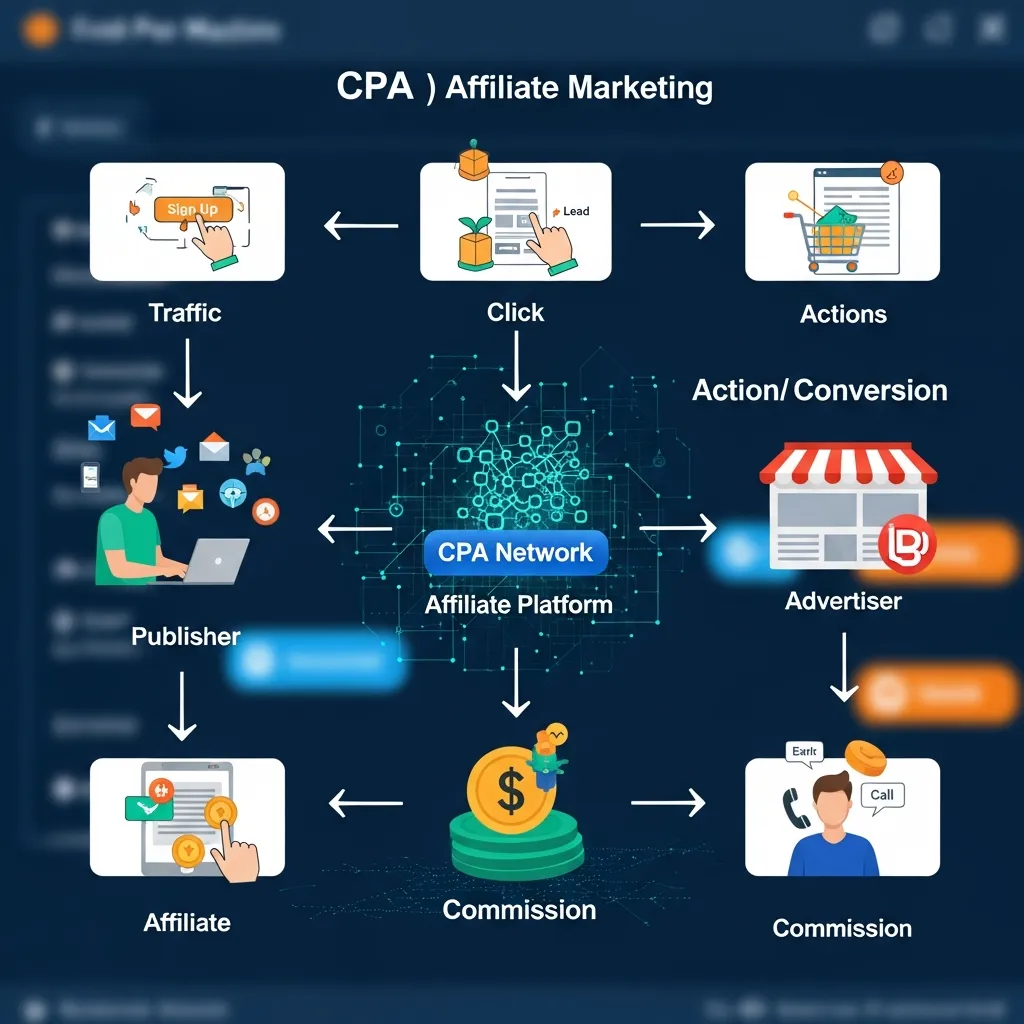
Cost per action (CPA) is an affiliate marketing model where an advertiser pays an affiliate a specific commission when a user completes a required action. The action can be anything from filling out a lead form, signing up for a free trial, downloading software, or making a purchase. Because the payout is tied directly to a specific action, cost per action (CPA) is incredibly attractive to businesses focused on lead generation and customer acquisition.
How CPA Differs from Other Affiliate Models
To understand cost per action (CPA), you need to know how it contrasts with other models:
- Cost Per Click (CPC): The advertiser pays every time a user clicks an ad, regardless of what the user does next.
- Cost Per Sale (CPS): The advertiser only pays if the user actually buys a product.
Cost per action (CPA) sits comfortably in the middle. The action does not always have to be a direct purchase, which makes it easier for affiliates to convert traffic compared to the strict requirements of CPS.
Key Players in CPA
The cost per action (CPA) ecosystem consists of three main participants:
- The Affiliate (Publisher): The person or company promoting the offer and driving traffic.
- The Merchant (Advertiser): The business that creates the offer and pays for the completed actions.
- The CPA Network: The platform that connects affiliates with merchants, handles the tracking, and processes payments.
Why Choose CPA Affiliate Marketing?
Benefits for Affiliates
Lower Risk
Affiliates often find cost per action (CPA) less risky because they do not have to convince a user to open their wallet. Convincing someone to enter an email address for a free sample is significantly easier than persuading them to buy a $100 product.
Higher Earning Potential
Because merchants highly value qualified leads, cost per action (CPA) payouts can be substantial. Depending on the niche, a single completed action can pay anywhere from $1 to over $100.
Flexibility
Cost per action (CPA) offers massive flexibility. Affiliates can run campaigns across social media, search engines, native ads, or email lists. You are not locked into one specific traffic source.
Benefits for Merchants
Performance-Based Payment
Merchants love cost per action (CPA) because they only pay for actual results. If an affiliate drives a thousand clicks but no one fills out the lead form, the merchant pays nothing.
Scalability
Once a merchant identifies a cost per action (CPA) offer that converts profitably, they can easily scale the campaign by recruiting more affiliates through the CPA network.
Brand Exposure
Even if users do not complete the required action immediately, the merchant still receives free brand exposure from the affiliate’s marketing efforts.
How CPA Affiliate Marketing Works
Step-by-Step Process
The mechanics of a cost per action (CPA) campaign follow a logical flow:
- The affiliate joins a CPA network and selects a relevant offer.
- The network provides a unique tracking link.
- The affiliate promotes this link using their chosen traffic source.
- A user clicks the link and lands on the merchant’s page.
- The user completes the specified action.
- The network’s tracking software registers the action.
- The affiliate receives their commission.
Tracking and Attribution Models
Accurate tracking is the backbone of cost per action (CPA). Networks use tracking pixels, cookies, and server-to-server (postback) tracking to ensure every action is credited to the correct affiliate. Postback tracking is particularly reliable because it relies on direct server communication rather than vulnerable browser cookies.
Common “Actions” in CPA
A cost per action (CPA) offer can require various user behaviors:
- Email or zip code submits
- Account registrations
- Software or app installations
- Free trial sign-ups
- Booking an appointment
Types of Affiliate Marketing
When analyzing the different Types of Affiliate Marketing, cost per action (CPA) occupies a unique and powerful position. There are several Types of Affiliate Marketing, including unattached, related, and involved affiliate marketing.
Unattached marketing usually involves basic pay-per-click ads where the affiliate has no authority in the niche. Involved marketing requires deep trust and product reviews. Cost per action (CPA) often functions as related marketing. Affiliates might have some presence in a niche (like a personal finance blog) and promote relevant CPA offers (like credit score checks).
Exploring different niches helps you determine their suitability for (CPA). Finance, dating, gaming, and health are highly lucrative for (CPA) because the target audiences have specific, urgent problems that free trials or app downloads can immediately solve. Understanding the different Types of Affiliate Marketing ensures you pick the right model for your audience.
Key Metrics and KPIs in CPA
Conversion Rate
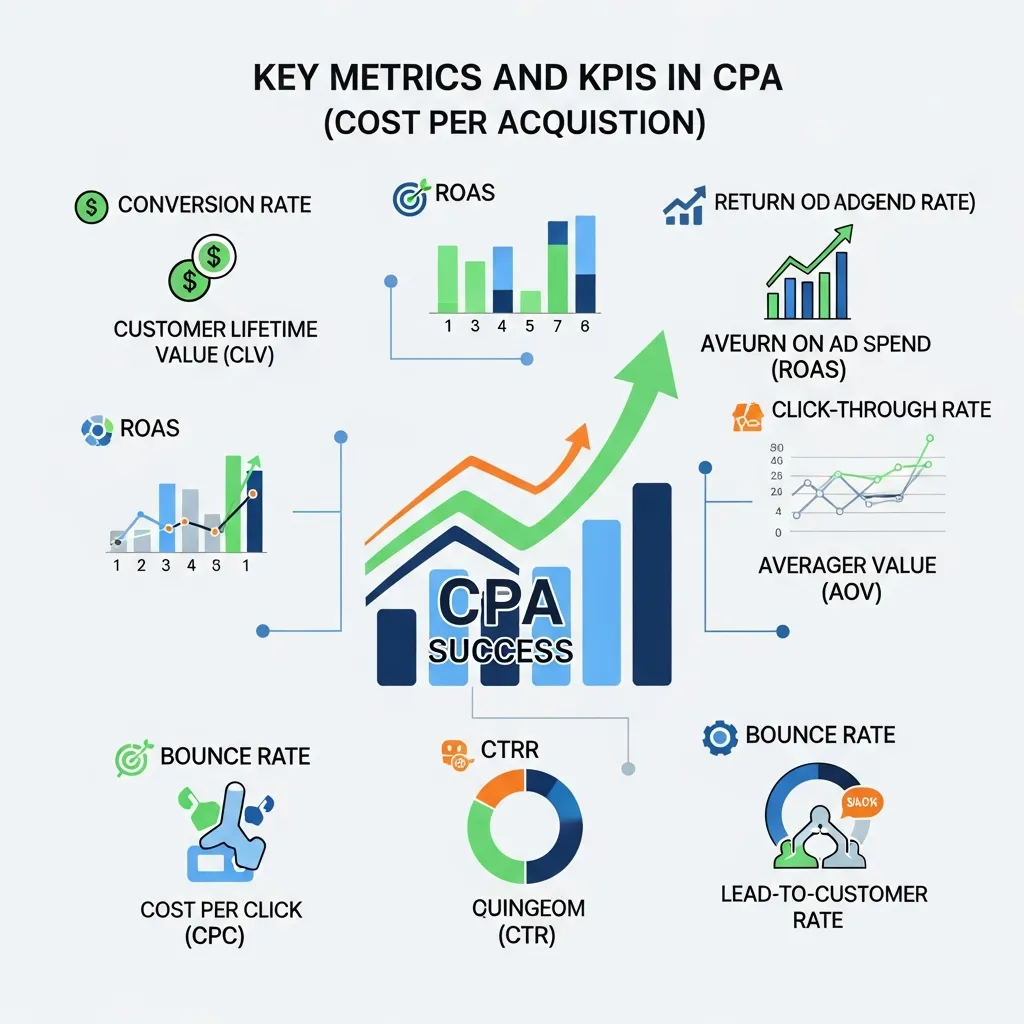
The conversion rate measures the percentage of visitors who complete the required action after clicking your tracking link. A higher conversion rate means your traffic is highly targeted and the landing page is effective.
Earnings Per Click (EPC)
EPC reveals how much money you earn on average for every click you send to an offer. If you earn a $10 commission for every 100 clicks, your EPC is $0.10. Affiliates use EPC to compare the profitability of different (CPA) offers.
Return on Ad Spend (ROAS)
If you use paid traffic to promote a (CPA) offer, ROAS is your most critical metric. It calculates the revenue generated for every dollar spent on advertising. Positive ROAS means your campaign is profitable.
Best Practices for CPA Affiliates
Choosing the Right Niche and Offers
Focus on niches you understand. If you know the gaming industry, promote gaming (CPA) offers. Always test multiple offers to see which one converts best with your specific audience.
Effective Traffic Generation Strategies
Your traffic source determines your success. Search Engine Optimization (SEO) provides high-quality, free traffic over time. Pay-Per-Click (PPC) offers immediate scale but requires a budget. Social media traffic works exceptionally well for lifestyle, health, and sweepstakes cost per action (CPA) offers.
Landing Page Optimization
Sending traffic directly to a merchant’s offer can result in low conversions. Savvy affiliates use pre-sale or landing pages to warm up the visitor. Ensure your landing page loads fast, features a clear call-to-action, and matches the visual style of the merchant’s offer page.
A/B Testing and Analytics
Never guess what works. Test different headlines, images, and traffic sources. Use tracking software like Voluum or BeMob to monitor which variables produce the highest conversion rates and optimize accordingly.
Best Practices for Merchants Running CPA Campaigns
Setting Up Attractive Offers
To attract top affiliates, your (CPA) payout must be competitive. Calculate your maximum customer acquisition cost and set a payout that leaves room for affiliate profit while keeping your business profitable.
Partnering with Reliable Affiliates and Networks
Not all networks are equal. Choose reputable (CPA) networks like MaxBounty or Perform[cb] that actively police fraud and provide high-quality affiliates.
Providing Effective Tracking and Support
Affiliates need to know their traffic is tracking correctly. Provide accurate real-time reporting, varied creative assets (banners, email copy), and a dedicated affiliate manager to answer questions.
Challenges and Risks in CPA Affiliate Marketing
Fraud and Compliance Issues
Because (CPA) pays for actions like email submits, bad actors sometimes use bots to fill out forms. Merchants must implement fraud detection software, and affiliates must ensure their promotional methods comply with network rules to avoid being banned.
Competition
Profitable (CPA) offers attract intense competition. You will often bid against seasoned affiliates for ad space. Success requires finding unique angles and less saturated traffic sources.
Volatility of Offers
A highly profitable (CPA) offer can be paused by the merchant without warning. Always have backup offers ready so your traffic does not go to a dead link.
The Future of CPA Affiliate Marketing
Trends and Predictions
The future of cost per action (CPA) points toward stricter data privacy regulations. As third-party cookies disappear, server-to-server tracking will become the absolute standard. Advertisers will also demand higher-quality actions, shifting slightly away from simple email submits toward actions that show stronger buying intent.
Impact of AI and Automation
Artificial intelligence is changing how affiliates optimize campaigns. AI tools now write ad copy, design landing pages, and automatically adjust bidding strategies for paid traffic, allowing cost per action (CPA) marketers to test hundreds of variables in minutes rather than weeks.
Unlocking Growth with Cost Per Action Marketing

Cost per action (CPA) is an incredibly dynamic marketing model. It protects merchants from wasted ad spend by guaranteeing specific results and offers affiliates a highly lucrative way to monetize traffic without forcing hard sales.
Whether you are a business looking to scale your lead generation or an entrepreneur aiming to build a profitable digital income, the cost per action (CPA) model provides the framework you need. Start by researching top networks, choose a niche that aligns with your expertise, and commit to testing your campaigns rigorously. The opportunity within the cost per action (CPA) landscape is vast for those willing to learn the mechanics of targeted traffic and conversion optimization.
Frequently Asked Questions (FAQs)
1. What is cost per action (CPA)?
Cost per action (CPA) is an online advertising model where advertisers pay affiliates only when a user completes a specific action, such as signing up for a newsletter, downloading an app, or submitting a form.
2. How do I start with CPA affiliate marketing?
To get started, choose a niche you understand, create a website or landing page, and apply to trusted CPA networks. After approval, select an offer, get your tracking link, and begin driving targeted traffic to it.
3. Is CPA affiliate marketing profitable?
Yes, this model can be highly profitable. Since users often don’t need to spend money to complete an action, conversion rates tend to be higher compared to traditional sales-based models.
4. What are common CPA actions?
Typical actions include filling out lead forms, signing up for a website, downloading apps, starting free trials, or requesting quotes for services like insurance.
5. What is the difference between CPA and CPS?
In CPA, affiliates earn a commission when a user completes a specific action. In contrast, Cost Per Sale (CPS) requires a completed purchase before any commission is paid.
6. How do CPA networks work?
CPA networks act as intermediaries between advertisers and affiliates. They host offers, provide tracking links, monitor traffic quality, handle payments, and ensure smooth transactions between both parties.
7. What are the best CPA networks for beginners?
Beginner-friendly platforms include MaxBounty, CPALead, and MyLead. These networks offer user-friendly dashboards, helpful resources, and easier approval processes.
8. How can I avoid CPA fraud?
To avoid fraud, always use legitimate traffic sources, avoid bots, and follow the rules of each offer. Advertisers typically use advanced tracking systems to detect suspicious activity, so maintaining transparency is essential.
9. What kind of traffic works best?
Targeted traffic performs best. Search traffic (SEO and ads) provides high intent, while social media platforms are effective for lifestyle offers. Native ads also work well for niches like health and finance.
10. Can I do CPA without a website?
Yes, it’s possible. You can use direct linking (if allowed), promote offers through social media, or use landing page builders to create simple pre-sale pages.
11. How often are commissions paid?
Payment schedules vary by network. Most start with Net-30 terms, but as you build trust and generate consistent results, you may qualify for weekly or bi-weekly payouts.
12. What are the legal considerations?
You must follow advertising regulations, including guidelines from the Federal Trade Commission. This includes disclosing affiliate relationships and complying with privacy laws like GDPR and CCPA, while avoiding misleading claims.