This guide explores the cost per lead (CPL) affiliate marketing meaning in detail. We cover how the CPL model functions, the benefits for both advertisers and affiliates, and the different types of leads you will encounter. You will also learn how to set up a campaign, measure performance, and see how CPL compares to a cost per sale (CPS) affiliate marketing guide. Finally, we review common challenges, future trends, and answer frequently asked questions.
Understanding the mechanics of digital advertising can feel overwhelming. Many businesses waste budgets on clicks that never convert, while content creators struggle to monetize their traffic effectively. This is where cost per lead campaigns provide a unique, performance-based solution.
By paying for qualified information rather than just traffic or finalized sales, brands can build robust sales pipelines. Affiliates, on the other hand, enjoy a lower barrier to conversion. Instead of convincing a user to pull out their credit card, they only need to persuade them to submit an email address or fill out a form.
This post explains the true cost per lead (CPL) affiliate marketing meaning. You will learn the core mechanics of this model, explore its distinct advantages, and discover how to launch your own profitable campaigns.
Introduction to Cost Per Lead (CPL) Affiliate Marketing

What is Affiliate Marketing?
Affiliate marketing is a performance-based marketing strategy. A business rewards external partners (affiliates) for generating specific results, such as traffic or sales. Affiliates promote the business’s products or services using unique tracking links. When a user takes a desired action through that link, the affiliate earns a commission.
Evolution of Affiliate Marketing Models
Early affiliate programs heavily relied on paying for basic traffic or impressions. As digital marketing matured, advertisers demanded better return on investment. This shift led to performance-focused models. Advertisers wanted actionable results, which gave rise to paying specifically for sales and leads.
Defining Cost Per Lead (CPL) Affiliate Marketing Meaning
To grasp the cost per lead (CPL) affiliate marketing meaning, you must look at the exact action being rewarded. In a CPL model, the advertiser pays the affiliate when a referred user signs up for something. This might be a newsletter, a free trial, a webinar, or a quote request. The focus is strictly on capturing user information. Understanding this cost per lead (CPL) affiliate marketing meaning helps businesses tailor their budgets toward building contact lists rather than pushing for immediate transactions.
How CPL Affiliate Marketing Works
The CPL Model Explained
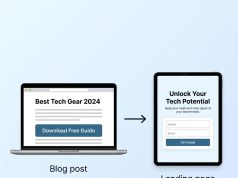
In this framework, the affiliate places a promotional link on their blog, social media, or email newsletter. A user clicks the link and arrives at a designated landing page. If the user completes the required form, a lead is generated. The advertiser then pays the affiliate a predetermined fixed rate for that specific lead.
Key Players in CPL Affiliate Marketing (Advertisers, Affiliates, Consumers)
Three main groups make this ecosystem function:
- Advertisers: Companies seeking to collect consumer information to build their sales pipeline.
- Affiliates: Publishers or marketers who drive targeted traffic to the advertiser’s landing pages.
- Consumers: Users who express interest in the product or service by voluntarily submitting their contact details.
Tracking and Attribution in CPL Campaigns
Tracking ensures affiliates get paid for their efforts. Advertisers use specialized software to generate unique URLs for each partner. When a consumer submits a form, a tracking pixel fires. This pixel communicates with the affiliate network to verify the lead’s origin, ensuring accurate attribution and timely payouts.
Benefits of CPL Affiliate Marketing for Advertisers
Reduced Risk and Cost-Effectiveness
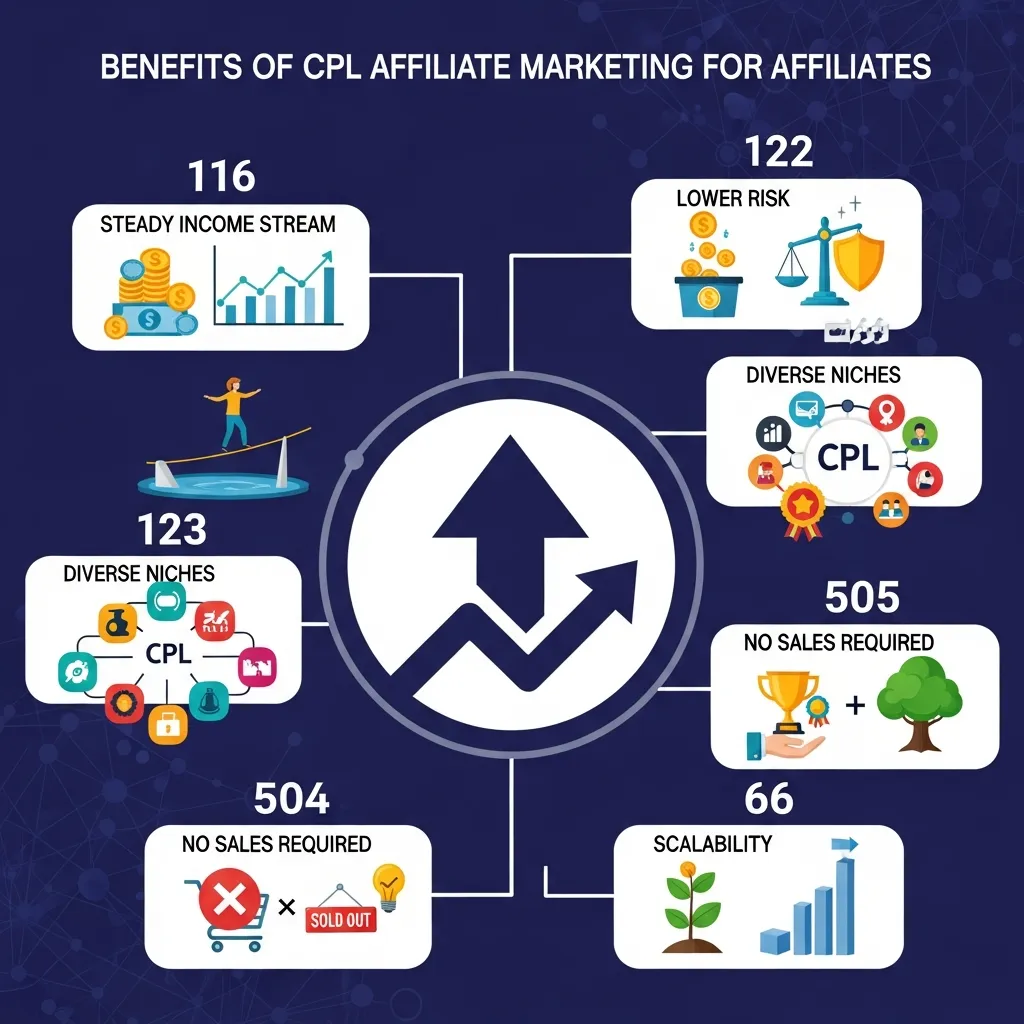
Advertisers love the CPL structure because they only pay for concrete results. Paying for a lead is significantly less risky than paying for raw clicks, which might bounce immediately. It keeps marketing budgets predictable and highly cost-effective.
High-Quality Lead Generation
When you understand the cost per lead (CPL) affiliate marketing meaning, you realize its power in filtering audiences. By requiring users to fill out a form, advertisers naturally weed out users with zero interest. The resulting database consists of people who genuinely want to learn more about the product.
Scalability and Reach
Partnering with multiple affiliates allows brands to scale their reach rapidly. Advertisers can tap into diverse audiences across different niches without having to build those communities themselves.
Benefits of CPL Affiliate Marketing for Affiliates
Higher Payouts Compared to Other Models
While a sale might offer a higher individual commission, leads convert much faster. Affiliates often find that a $5 CPL payout converting at 10% yields better overall revenue than a $50 CPS payout converting at 0.5%.
Flexibility and Diverse Niches
The cost per lead (CPL) affiliate marketing meaning extends across countless industries. Affiliates can promote dating sites, financial services, insurance quotes, and software trials. This flexibility allows them to choose offers that perfectly align with their audience.
Performance-Based Earning Potential
There is no cap on earning potential. Affiliates who master traffic generation and conversion rate optimization can scale their income dramatically. The better you understand your audience, the more leads you can generate.
Understanding Different Lead Types in CPL
Marketing Qualified Leads (MQLs)
An MQL is a user who has engaged with marketing efforts but is not yet ready to buy. They might have downloaded a free guide or signed up for a newsletter. They require further nurturing before a sales pitch.
Sales Qualified Leads (SQLs)
SQLs have shown a clear intent to purchase. They might have requested a live demo, asked for a pricing quote, or filled out a specific consultation form. These leads are immediately passed to the sales team.
Information Qualified Leads (IQLs)
IQLs are at the very beginning of the buyer’s journey. They typically provide basic information in exchange for educational content. The goal here is to establish brand authority and gradually move them down the funnel.
Best Practices for Lead Qualification
Advertisers must clearly define what constitutes a valid lead. Adding custom fields to your forms helps filter out low-quality submissions. However, asking for too much information will lower conversion rates. Balance is essential for a successful campaign.
Setting Up a Successful CPL Affiliate Marketing Campaign
Choosing the Right Niche and Offers
Success starts with relevance. An affiliate focusing on personal finance should promote credit card applications or budgeting tool sign-ups. Matching the offer to the audience’s specific pain points ensures higher conversion rates.
Crafting Compelling Landing Pages
The landing page determines whether a click becomes a lead. It must have a clear headline, concise copy, and a highly visible form. Remove distractions like external navigation links to keep the user focused entirely on submitting their information.
Effective Traffic Generation Strategies (SEO, PPC, Social Media)
Affiliates use various methods to attract visitors. Search Engine Optimization (SEO) provides long-term, organic traffic. Pay-Per-Click (PPC) advertising yields immediate results but requires an upfront budget. Social media allows for targeted community building and engaging content.
Optimizing for Conversions
Constant testing is required to maximize returns. Affiliates and advertisers should A/B test call-to-action buttons, form lengths, and page layouts. Small tweaks often lead to significant increases in lead volume.
Measuring and Analyzing CPL Campaign Performance
Key Metrics (Conversion Rate, ROI, Lead Quality)
To evaluate success, track your conversion rate (the percentage of visitors who become leads). Advertisers must also measure Return on Investment (ROI) by calculating how many of those leads eventually turn into paying customers. Lead quality is just as vital; a high volume of fake leads wastes money.
Tools for Tracking and Analytics
Platforms like Google Analytics, Voluum, or Everflow help monitor campaign health. These tools provide real-time data on clicks, conversions, and geographical performance.
Iterative Optimization
Never launch a campaign and ignore it. Use your analytics tools to identify underperforming traffic sources. Pause bad placements and allocate more budget to the affiliates bringing in the highest quality leads.
CPL vs. Other Affiliate Marketing Models: A Comparative Analysis
Cost Per Sale (CPS) Affiliate Marketing Guide: When to Use It
While CPL focuses on information, CPS focuses on revenue. If you are reviewing a cost per sale (CPS) affiliate marketing guide, you will see that advertisers pay a percentage of the final purchase. Use CPS when you sell physical products or high-ticket items where immediate revenue is necessary to offset affiliate payouts.
Cost Per Click (CPC) and Cost Per Impression (CPM)
CPC pays for every click, regardless of action. CPM pays per thousand views. These models are great for brand awareness but carry high risk for advertisers focused on direct response. The cost per lead (CPL) affiliate marketing meaning centers entirely on measurable interest, making it a safer middle ground.
Choosing the Right Model for Your Goals
If your business needs a massive list of potential clients to nurture over time, CPL is the best choice. If you need immediate cash flow and have a fast checkout process, look into a cost per sale (CPS) affiliate marketing guide to build your strategy.
Challenges and Pitfalls in CPL Affiliate Marketing
Lead Fraud and Quality Control
Some bad actors use bots or stolen information to submit fake leads and collect payouts. Advertisers must use fraud detection software and implement strict validation rules (like email verification) to protect their budgets.
Compliance and Regulatory Considerations
Collecting user data comes with legal responsibilities. Advertisers and affiliates must comply with privacy laws like GDPR or CCPA. Always include clear privacy policies and obtain explicit consent before gathering information.
Competitive Landscape
High-paying CPL offers attract many affiliates, driving up ad costs on platforms like Facebook and Google. Affiliates must find unique angles and long-tail keywords to stand out in crowded markets.
Future Trends in CPL Affiliate Marketing
AI and Machine Learning in Lead Generation
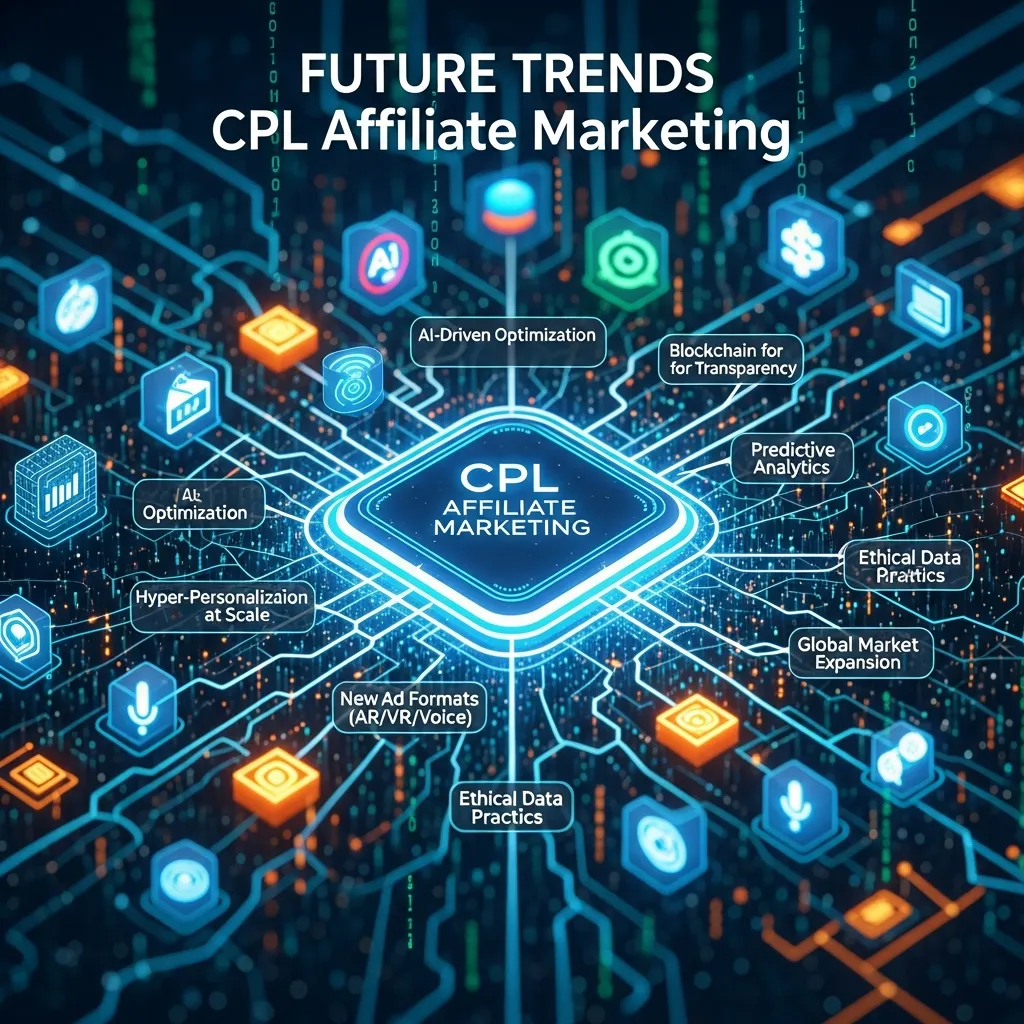
Artificial intelligence is changing how we qualify traffic. Predictive modeling helps advertisers assess lead quality in real-time, instantly blocking suspicious form submissions and routing high-value leads to sales teams faster.
Personalization and Hyper-targeting
Generic landing pages are becoming obsolete. Dynamic content that changes based on a user’s location, referral source, or past behavior significantly increases form completion rates.
New Platforms and Technologies
New social platforms and interactive formats (like quizzes or calculators) are highly effective at capturing information. Staying adaptable to these new technologies is crucial for long-term success.
Mastering Lead Generation
Grasping the cost per lead (CPL) affiliate marketing meaning allows brands to grow their customer base predictably and profitably. By focusing on data capture rather than immediate sales, businesses can nurture prospects at their own pace. For affiliates, it provides a highly lucrative, flexible way to monetize audience trust. Define your target audience, build frictionless landing pages, and test your campaigns continually to maximize your results.
Frequently Asked Questions (FAQs)
1. What is the fundamental cost per lead (CPL) affiliate marketing meaning?
The cost per lead (CPL) affiliate marketing meaning refers to a pricing model where advertisers pay affiliates a fixed commission every time a referred user successfully submits their contact information via a sign-up form.
2. How does CPL differ from a cost per sale (CPS) affiliate marketing guide?
A CPL model pays for contact information (leads). A cost per sale (CPS) affiliate marketing guide focuses on paying affiliates only when a user completes a financial transaction or purchases a product.
3. What types of businesses benefit most from CPL affiliate marketing?
Service-based industries, B2B software companies, insurance providers, and educational institutions benefit greatly, as they rely on building lists of prospects to close deals over time.
4. How can affiliates ensure they generate high-quality leads?
Affiliates should target specific, relevant audiences using precise keywords and honest promotional copy. Misleading users to get a click results in poor-quality leads that advertisers will ultimately reject.
5. What are common payout structures in CPL campaigns?
Payouts are typically a fixed flat rate per lead. Depending on the industry, this can range from $1 for a simple email submit to over $100 for a detailed mortgage quote request.
6. How do advertisers track leads in a CPL model?
Advertisers use affiliate tracking software that generates unique URLs. When a user completes a form, a tracking pixel fires, matching the submission to the affiliate who drove the traffic.
7. What are the average CPL rates across different industries?
Rates vary wildly. An entertainment newsletter sign-up might pay $1 to $3. A B2B software trial could pay $20 to $50, while financial or legal services often pay $50 to $150 per qualified lead.
8. Can CPL affiliate marketing be combined with other strategies?
Yes. Many businesses run CPL campaigns to build their email lists, and then use separate email marketing strategies to convert those leads into sales later on.
9. What are the legal considerations for CPL campaigns?
You must strictly adhere to data privacy regulations like GDPR and CCPA. Users must be clearly informed about how their data will be used, and forms should include mandatory opt-in checkboxes.
10. How important is the landing page in CPL affiliate marketing?
It is critical. A slow, confusing, or overly complicated landing page will cause users to abandon the form, meaning the affiliate earns nothing and the advertiser gets no data.
11. What tools are essential for CPL campaign management?
You need reliable tracking software (like Voluum or Tune), a robust Customer Relationship Management (CRM) system to store the leads, and fraud detection tools to filter out bot traffic.
12. How can I avoid lead fraud in CPL programs?
Advertisers should implement double opt-in email verification, use CAPTCHA on forms, analyze the IP addresses of submitted leads, and set clear quality thresholds with their affiliate networks.