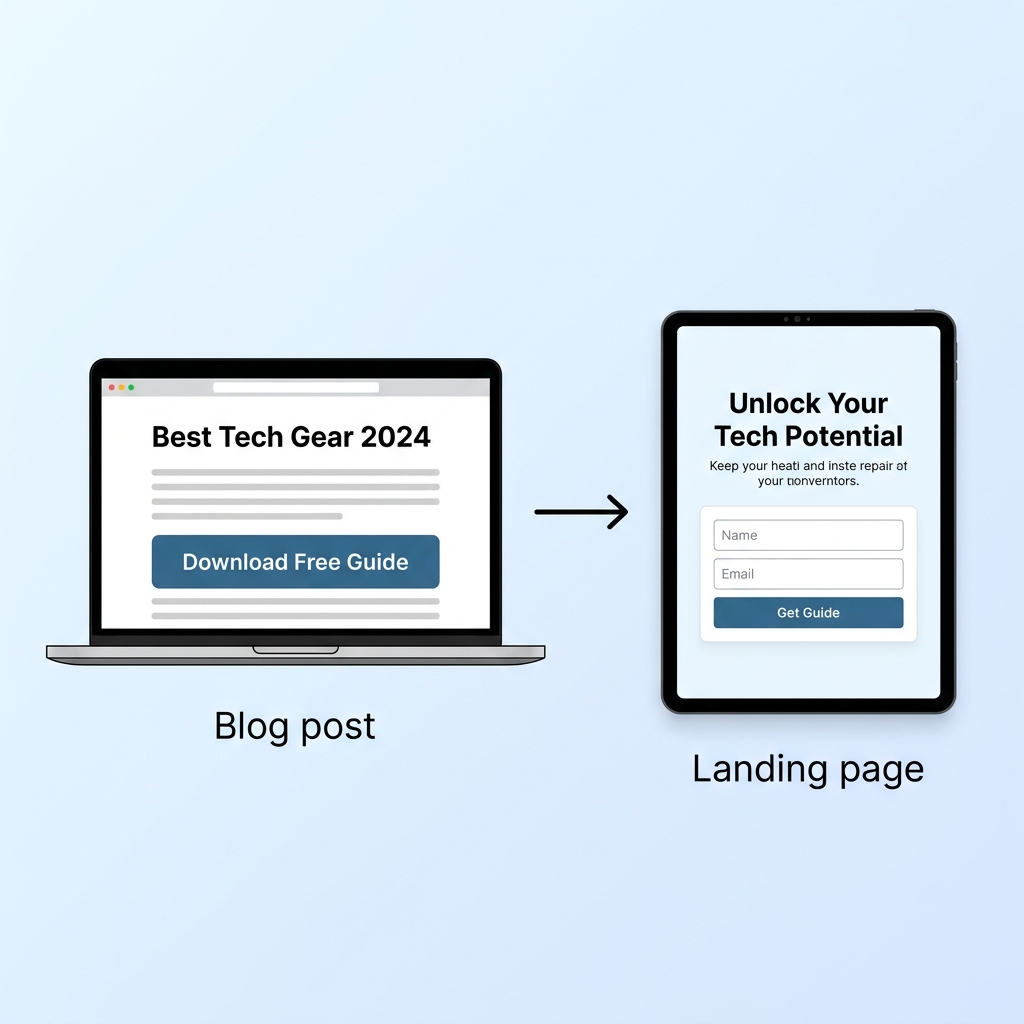
An Affiliate Marketing Automation Workflow is a structured system that uses automation tools and processes to manage repetitive affiliate marketing tasks. Instead of manually handling every click, lead, email, conversion, report, and campaign update, affiliates can automate important parts of the customer journey. This guide explains how affiliate automation works, which tasks can be automated, how to build an effective workflow, what tools to use, common mistakes to avoid, and how automation can improve productivity, tracking, conversions, and revenue.
What Is an Affiliate Marketing Automation Workflow?
An Affiliate Marketing Automation Workflow is a sequence of automated processes designed to move visitors from initial discovery to affiliate conversion while reducing repetitive manual work.
Affiliate marketing usually involves several connected activities. A marketer needs to find keywords, create content, attract visitors, recommend products, track clicks, manage leads, follow up with prospects, analyze conversions, and optimize campaigns.
When these activities are handled manually, scaling becomes difficult. Automation connects these tasks so that one action can trigger another.
For example, a simple workflow could look like this:
Visitor discovers content → clicks affiliate link → tracking system records click → visitor enters funnel → automated email follows up → visitor converts → affiliate network records conversion → dashboard updates performance data.
The goal is not to remove human involvement completely. Instead, an Affiliate Marketing Automation Workflow handles repetitive processes while marketers focus on strategy, content quality, audience research, and optimization.
Automation can be particularly useful for affiliate websites that receive traffic from SEO, paid advertising, social media, email marketing, and other channels.
Why Affiliate Marketing Automation Matters
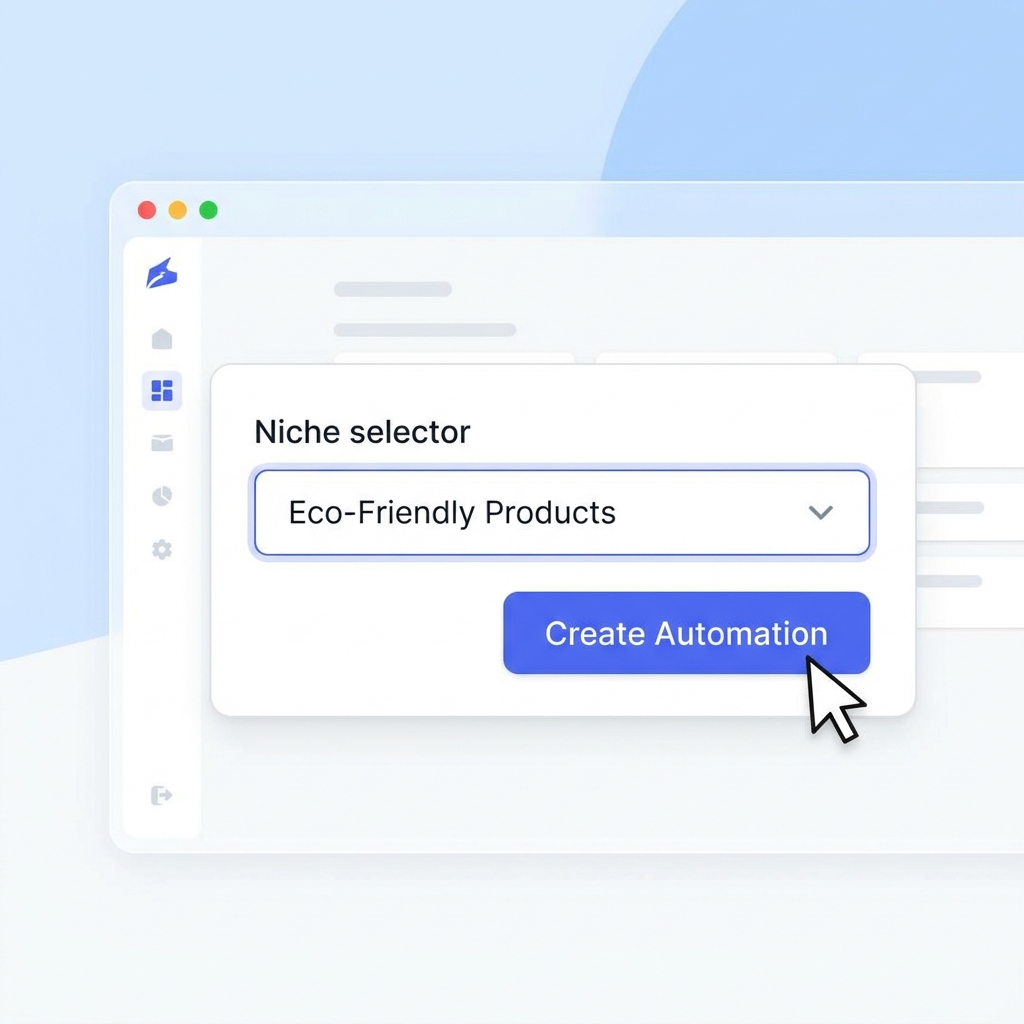
Affiliate marketing can become complicated as traffic, products, campaigns, and audiences increase. Automation helps create a more organized system.
1. Saves Time
Manual tasks such as checking reports, sending follow-up emails, organizing leads, and updating campaign information can consume many hours.
Automation allows repetitive activities to happen automatically according to predefined rules.
2. Reduces Human Errors
Manual data entry can result in incorrect tracking links, reporting mistakes, duplicate entries, or missed follow-ups.
An automated workflow can standardize these processes.
3. Improves Tracking
Accurate tracking is essential for affiliate marketing. You need to know where clicks and conversions originate.
A structured automation system can connect traffic sources, tracking parameters, affiliate links, and conversion data.
For more information, see Affiliate Tracking Explained: The Complete Guide.
4. Supports Faster Follow-Up
If someone subscribes to an email list or downloads a resource, an automated sequence can deliver relevant follow-up messages without requiring manual intervention.
5. Makes Scaling Easier
A system that works for 100 visitors may become difficult to manage when traffic grows to 10,000 visitors.
Automation creates repeatable processes that can support larger audiences.
6. Improves Optimization
Automated reports can help marketers identify which products, pages, campaigns, and traffic sources are performing best.
Key Components of an Affiliate Marketing Automation Workflow
A successful Affiliate Marketing Automation Workflow usually contains several connected stages.
1. Traffic Generation
The first stage is attracting potential customers.
Traffic can come from:
- Organic search
- Paid advertising
- Social media
- YouTube
- Email marketing
- Online communities
- Referral traffic
- Content marketing
The best traffic source depends on your niche, audience, budget, and business model.
For SEO-focused affiliates, keyword research and helpful content are essential. For related information, see the Affiliate Marketing Keyword Research Guide.
2. Content Creation
Content introduces products and helps potential customers make informed decisions.
Common affiliate content formats include:
- Product reviews
- Comparison articles
- Tutorials
- Buying guides
- Listicles
- Case studies
- How-to articles
- Videos
- Email newsletters
Automation can assist with content planning, editorial calendars, content distribution, and performance reporting.
However, content quality should remain a human priority. Automation should not become an excuse for publishing low-value or repetitive content.
3. Affiliate Link Management
Affiliate links need to be organized and monitored.
A growing affiliate website may have hundreds of links across multiple articles.
Automation can help:
- Organize affiliate URLs
- Categorize links
- Track clicks
- Identify broken links
- Update destination URLs
- Compare link performance
Proper link management becomes increasingly important as your website grows.
4. Click Tracking
Click tracking shows which content and traffic sources generate affiliate engagement.
Useful tracking information may include:
- Source
- Medium
- Campaign
- Page
- Device
- Location
- Affiliate offer
- Click timestamp
Tracking data helps marketers understand which channels and pages are producing results.
5. Lead Capture
Not every visitor is ready to purchase immediately.
A lead capture system can encourage visitors to subscribe to an email list or access a useful resource.
Common lead magnets include:
- Checklists
- Templates
- Guides
- Coupons
- Product comparisons
- Free resources
- Educational newsletters
Once a visitor becomes a subscriber, automation can continue the relationship.
How to Build an Affiliate Marketing Automation Workflow
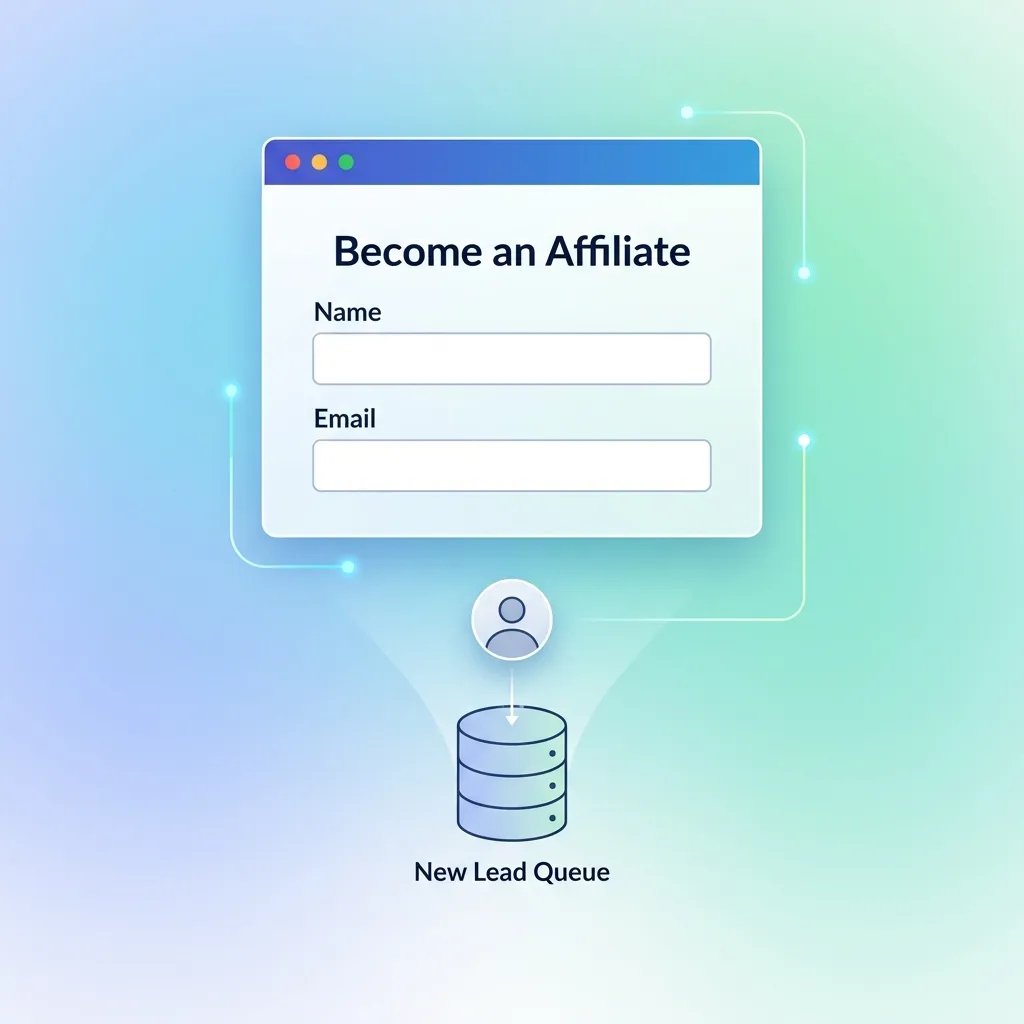
Building an effective workflow becomes easier when you break it into clear stages.
Step 1: Define Your Goal
Start by identifying the outcome you want to automate.
For example:
- Generate more affiliate clicks
- Increase email subscribers
- Improve conversion rates
- Increase affiliate revenue
- Reduce manual reporting
- Automate customer follow-ups
A specific goal helps determine which tools and processes you actually need.
Step 2: Map the Customer Journey
Before automating anything, understand how your audience moves through your funnel.
A simple journey could be:
Search → Blog Post → Affiliate Link → Product Page → Purchase
A more advanced journey could be:
Search → Blog Post → Lead Magnet → Email Sequence → Product Comparison → Affiliate Click → Purchase
Mapping the journey shows where automation can add value.
Step 3: Select Your Traffic Source
Determine how people will enter the workflow.
For an SEO website, the entry point might be an organic search result.
For a paid campaign, it may be an advertisement.
For email marketing, the entry point could be an existing subscriber.
Different traffic sources require different workflows.
Step 4: Create Valuable Content
Content should solve a real problem before it attempts to generate an affiliate sale.
For example, someone searching for “best project management software for small businesses” may need a comparison guide.
A helpful article can introduce relevant products naturally and direct readers toward useful resources.
Step 5: Add Tracking
Tracking should be implemented before sending significant traffic.
Use appropriate parameters and tracking systems to identify:
- Traffic source
- Campaign
- Content
- Affiliate offer
- Click
- Conversion
Accurate tracking allows your Affiliate Marketing Automation Workflow to produce useful performance data.
Step 6: Build the Lead Funnel
If your strategy includes email marketing, create a lead capture page or form.
After a user subscribes, automation can trigger a welcome message.
For example:
Subscription → Welcome Email → Educational Email → Product Comparison → Affiliate Recommendation
This creates a structured relationship instead of relying on one-time website visits.
Step 7: Create Automated Email Sequences
Email automation can be one of the most useful parts of affiliate marketing.
A simple sequence might include:
Email 1: Welcome
Introduce the subscriber and explain what they can expect.
Email 2: Education
Provide useful information related to their problem.
Email 3: Solution
Introduce possible solutions or product categories.
Email 4: Comparison
Compare relevant products based on useful criteria.
Email 5: Recommendation
Present an appropriate affiliate recommendation with a clear explanation.
Email 6: Follow-Up
Answer common objections or provide additional information.
The sequence should focus on usefulness rather than sending aggressive promotional messages.
Affiliate Marketing Automation Workflow Example
Consider an affiliate website in the software niche.
A visitor searches Google for information about CRM tools.
Stage 1: Organic Search
The visitor finds a helpful comparison article.
Stage 2: Content Engagement
The article explains different CRM features and includes product comparisons.
Stage 3: Lead Capture
The visitor downloads a CRM comparison checklist.
Stage 4: Email Automation
The subscriber receives an automated sequence about choosing CRM software.
Stage 5: Affiliate Recommendation
An email recommends suitable tools based on the subscriber’s needs.
Stage 6: Affiliate Click
The subscriber clicks an affiliate link.
Stage 7: Conversion Tracking
The affiliate platform records the conversion if the user completes the required action.
Stage 8: Reporting
Performance data is added to the marketing reporting system.
Stage 9: Optimization
The marketer analyzes the results and improves the content, emails, offer positioning, or traffic source.
This creates a complete Affiliate Marketing Automation Workflow from acquisition to optimization.
Affiliate Marketing Tasks You Can Automate
Not every activity should be automated, but many repetitive processes can be.
Content Distribution
After publishing an article, automation can help distribute it through selected channels.
Possible activities include:
- Social scheduling
- Email notifications
- Content promotion
- RSS distribution
- Internal content updates
Email Follow-Ups
Email platforms can automatically send messages based on subscriber actions.
For example:
Subscribe → Welcome Email → Wait → Educational Email → Wait → Product Email
Performance Reporting
Instead of manually checking multiple affiliate networks, marketers can consolidate performance information into a reporting system.
Important metrics can include:
- Clicks
- Conversions
- Earnings
- Commission
- Conversion rate
- Earnings per click
Link Monitoring
Automated link monitoring can identify broken affiliate links or unavailable destinations.
This is particularly valuable for large websites.
Lead Segmentation
Subscribers can be categorized based on their interests or actions.
For example:
- New subscriber
- Product researcher
- High-intent visitor
- Previous buyer
- Inactive subscriber
Different segments can receive different content.
Tools for Affiliate Marketing Automation
The right tools depend on your workflow and budget.
Analytics Platforms
Analytics tools help monitor traffic, engagement, conversions, and user behavior.
They provide the data required to evaluate your automation system.
Email Marketing Platforms
Email platforms can automate:
- Welcome sequences
- Follow-ups
- Segmentation
- Broadcasts
- Subscriber tagging
- Triggered campaigns
Affiliate Tracking Tools
Affiliate tracking systems help monitor clicks, conversions, commissions, and campaign performance.
CRM Platforms
A CRM can help manage leads and customer relationships, particularly for affiliates promoting higher-value products or services.
Automation Platforms
Workflow automation tools can connect different applications.
For example:
Form Submission → Add Subscriber → Apply Tag → Send Email → Record Lead
This can reduce manual work across multiple platforms.
SEO Tools
SEO tools can help automate reporting, keyword monitoring, ranking checks, and content performance analysis.
Automation works best when these tools support a broader marketing strategy rather than replacing it.
Affiliate Marketing Automation Workflow for Email Marketing
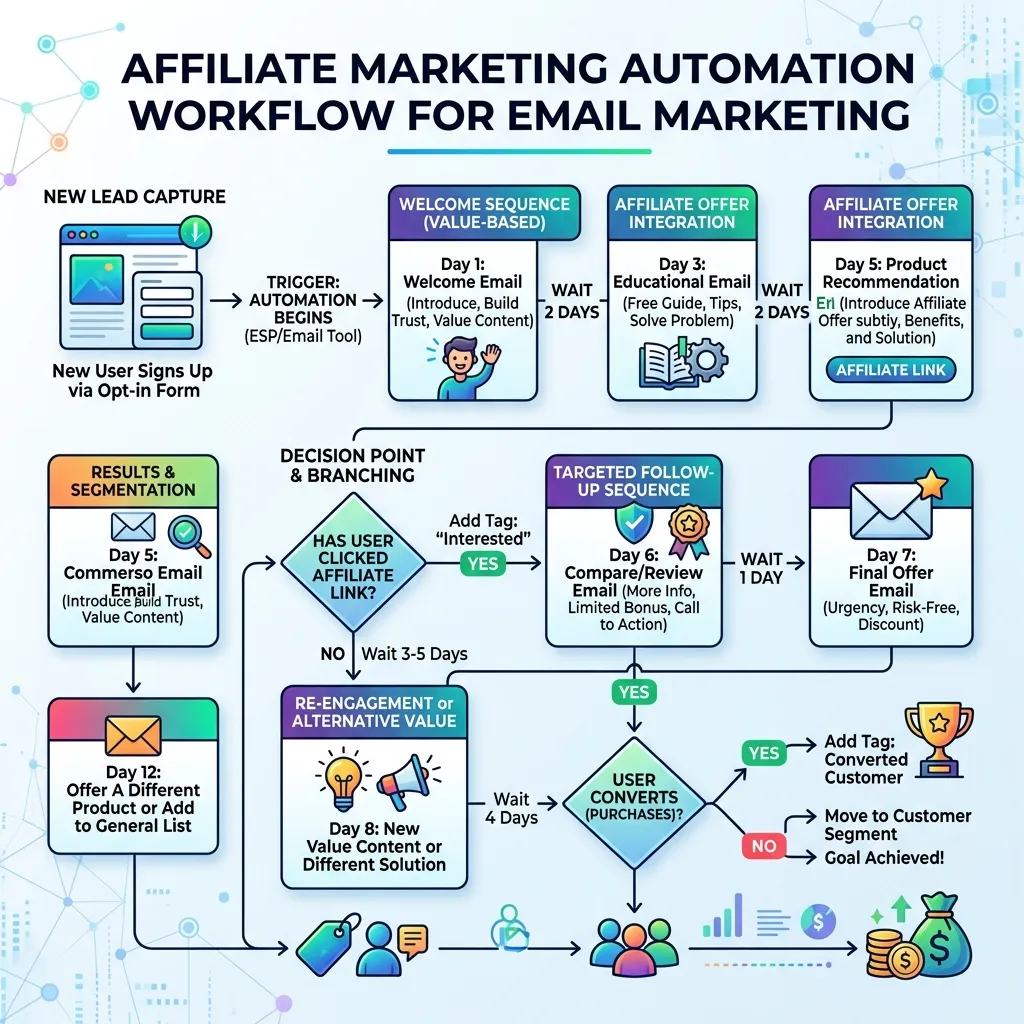
Email automation can create a consistent communication process.
A practical workflow might look like:
Visitor → Lead Magnet → Subscription → Segmentation → Welcome Sequence → Educational Content → Product Recommendation → Conversion → Follow-Up
Each stage can have a specific purpose.
For example, the first email should establish expectations. The second should provide useful information. Later emails can introduce relevant products.
Personalization can improve the relevance of these messages.
Subscribers interested in one product category should not necessarily receive the same sequence as subscribers interested in another category.
Affiliate Marketing Automation Workflow for Content Marketing
Content automation can support the publishing process without eliminating human editorial control.
A basic workflow can be:
Keyword Research → Topic Selection → Content Brief → Writing → Editing → SEO Optimization → Publishing → Distribution → Performance Tracking
Some repetitive activities can be automated, but human review should remain important.
Editors should verify:
- Accuracy
- Originality
- Search intent
- Product information
- Affiliate disclosures
- User value
- Internal links
- External references
This approach helps maintain content quality while improving efficiency.
How Automation Improves Affiliate Conversion Rates
Automation does not automatically guarantee higher conversions. However, it can improve the conditions that support conversions.
Faster Follow-Up
Visitors can receive relevant information shortly after taking an action.
Better Segmentation
Different audiences can receive more relevant recommendations.
Consistent Communication
Automation ensures that subscribers do not depend on manual follow-up.
Better Testing
Marketers can test:
- Headlines
- Calls to action
- Email subject lines
- Offers
- Landing pages
- Product positioning
The results can then be used to improve the workflow.
For additional conversion strategies, read How to Increase Affiliate Conversion Rate.
Measuring Affiliate Marketing Automation Performance
A workflow is only useful if you can measure its results.
Important metrics include:
Click-Through Rate
Measures how frequently users click links after seeing them.
Conversion Rate
Shows how many visitors or clicks result in the desired action.
Earnings Per Click
EPC helps evaluate the earnings generated by affiliate clicks.
Revenue
Revenue shows the total monetary result of your affiliate activities.
Customer Acquisition Cost
If you use paid traffic, CAC helps determine whether your acquisition strategy is economically sustainable.
Email Metrics
For email-based workflows, track:
- Open rate
- Click rate
- Unsubscribe rate
- Conversion rate
- Revenue per subscriber
Funnel Drop-Off
Identify where users stop progressing.
For example:
1,000 visitors → 300 subscribers → 100 product clicks → 20 conversions
If many visitors subscribe but few click affiliate offers, your email or product recommendation stage may need improvement.
Common Affiliate Marketing Automation Mistakes
Automating Everything
Automation should support strategy, not replace it.
Some activities require human judgment, especially content quality, product selection, audience understanding, and strategic optimization.
Sending Too Many Emails
Too many promotional emails can reduce trust and increase unsubscribes.
Focus on useful communication.
Ignoring Tracking
Without accurate tracking, you cannot determine whether your automation workflow is working.
Using Irrelevant Recommendations
Products should match the user’s needs and the content they are consuming.
Publishing Low-Quality Automated Content
Automation can speed up production, but low-value content can damage audience trust and search performance.
Forgetting Compliance
Affiliate marketers should clearly disclose commercial relationships where required and follow the rules of relevant platforms and jurisdictions.
Not Testing the Workflow
A broken trigger, incorrect link, or failed email can stop the entire process.
Test every important stage before sending significant traffic.
Affiliate Marketing Automation Workflow Best Practices
Follow these practices to build a reliable system:
- Start with one clear objective.
- Map the customer journey.
- Track every important stage.
- Automate repetitive tasks.
- Keep human oversight.
- Segment your audience.
- Personalize recommendations where appropriate.
- Provide valuable content.
- Test emails and landing pages.
- Monitor affiliate links.
- Review conversion data.
- Track revenue and profitability.
- Maintain accurate reporting.
- Follow affiliate program requirements.
- Review the workflow regularly.
The best Affiliate Marketing Automation Workflow is not necessarily the most complicated. A simple system that works reliably is usually more valuable than a complicated system that is difficult to maintain.
Advanced Affiliate Marketing Automation Strategies
Once your basic workflow is working, you can introduce more advanced automation.
Behavioral Segmentation
Segment users according to actions such as:
- Pages visited
- Products viewed
- Links clicked
- Emails opened
- Previous purchases
This allows you to create more relevant follow-up campaigns.
Automated Retargeting
If your advertising strategy supports retargeting, you can create audiences based on website behavior.
For example, users who viewed a product comparison but did not click an affiliate link could receive additional educational content.
Dynamic Recommendations
Advanced systems can recommend different products based on user interests, behavior, or previous interactions.
Automated Performance Alerts
Set alerts when important metrics change significantly.
For example:
- Conversion rate drops by 20%
- Affiliate clicks decrease
- Revenue suddenly falls
- A major campaign exceeds its budget
These alerts help marketers react faster.
Simple Affiliate Marketing Automation Workflow Template
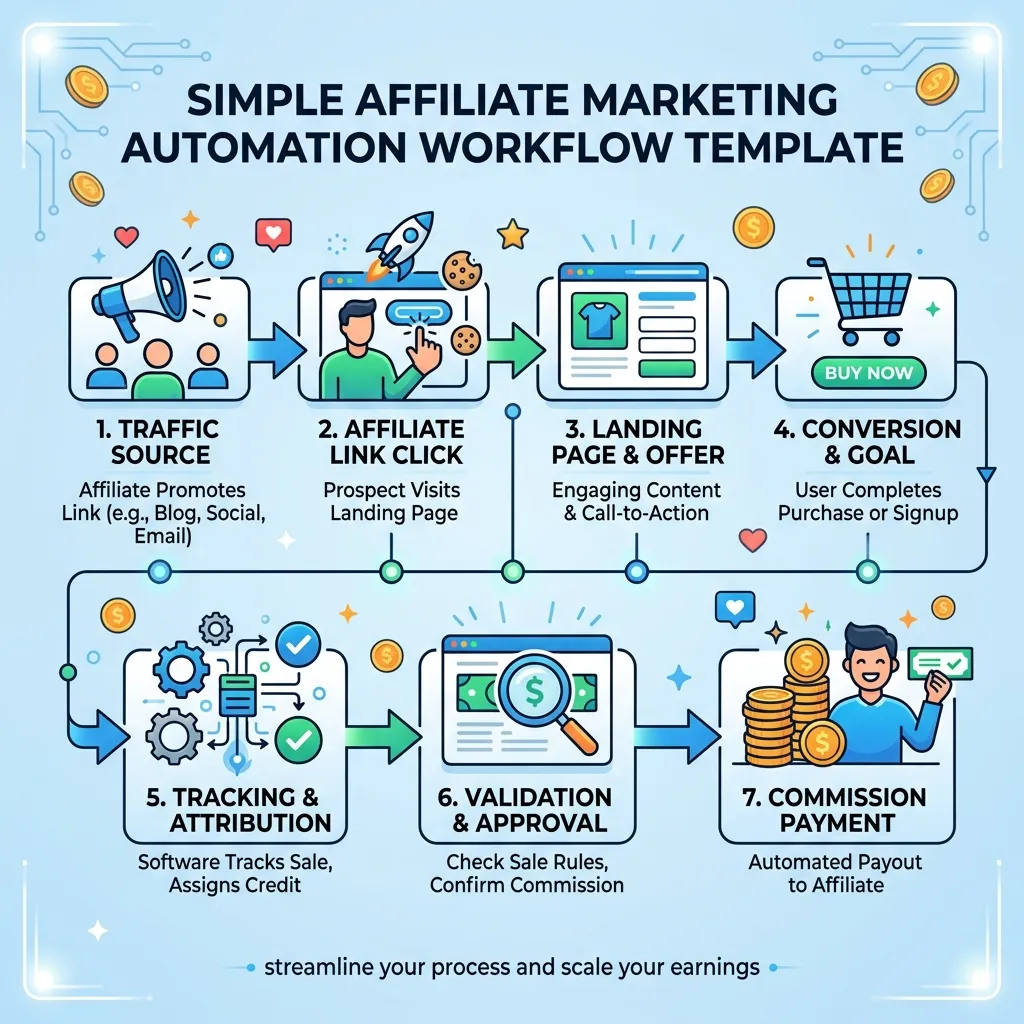
You can use the following framework as a starting point:
Step 1: Attract targeted traffic.
Step 2: Send visitors to valuable content.
Step 3: Add relevant affiliate links.
Step 4: Capture leads where appropriate.
Step 5: Trigger an automated welcome sequence.
Step 6: Segment subscribers according to interests.
Step 7: Deliver educational content.
Step 8: Introduce relevant affiliate products.
Step 9: Track clicks and conversions.
Step 10: Analyze revenue and conversion data.
Step 11: Identify weak stages.
Step 12: Test and optimize the workflow.
This framework can be adapted to almost any affiliate niche.
Conclusion
An Affiliate Marketing Automation Workflow can transform a collection of repetitive marketing activities into a structured and scalable system. From traffic generation and content distribution to lead capture, email follow-ups, affiliate tracking, reporting, and optimization, automation can reduce manual work while creating a more consistent customer journey.
The most important principle is to automate processes that are repetitive while keeping human control over strategy, content quality, product selection, and audience relationships. Start with a simple workflow, measure each stage, identify bottlenecks, and gradually introduce more advanced automation.
A strong workflow should connect marketing activity with measurable outcomes such as clicks, conversions, commissions, and revenue. When tracking and optimization are built into the system, affiliate marketers can make better decisions and scale their efforts more efficiently.
Whether you are building your first affiliate website or managing an established affiliate business, the right Affiliate Marketing Automation Workflow can help you save time, improve organization, strengthen follow-up, and create a more predictable marketing process.
Frequently Asked Questions
1. What is an Affiliate Marketing Automation Workflow?
An Affiliate Marketing Automation Workflow is a series of connected automated processes that manage repetitive affiliate marketing activities such as lead capture, email follow-ups, tracking, reporting, and campaign optimization.
2. Why should affiliate marketers use automation?
Automation saves time, reduces repetitive manual work, improves consistency, supports accurate tracking, and makes it easier to scale affiliate campaigns.
3. Can affiliate marketing be fully automated?
Not effectively. Many repetitive tasks can be automated, but strategy, content quality, audience research, product evaluation, and optimization still require human involvement.
4. What affiliate marketing tasks can be automated?
Common examples include email sequences, reporting, lead segmentation, content distribution, link monitoring, tracking, and performance alerts.
5. Does automation increase affiliate conversions?
Automation can support higher conversions by improving follow-up, segmentation, personalization, and testing, but it does not guarantee a specific conversion rate.
6. What is the best automation tool for affiliate marketing?
There is no single best tool. The right choice depends on your traffic sources, email strategy, affiliate programs, tracking requirements, budget, and technical setup.
7. How does email automation help affiliate marketing?
Email automation allows marketers to send timely educational and promotional messages based on subscriber actions, helping maintain communication without manual follow-up.
8. Is affiliate tracking necessary for automation?
Yes. Accurate tracking is important because it helps marketers understand clicks, conversions, revenue, traffic sources, and campaign performance.
9. Can AI be used in affiliate marketing automation?
Yes. AI can support tasks such as research, content planning, personalization, customer segmentation, analysis, and workflow optimization. However, human review remains important.
10. What metrics should an automated affiliate workflow track?
Important metrics include clicks, conversion rate, earnings per click, commissions, revenue, traffic source, email engagement, and funnel drop-off.
11. Is affiliate marketing automation suitable for beginners?
Yes. Beginners can start with simple automation such as email welcome sequences, link tracking, and performance reporting before adding more advanced workflows.
12. What is the biggest mistake when automating affiliate marketing?
The biggest mistake is focusing on automation instead of audience value. Automation should make useful marketing more efficient, not turn the process into irrelevant content or excessive promotion.