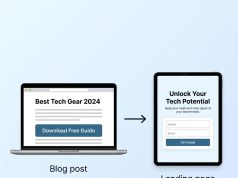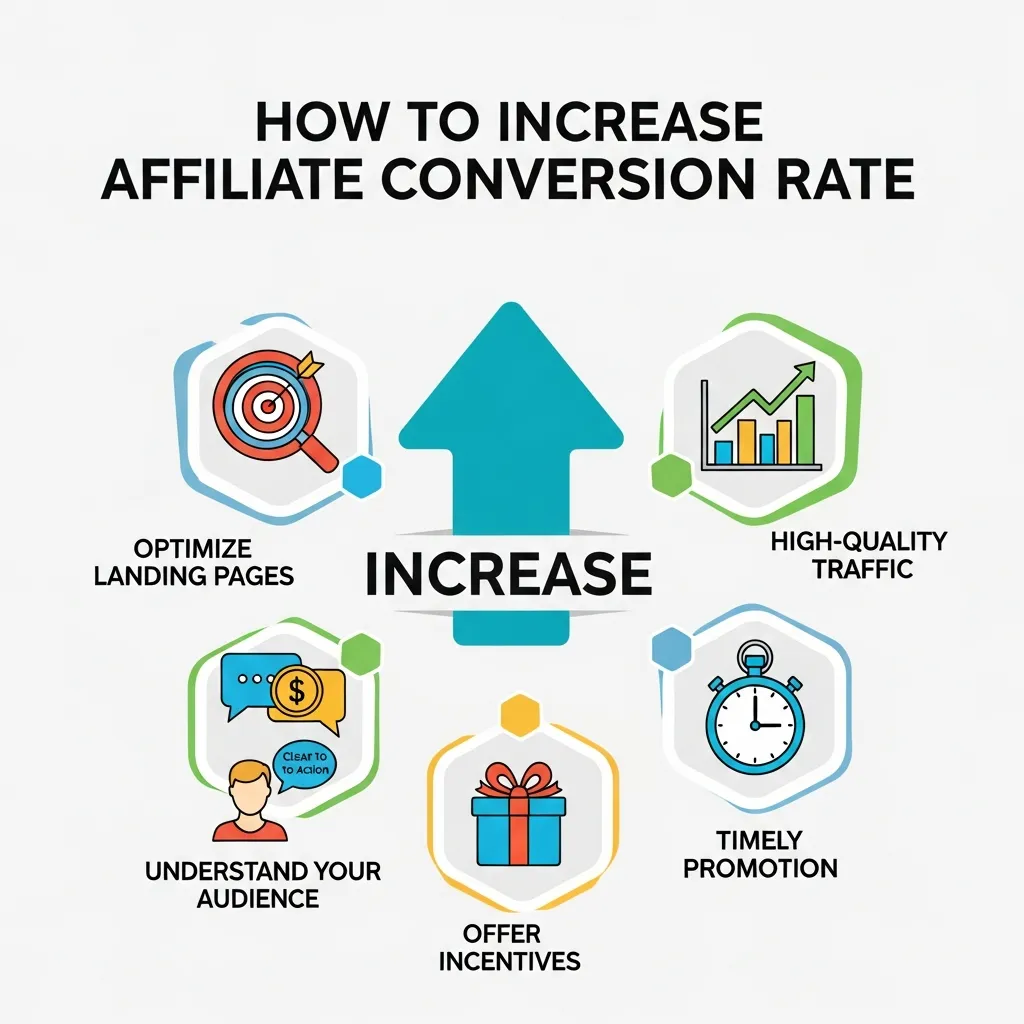
To increase your affiliate conversion rate, optimize your landing pages with clear CTAs and fast load speeds, craft targeted ad campaigns, publish trust-building content, and use analytics to eliminate friction. Most affiliates see meaningful improvements within 30–90 days by combining these strategies systematically.
Most affiliate marketers spend the bulk of their energy driving traffic—and then watch it disappear. Clicks come in, but sales don’t follow. If that sounds familiar, the problem usually isn’t your traffic source. It’s your conversion strategy.
Your affiliate conversion rate is the percentage of visitors who complete a desired action—clicking your affiliate link, signing up, or making a purchase. Even a modest improvement can dramatically change your revenue. Increasing your conversion rate from 1% to 2% doesn’t just double your earnings per visitor—it doubles the value of every dollar you spend on traffic.
Understanding how to increase affiliate conversion rate is one of the highest-leverage skills in digital marketing. Unlike chasing more traffic, conversion optimization compounds. Every improvement you make continues paying dividends long after the work is done, making it one of the most reliable paths to building passive income with affiliate marketing.
This guide covers the full picture—from affiliate landing page optimization and ad strategy to content creation, technical SEO, data analytics, and advanced retention tactics. Whether you’re just getting started or trying to push past a plateau, these strategies will help you convert more of the audience you already have.
What Is an Affiliate Conversion Rate and Why Does It Matter?
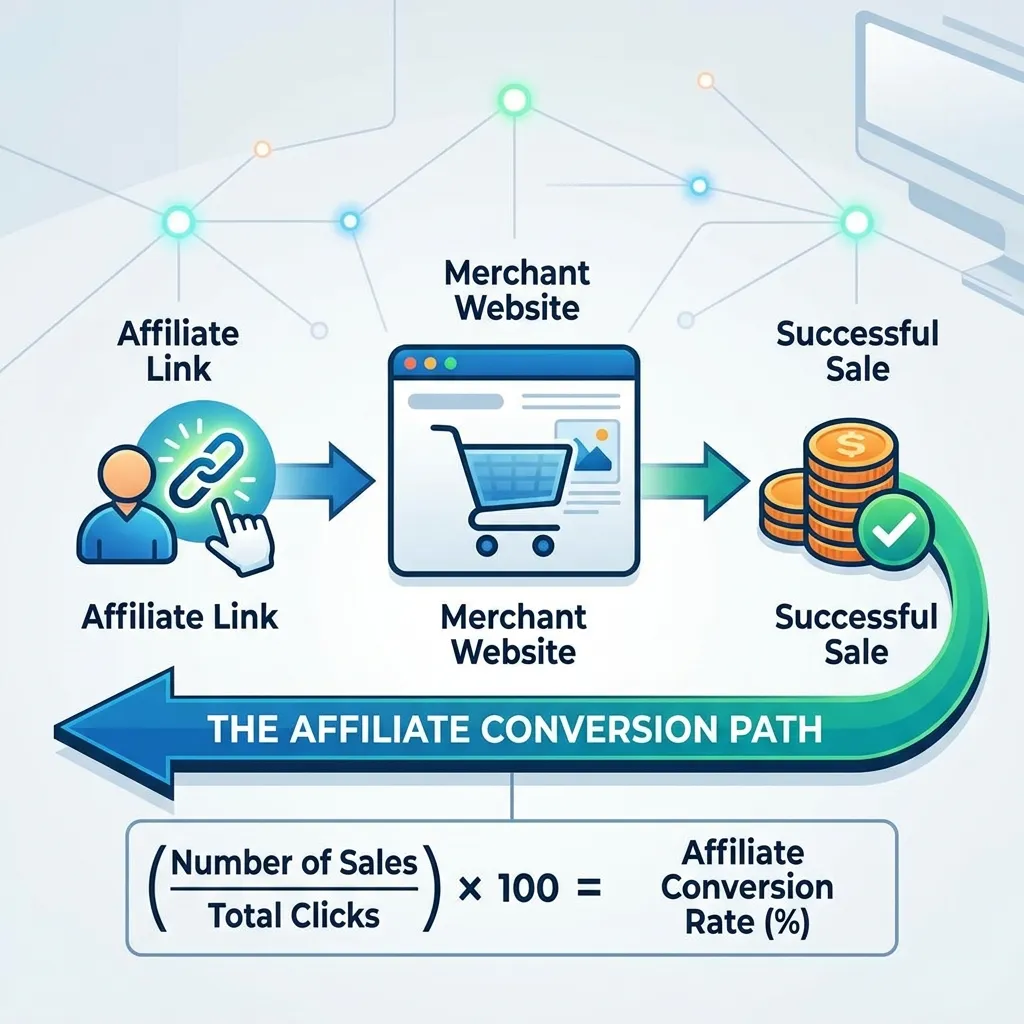
Your affiliate conversion rate measures how effectively your marketing efforts translate into revenue-generating actions. The formula is simple:
Conversion Rate = (Number of Conversions ÷ Total Visitors) × 100
A “good” affiliate conversion rate varies significantly by niche and offer type. Software and SaaS products typically convert between 1–5%, while high-ticket offers may convert below 1% but generate higher commissions per sale. Physical product affiliates often target rates between 2–4%.
Why does this matter so much? Because ad conversion rate and traffic costs are rising across every major platform. Getting more from your existing audience is almost always more cost-effective than acquiring new visitors. Affiliate landing page optimization, better content, and smarter targeting can double or triple your returns without increasing your marketing spend.
Affiliate Landing Page Optimization: Building Pages That Convert
Your landing page is where traffic becomes revenue—or doesn’t. Affiliate landing page optimization is the single most impactful lever most marketers can pull.
What makes a high-converting affiliate landing page?
A high-converting affiliate landing page has five core elements:
- A headline that speaks to a specific pain point or desire. Vague headlines lose visitors in seconds. Be explicit about the benefit.
- A clear value proposition. Tell visitors exactly what they’ll get and why it’s better than the alternatives.
- Social proof. Testimonials, star ratings, user counts, and case studies reduce purchase anxiety.
- A strong, singular call to action (CTA). Multiple CTAs split attention. One focused CTA drives action.
- Minimal distractions. Remove navigation menus, unrelated links, and anything that pulls the reader away from your primary goal.
How does A/B testing improve landing page conversions?
A/B testing—comparing two versions of a page to see which performs better—is the most reliable way to improve conversions over time. Test one element at a time: your headline, CTA button color, hero image, or page layout. Tools like Google Optimize, VWO, and Unbounce make it straightforward to run these experiments without developer help.
Run each test for at least two weeks, or until you reach statistical significance. Small changes compound. A headline tweak that boosts conversions by 8% plus a CTA color change that adds another 5% adds up quickly across thousands of visitors.
Why does page speed matter for affiliate conversion rate?
According to Google, a one-second delay in mobile load time can reduce conversion rates by up to 20%. Compress your images, use a content delivery network (CDN), minimize JavaScript, and choose a fast hosting provider. Tools like Google PageSpeed Insights and GTmetrix will flag your biggest performance bottlenecks.
Mobile responsiveness is equally critical. More than 60% of web traffic now comes from mobile devices. If your landing page isn’t optimized for smaller screens, you’re leaving a significant portion of your potential conversions on the table.
Driving Traffic: Mastering Landing Page Conversion Ads
Paid advertising can accelerate affiliate growth—but only when your ad strategy and landing page work together. Landing page conversion ads are most effective when there’s a consistent message from ad creative all the way through to the offer.
How do you improve your ad conversion rate for affiliate campaigns?
Improving your ad conversion rate starts with audience precision. Broad targeting wastes budget on people unlikely to convert. Use detailed interest targeting, lookalike audiences, and retargeting lists to focus your spend on high-intent users.
Your ad copy should mirror the language your audience actually uses. Read product reviews, forums, and Reddit threads in your niche to understand exactly how your target customers describe their problems. Use that language in your headlines and body copy.
For visuals, native-style creative—content that looks organic rather than like an advertisement—consistently outperforms polished, branded imagery on social platforms. Test multiple creative formats: static images, short-form video, and carousel ads.
Always align your ad message with your landing page. If your ad promises “5 tools to double your productivity,” your landing page should open with exactly that. Mismatched messaging is one of the most common reasons landing page conversion ads underperform.
Content Is King: Writing Content That Converts Affiliate Offers

Great content doesn’t just attract readers—it guides them toward a purchase decision. When done well, content is the most scalable tool for how to increase affiliate conversion rate.
How do product reviews drive affiliate conversions?
Honest, detailed product reviews consistently outperform thin, generic endorsements. Structure your reviews around specific use cases, pros and cons, and clear comparisons to alternatives. Include personal experience where possible. Readers are sophisticated—they can identify manufactured enthusiasm, and it destroys trust.
Use structured data markup for reviews so your star ratings can appear in search results. Higher click-through rates from search lead to warmer traffic, which converts at higher rates.
What content formats work best for affiliate conversions?
Beyond reviews, tutorials and how-to guides are particularly powerful. They attract high-intent users who are actively trying to solve a problem—and if your recommended product is part of the solution, the conversion feels natural rather than forced.
Comparison posts (“X vs Y: Which Is Right for You?”) capture users who are already close to a buying decision. These readers have done their research; they just need help making the final call. Thorough, balanced comparisons build the trust that closes the deal.
Technical SEO and UX: Removing Friction from the Path to Conversion
Technical performance and user experience are often overlooked in affiliate marketing conversations, but they directly affect how to increase affiliate conversion rate.
Intuitive navigation means visitors can find what they’re looking for without thinking. A cluttered layout, broken links, or confusing menus create friction—and friction kills conversions. Audit your site regularly from a fresh perspective.
Clear, well-placed CTAs eliminate ambiguity. Users shouldn’t have to search for the next step. Use directional cues, contrasting button colors, and action-oriented language (“Get My Free Trial” converts better than “Submit”).
Core Web Vitals—Google’s metrics for loading speed, interactivity, and visual stability—now influence both search rankings and user experience. Improving these metrics helps with both SEO visibility and on-page conversion rates simultaneously.
Leveraging Data: Using Analytics to Optimize Affiliate Performance
Data transforms guesswork into strategy. Without proper tracking, you’re optimizing blind.
What tools are best for tracking affiliate conversions?
Set up Google Analytics 4 with conversion events tied to your affiliate link clicks and goal completions. For heatmaps and session recordings, Hotjar and Microsoft Clarity are excellent free options that show exactly where users click, scroll, and drop off.
Most affiliate networks—ShareASale, CJ Affiliate, Impact, and others—provide their own dashboards with conversion data. Cross-reference this with your own analytics to identify discrepancies and spot your top-performing traffic sources.
How do you identify conversion bottlenecks with analytics?
Look for pages with high traffic but low conversion rates—these are your biggest opportunities. Funnel visualization in Google Analytics shows you exactly where visitors exit before completing a conversion. Session recordings often reveal surprising friction points: confusing CTAs, broken elements on mobile, or distracting page sections.
Track your data consistently. A single data point means little; trends over time reveal the patterns that drive real improvement.
Advanced Strategies to Increase Affiliate Conversion Rate
Once your foundation is solid, these advanced tactics push your affiliate conversion rate further.
Email marketing remains one of the highest-ROI channels in affiliate marketing. Build an email list with a lead magnet relevant to your niche—a free guide, checklist, or mini-course. Nurture subscribers with genuinely useful content before introducing affiliate offers. Warm leads convert at significantly higher rates than cold traffic.
Retargeting campaigns bring back visitors who didn’t convert on the first visit. Studies show that retargeted ads can increase conversion rates by up to 150%. Use pixel-based retargeting on Facebook, Google Display Network, or platforms like AdRoll to re-engage visitors with tailored messaging based on the pages they viewed.
Exit-intent pop-ups capture users about to leave. Offer something valuable—a discount code, a bonus resource, or a compelling reason to stay. These pop-ups can recover 5–10% of abandoning visitors when the offer is relevant and the design is clean.
Personalization significantly improves conversion rates. Dynamically adjust content based on traffic source, device type, or user behavior. A visitor arriving from a “best email marketing tools” search should see different messaging than someone coming from a “how to start a blog” article—even if they’re both seeing the same product.
Building Long-Term Success: Passive Income with Affiliate Marketing
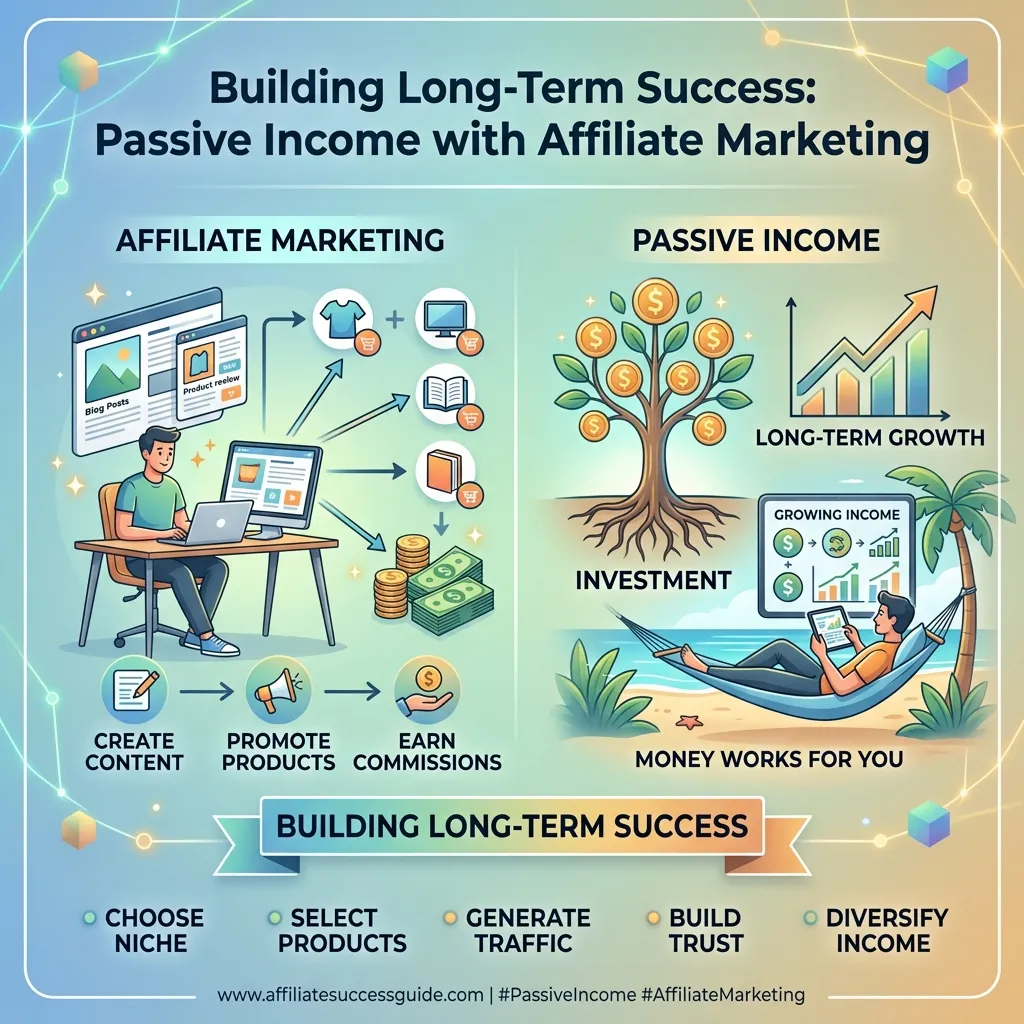
Sustainable passive income with affiliate marketing requires more than one-time optimization sprints. It demands a long-term approach.
Diversify your affiliate portfolio across multiple programs, niches, and traffic sources. Over-reliance on a single affiliate program or platform creates fragility—commission rate changes, program shutdowns, or algorithm updates can devastate income overnight.
Maintain ethical practices consistently. Disclose your affiliate relationships clearly, as required by the FTC. Promote only products you genuinely believe in. Readers who feel deceived don’t return—and long-term affiliate income depends on recurring, trust-based traffic.
Review your affiliate portfolio quarterly. Drop underperforming offers, test new programs, and reallocate content effort toward your highest-converting partnerships. Treat affiliate marketing as a business, not a passive side project, and the passive income follows naturally.
Conclusion: Mastering How to Increase Affiliate Conversion Rate
Learning how to increase affiliate conversion rate is not a one-time fix—it’s an ongoing process of testing, analyzing, and refining. The strategies covered in this guide work together as a system. Affiliate landing page optimization improves your foundation. Better landing page conversion ads improve traffic quality. Persuasive content builds trust. Technical SEO removes friction. Data analytics ensures you’re improving the right things.
Start with the areas that offer the biggest gap between current performance and potential. If your pages load slowly or your CTAs are unclear, fix those first. Then layer in email marketing, retargeting, and personalization as your confidence grows.
Consistent, compounding improvements are what separate affiliates who build real passive income with affiliate marketing from those who remain stuck chasing traffic. The opportunity is there—the path is optimization.
Frequently Asked Questions
What is a good affiliate conversion rate?
A good affiliate conversion rate depends on the niche and offer type. Generally, 1–3% is considered average, while 3–5% is strong. High-ticket offers may convert below 1% but generate higher earnings per conversion. Compare your rate against industry benchmarks for your specific category rather than using a universal standard.
How often should I A/B test my affiliate landing pages?
Run A/B tests continuously, but test one element at a time. Most tests require a minimum of two weeks and at least 100 conversions per variant to reach statistical significance. Prioritize testing high-impact elements first: headlines, CTAs, and page layout typically yield the largest conversion gains.
What are the best tools for tracking affiliate conversions?
The most effective tools for tracking affiliate conversions include Google Analytics 4 for on-site behavior, Hotjar or Microsoft Clarity for heatmaps and session recordings, and your affiliate network’s native dashboard (ShareASale, Impact, CJ Affiliate). For comprehensive tracking, ClickMagick and Voluum are purpose-built affiliate tracking platforms worth considering.
Can SEO directly impact my affiliate conversion rate?
Yes. SEO brings in higher-intent traffic—users actively searching for solutions—which typically converts at higher rates than cold social traffic. Ranking for buyer-intent keywords like “best [product] for [use case]” or “[product] review” delivers pre-qualified visitors who are already closer to a purchase decision, which raises your overall affiliate conversion rate.
How can I improve my landing page conversion ads?
To improve landing page conversion ads, align your ad message precisely with your landing page content, use audience targeting based on intent signals, test multiple creative formats (video, static, carousel), and ensure your landing page loads in under three seconds. Consistent messaging from ad to landing page is the most commonly overlooked factor in a low ad conversion rate.
What role does trust play in increasing affiliate conversions?
Trust is foundational to affiliate conversions. Readers who don’t trust your recommendations won’t act on them. Build trust by disclosing affiliate relationships transparently, reviewing only products you’ve genuinely used, including balanced pros and cons, and sharing real results. Trust built over time creates the repeat visitors and loyal audience that drive sustainable affiliate income.
Are there specific niches where it’s easier to increase affiliate conversion rates?
Niches with high purchase intent and strong information gaps tend to convert more easily. Software (SaaS), personal finance, health and wellness, and online education consistently show strong affiliate conversion rates. Niches where buyers actively research before purchasing—and where your content can answer their questions thoroughly—tend to be most conversion-friendly.
How can I optimize for a better ad conversion rate?
To improve your ad conversion rate, use precise audience segmentation, write ad copy that mirrors your target audience’s exact language, test native-style creative, and maintain message continuity between your ad and your landing page. Retargeting campaigns targeting people who have already visited your site deliver significantly higher ad conversion rates than cold audiences.
What are common mistakes to avoid when trying to increase affiliate conversions?
The most common mistakes include promoting too many products without adequate depth, failing to A/B test landing pages, using generic CTAs, ignoring mobile optimization, and not tracking conversions accurately. Overloading pages with affiliate links also signals low quality to both readers and search engines, which reduces both trust and traffic.
How long does it take to see significant improvements in conversion rate?
Most affiliates see measurable improvements within 30–90 days of implementing systematic optimization. Quick wins—like fixing page speed issues or clarifying CTAs—can show results within days. More complex improvements, like building email sequences or accumulating A/B test data, take longer but typically deliver more durable gains.
How can I build passive income with affiliate marketing?
Building passive income with affiliate marketing requires three pillars: high-quality content that ranks organically over time, a diversified affiliate portfolio across multiple programs, and a well-optimized conversion funnel that works without constant intervention. Focus on evergreen content topics, build an email list for repeat traffic, and reinvest early earnings into additional content and optimization.
What is the best way to use email marketing for affiliate conversions?
Build your email list with a high-value lead magnet aligned with your niche. Deliver consistent value in your emails before introducing affiliate offers. Segment your list based on interests and behavior for better personalization. According to industry benchmarks, email marketing delivers an average ROI of $36 for every $1 spent—making it one of the most effective tools for increasing affiliate conversion rate over time.