
In today’s digital landscape, affiliate strategies continue to evolve rapidly, driven by the need for enhanced transparency, security, and efficiency. As digital channels expand, marketers are exploring innovative solutions to foster trust among stakeholders and streamline commission flows. One of the most promising developments this year is the integration of blockchain affiliate marketing into mainstream campaigns. By leveraging distributed ledger technology and programmable smart contracts, brands and publishers can record and verify every referral event immutably, reducing disputes and accelerating payouts.
Historically, affiliate networks have relied on centralized databases and manual reconciliations, often resulting in delayed commissions, data discrepancies, and a lack of real-time visibility. Blockchain affiliate marketing addresses these challenges by offering decentralized record-keeping and automated execution of commission agreements. Affiliates gain confidence knowing transactions are visible on an unalterable ledger, while advertisers benefit from reduced administrative overhead and fraud mitigation.
In this comprehensive blog post, we’ll explore the core principles of blockchain affiliate marketing, examine its key benefits, outline practical implementation strategies, and offer a roadmap for launching a robust, blockchain-powered program. We’ve also included real-world examples and external insights from authoritative sources like IBM’s blockchain overview and the U.S. Government’s digital transformation site to help you make informed decisions. Whether you’re an affiliate manager, brand marketer, or technology leader, this guide will equip you with the knowledge needed to harness blockchain affiliate marketing for sustained growth and competitive advantage.
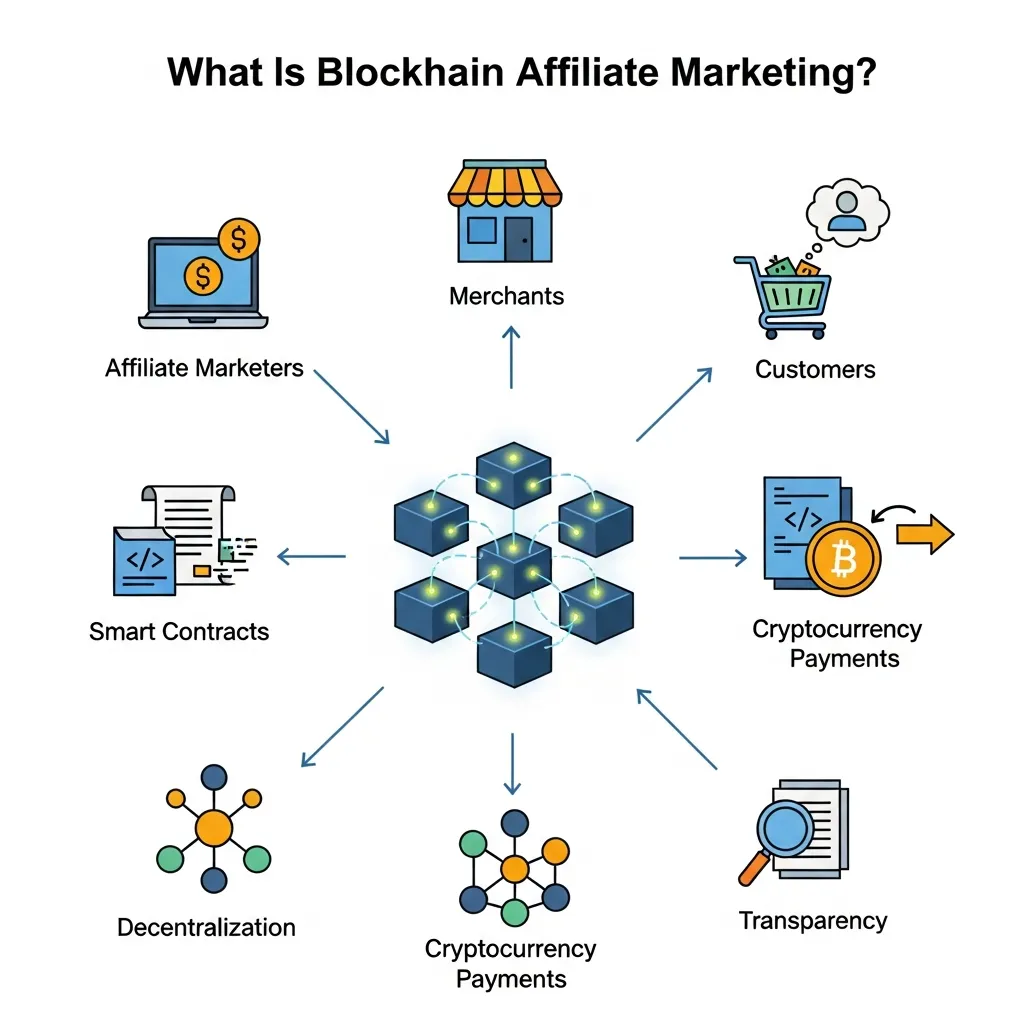
Key Benefits: Transparency and Security
Blockchain affiliate marketing offers compelling advantages that address the most persistent pain points in conventional programs. Among these, transparency and security stand out as transformative factors that redefine how brands and affiliates interact.
Immutable Transaction Records
One of the most celebrated benefits of blockchain is its immutability. Once a referral event is recorded on the ledger, it cannot be altered or deleted. This unchangeable record mitigates the risk of fraudulent chargebacks or manipulated click data. Affiliates can independently verify each event, and advertisers can audit performance metrics without relying on intermediaries.
Decentralized Architecture Reduces Vulnerabilities
Centralized affiliate platforms present single points of failure. Network outages or security breaches can disrupt tracking and expose sensitive data. Blockchain’s decentralized network stores records on multiple nodes, making it virtually impervious to unauthorized tampering. Additionally, cryptographic hashing secures each block, ensuring that any attempt to alter a past transaction would break the entire chain, immediately signaling foul play.
Real-Time Dashboards for Stakeholder Confidence
Access to synchronized dashboards delivers real-time insights for both advertisers and affiliates. Rather than waiting days or weeks for settlement reports, partners can monitor clicks, conversions, and payouts as they occur. This level of openness fosters a collaborative environment where issues are identified and resolved swiftly, further strengthening trust between parties.
Implementing Smart Contracts for Automated Commissions

Smart contracts lie at the heart of blockchain affiliate marketing, enabling autonomous, rule-based execution of commission agreements. By embedding payout conditions directly into code, brands can ensure precision, consistency, and speed in rewarding affiliates.
Selecting the Right Blockchain Platform
Implementation begins with choosing an appropriate blockchain framework. Public networks like Ethereum and Binance Smart Chain offer extensive tooling and community support, while permissioned ledgers such as Hyperledger Fabric can provide greater control and privacy. Factors like transaction fees, throughput, and security requirements should guide platform selection.
Writing and Auditing Smart Contract Code
Developers author smart contracts in specialized languages—Solidity for Ethereum or Chaincode for Hyperledger. It’s essential to follow best practices for secure coding and to commission third-party security audits. This step prevents vulnerabilities such as reentrancy attacks or integer overflows, which could jeopardize affiliate payouts or program integrity.
Automated Commission Flows
Once deployed, smart contracts automatically process events that meet predefined criteria. For instance, a contract may stipulate a 10% commission on purchases over $50 through an affiliate link. When the blockchain verifies a qualifying transaction, the contract releases funds immediately, cutting out manual reconciliation and reducing delays to near-zero.
Designing Token-Based Affiliate Incentives
Beyond traditional fiat payouts, many programs now integrate proprietary tokens to incentivize affiliates and encourage deeper engagement. Token economies can represent loyalty points, governance rights, or access privileges, creating multifaceted value for participants.
Tokenomics and Incentive Structures
Effective token-based affiliate programs begin with robust tokenomics design. Establishing a capped supply, distribution schedule, and vesting terms helps balance immediate rewards with long-term ecosystem growth. Affiliates earn tokens based on performance metrics—such as sales volume or new customer referrals—and can later redeem them for cash, discounts, or exclusive services.
Governance and Community Engagement
Tokens can empower affiliates to participate in program governance through decentralized voting mechanisms. By allocating voting power proportional to token holdings, brands encourage collaborators to contribute ideas on promotional strategies, product features, or reward structures. This participatory model strengthens community bonds and drives collective commitment to program success.
Redemption and Utility
For tokens to maintain value, clear utility must exist. Affiliates might redeem tokens for advanced analytics tools, premium marketing content, or platform fee waivers. By aligning token utility with affiliate needs, brands create a self-reinforcing ecosystem that scales organically and remains resilient amid market fluctuations.
Navigating Implementation Challenges in Blockchain Affiliate Marketing

While the potential of blockchain affiliate marketing is significant, successfully implementing it requires careful planning, technical expertise, and strategic execution. Organizations must balance innovation with practicality to ensure smooth adoption and long-term scalability. Below are the key challenges and effective strategies to overcome them.
Technical Complexity
One of the biggest barriers in adopting blockchain affiliate marketing is the technical complexity involved in building and maintaining the system. Developing, deploying, and auditing smart contracts requires specialized blockchain developers who understand cryptography, distributed systems, and secure coding practices.
For many organizations, especially those new to blockchain, this expertise may not be available in-house. As a result, businesses often collaborate with experienced blockchain development agencies or use white-label affiliate solutions to speed up implementation. While these options reduce development time and simplify deployment, they can sometimes limit flexibility and customization. Therefore, companies must carefully evaluate whether they prioritize faster market entry or a fully tailored blockchain affiliate marketing system aligned with their long-term goals.
User Experience Optimization
Another critical challenge in blockchain affiliate marketing is ensuring a smooth and user-friendly experience for affiliates. Many traditional marketers and content creators may not be familiar with blockchain tools such as digital wallets, private keys, or token-based transactions.
To overcome this, businesses must prioritize simplicity in onboarding. This can include integrating non-custodial wallet solutions that eliminate complex setup steps, designing intuitive dashboards, and providing clear, step-by-step onboarding guides. Additionally, offering responsive customer support and educational resources helps reduce friction and builds confidence among users. A seamless user experience is essential for driving adoption and ensuring consistent participation in blockchain affiliate marketing programs.
Regulatory and Compliance Considerations
Regulatory compliance is another major factor that cannot be overlooked in blockchain affiliate marketing. The use of tokens and decentralized payment systems may raise legal questions regarding whether certain digital assets qualify as securities in different jurisdictions.
To mitigate legal risks, organizations should engage legal experts early in the planning process. Compliance with financial regulations, data protection laws, and anti-money laundering (AML) requirements is essential. Transparent token documentation, clear disclaimers, and well-structured whitepapers can further strengthen legal clarity and trust.
By proactively addressing regulatory concerns, businesses can ensure that their blockchain affiliate marketing programs remain compliant, secure, and sustainable while building confidence among partners and users.
Conclusion
Blockchain affiliate marketing is transforming how brands and affiliates collaborate by introducing unalterable ledgers, smart contract automation, and token-based incentive models. Today, marketers can leverage these innovations to eliminate opaque reporting, accelerate commission flows, and build enduring trust with partners. While technical and regulatory challenges remain, a phased, disciplined approach—starting with clear objectives, the right blockchain platform, and thorough smart contract audits—will set the stage for success.
As decentralized networks mature, pioneers in blockchain affiliate marketing will enjoy greater transparency, security, and engagement. By embracing this cutting-edge strategy this year, your business can achieve scalable growth, stronger alliances, and a distinct competitive advantage in the affiliate landscape.
Frequently Asked Questions About Blockchain Affiliate Marketing
1. What is Blockchain Affiliate Marketing?
Blockchain Affiliate Marketing is a system where referral tracking and commission payments are recorded on a decentralized blockchain network using smart contracts for transparency and security.
2. How does Blockchain Affiliate Marketing work?
It works by recording affiliate clicks, leads, and sales on a blockchain ledger, while smart contracts automatically trigger commission payouts once conditions are met.
3. Why is Blockchain Affiliate Marketing important?
Blockchain Affiliate Marketing is important because it improves transparency, reduces fraud, ensures accurate tracking, and speeds up affiliate commission payments.
4. What are smart contracts in Blockchain Affiliate Marketing?
Smart contracts are self-executing codes that automatically release affiliate commissions when predefined conditions like verified sales are completed.
5. How does Blockchain Affiliate Marketing improve transparency?
It provides a shared, immutable ledger where all stakeholders can view real-time, tamper-proof data about clicks, conversions, and payouts.
6. Is Blockchain Affiliate Marketing secure?
Yes, Blockchain Affiliate Marketing is highly secure due to encryption, decentralized data storage, and cryptographic validation of transactions.
7. What are the benefits of Blockchain Affiliate Marketing for affiliates?
Affiliates benefit from faster payments, reduced disputes, transparent tracking, and guaranteed commission accuracy.
8. What are the benefits for businesses?
Businesses gain fraud reduction, lower administrative costs, real-time reporting, and improved trust with affiliate partners.
9. Do I need technical knowledge for Blockchain Affiliate Marketing?
Basic understanding helps, but many platforms now offer user-friendly dashboards that simplify Blockchain Affiliate Marketing for beginners.
10. What challenges exist in Blockchain Affiliate Marketing?
Challenges include technical complexity, regulatory uncertainty, wallet setup issues, and the need for smart contract auditing.
11. Can tokens be used in Blockchain Affiliate Marketing?
Yes, some systems use tokens as rewards for affiliates, which can be redeemed for cash, services, or governance participation.
12. What is the future of Blockchain Affiliate Marketing?
The future includes wider adoption of smart contracts, AI integration, faster global payments, and more transparent affiliate ecosystems powered by blockchain.