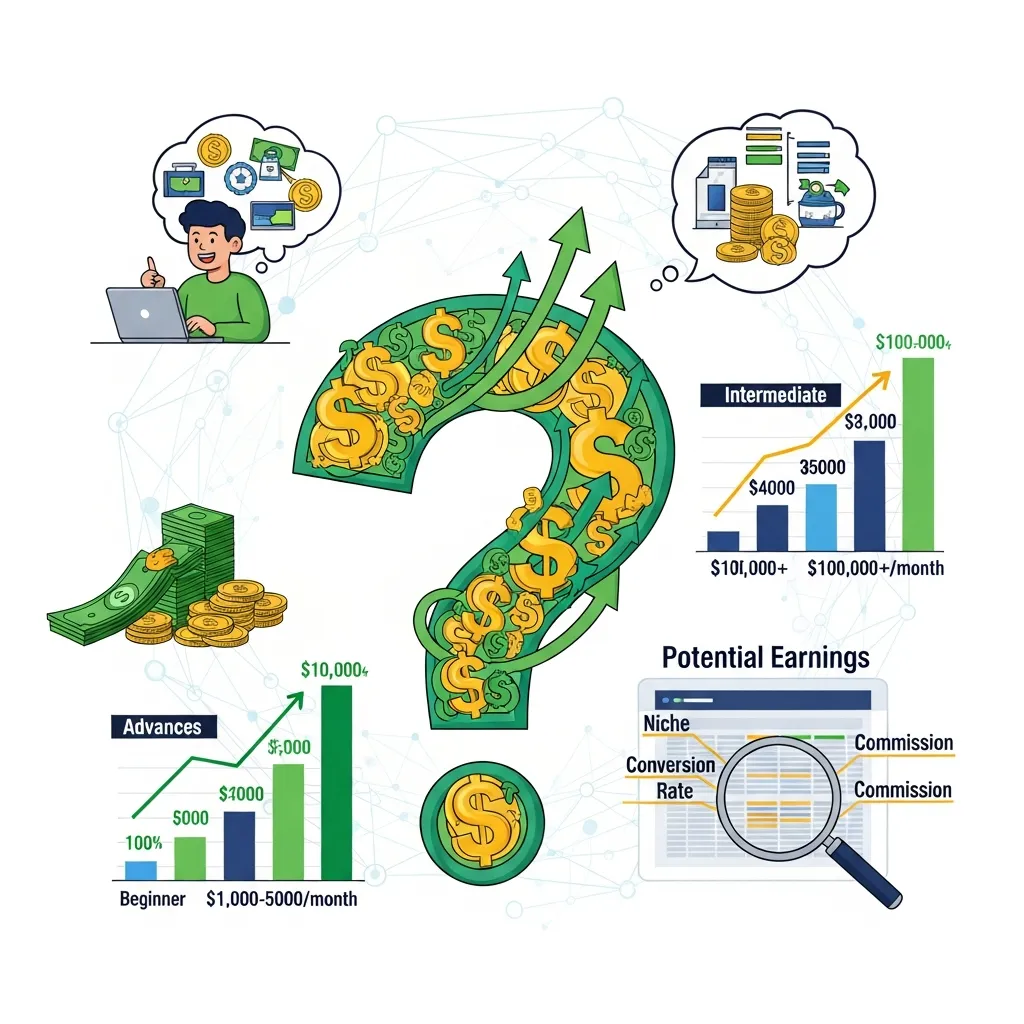
Affiliate marketing earnings range widely—from $0 for beginners to over $100,000 a month for top performers. Most affiliates earn between $0 and $1,000 monthly in their first year, while experienced marketers with strong traffic and the right niche can earn six or seven figures annually. Your results depend on niche, traffic, and strategy.
Affiliate marketing is one of the most popular ways to build an online income, but the numbers attached to it can feel confusing. Some people claim they earn pocket change. Others post screenshots of five-figure monthly payouts. So what’s the truth?
This post answers the question on every aspiring marketer’s mind: how much can you earn from affiliate marketing? We’ll break down realistic income ranges, the factors that shape your earnings, and a clear path from your first commission to a sustainable revenue stream. You’ll also learn which mistakes drain profits and how to scale once you find traction.
Whether you’re just getting started or trying to push past a plateau, the insights below will help you set realistic goals and build a plan that actually works. Let’s get into the details.
What Is Affiliate Marketing and Why Pursue It?
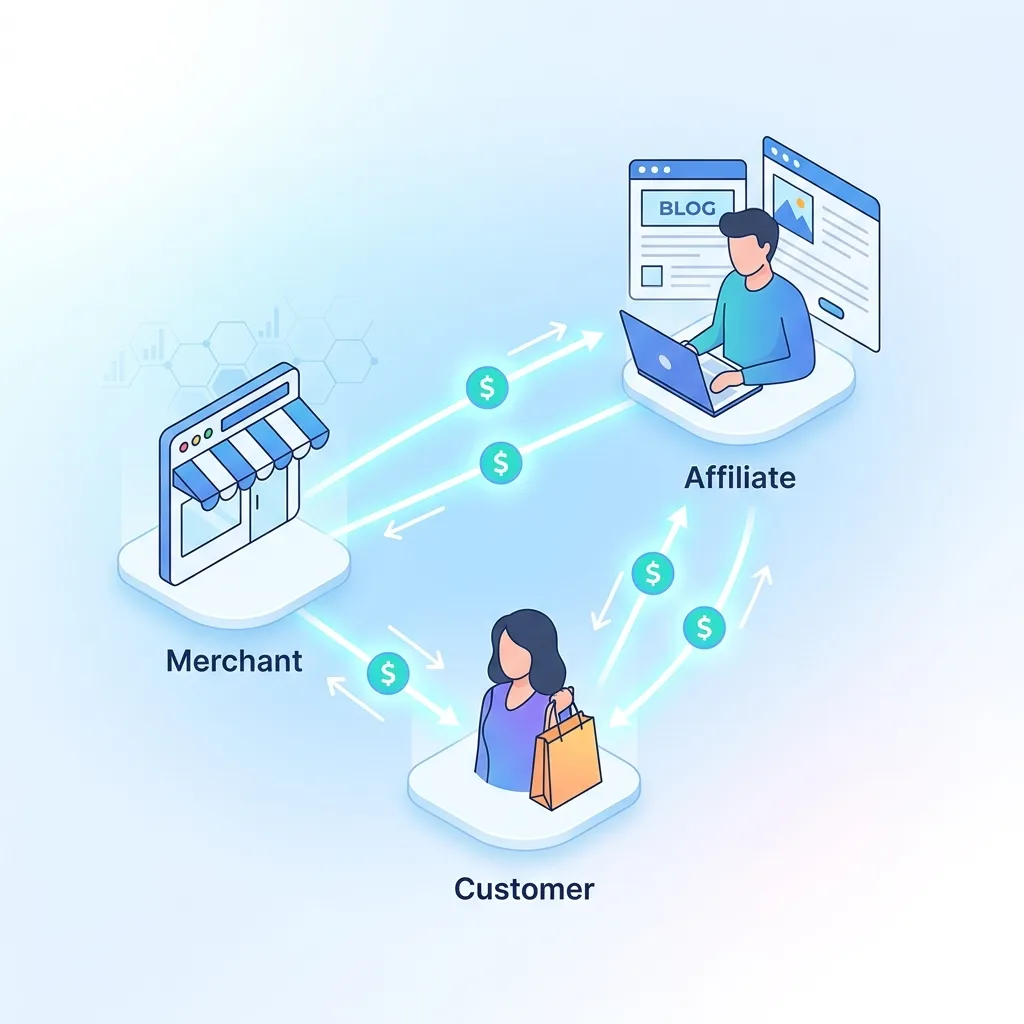
Affiliate marketing is a performance-based model where you earn a commission for promoting another company’s products or services. You share a unique tracking link, and when someone clicks it and completes an action—usually a purchase—you get paid.
The appeal is obvious. You don’t need to create your own product, manage inventory, or handle customer service. You can start with a small budget, work from anywhere, and scale your income over time. According to industry estimates, affiliate marketing spending in the United States alone is projected to surpass $10 billion, which shows how much room there is for new participants.
Still, the question of how much can you earn from affiliate marketing depends heavily on effort, strategy, and patience. This isn’t a get-rich-quick scheme. It’s a real business model that rewards consistency. Setting realistic expectations from day one will save you from frustration and help you stay in the game long enough to see results.
How Do Affiliate Marketing Earnings Actually Work?
Before you can estimate your income, you need to understand how affiliates get paid. Earnings hinge on a few core variables: your commission structure, your niche, the products you promote, and the traffic you drive.
What Are the Main Commission Structures?
Affiliate programs typically pay using one of three models:
- CPA (Cost Per Action): You earn a fixed amount when a user completes a specific action, such as signing up for a free trial.
- CPL (Cost Per Lead): You’re paid when a referral becomes a lead, often by submitting an email or filling out a form.
- CPS (Cost Per Sale): The most common model—you earn a percentage or flat fee whenever your referral makes a purchase.
Commission rates vary dramatically. Physical product programs like Amazon Associates often pay 1% to 10%, while digital products and software can pay 20% to 50% or more per sale.
How Does Niche Selection Affect Income?
Your niche is one of the biggest factors in how much can you earn from affiliate marketing. High-value niches—finance, software, health, and online business—tend to pay higher commissions because the underlying products cost more. A single sale in the software niche might earn you $100, while a kitchen gadget might earn $2.
That said, profitable niches are competitive. A smaller, focused niche with less competition can sometimes outperform a broad one because you build trust faster with a targeted audience.
Are Digital or Physical Products More Profitable?
Digital products—courses, software, memberships, and ebooks—usually offer the highest margins, which means higher commissions for you. Many digital programs also offer recurring commissions, paying you every month a customer stays subscribed. Physical products convert easily but pay less per sale. The smartest affiliates often blend both.
Why Does Traffic Determine Your Earnings?
No traffic means no clicks, and no clicks means no commissions. Traffic is the fuel of every affiliate business. More importantly, the quality of your traffic matters more than the quantity. A small audience of engaged, ready-to-buy readers will earn more than a large, unfocused crowd.
What Does a Beginner’s Affiliate Marketing Roadmap Look Like?

Starting out can feel overwhelming, so a clear affiliate marketing roadmap keeps you focused. Here’s a practical path for newcomers.
How Do You Build an Affiliate Marketing Roadmap?
A solid affiliate marketing roadmap follows these stages:
- Pick a niche you understand and that has buyer demand.
- Choose a platform—a blog, YouTube channel, or social account.
- Join affiliate programs that fit your niche.
- Create helpful content that solves real problems.
- Drive traffic and optimize based on results.
Following an affiliate marketing roadmap prevents the scattered, trial-and-error approach that stalls so many beginners.
What Tools and Platforms Do Beginners Need?
You don’t need expensive software to start. A few essentials include:
- A website or content platform (WordPress is popular and affordable).
- An email marketing tool to build a subscriber list.
- Analytics tools like Google Analytics to track performance.
- Keyword research tools to find topics people search for.
What Income Can Beginners Realistically Expect?
In the first three to six months, many beginners earn little to nothing. This is normal. Once your content gains traction, you might earn $100 to $1,000 per month within the first year. The marketers who push through that early quiet period are the ones who eventually break out.
What Are the 10 Affiliate Marketing Mistakes Beginners Make?
A popular Facebook ad once highlighted the “10 affiliate marketing mistakes beginners make,” and the list rings true. Avoid these common traps:
- Choosing a niche with no buyer intent.
- Promoting too many products at once.
- Ignoring SEO and search intent.
- Skipping email list building.
- Writing thin, salesy content.
- Failing to disclose affiliate links.
- Chasing high commissions over relevance.
- Neglecting mobile optimization.
- Quitting before content matures.
- Never tracking or testing results.
Learning the 10 affiliate marketing mistakes beginners make early can save you months of wasted effort.
How Do You Scale Your Affiliate Marketing Income?
Once you’re earning consistently, scaling becomes the goal. This is where small incomes grow into substantial ones.
Should You Diversify Your Affiliate Programs?
Relying on a single program is risky. If that program changes its commission rate or shuts down, your income vanishes overnight. Diversifying across several programs and product types protects your business and opens new revenue streams.
What Are the Best Traffic Generation Techniques?
To grow, expand beyond a single traffic source:
- SEO: Free, long-term traffic from search engines—often the highest-ROI channel.
- Paid ads: Platforms like Google and Facebook can scale fast, but require budget and testing.
- Social media: Builds community and trust, especially on YouTube, Instagram, and TikTok.
How Do You Build an Affiliate Content Strategy for Beginners?
A strong affiliate content strategy for beginners focuses on solving problems rather than pushing products. Create content types that naturally lead to recommendations:
- Product reviews that are honest and detailed.
- Comparison posts (“Tool A vs. Tool B”).
- How-to guides that include affiliate tools.
- Best-of lists for your niche.
A consistent affiliate content strategy for beginners builds authority, and authority drives conversions. The more your audience trusts you, the more they buy through your links.
Why Does Email Marketing Matter for Growth?
Email gives you direct access to your audience without depending on algorithms. By nurturing subscribers with valuable content and timely recommendations, you can drive repeat conversions and stabilize your income for the long term.
What Factors Influence How Much You Can Earn?
Several variables determine where you land on the income spectrum.
- Audience size and engagement: A loyal, engaged audience converts far better than a large, passive one.
- Conversion rates: Even small improvements in conversion can dramatically boost earnings.
- Competition: Crowded niches require more skill and patience to break into.
- Market trends: Demand shifts, seasonal spikes, and economic conditions all affect buying behavior.
Understanding these factors helps you answer how much can you earn from affiliate marketing in your specific situation, rather than relying on generic averages.
What Do Real Affiliate Income Levels Look Like?
Income tiers in affiliate marketing tend to fall into recognizable ranges:
- Beginners (0–12 months): $0 to $1,000 per month.
- Intermediate (1–3 years): $1,000 to $10,000 per month.
- Advanced (3+ years): $10,000 to $100,000+ per month.
Top affiliates in lucrative niches—like software, finance, and online education—report annual earnings well into six and seven figures. These results usually come from years of building content, audiences, and email lists. The lesson across every success story is the same: consistency and trust compound over time.
When people ask how much can you earn from affiliate marketing, the honest answer is that your ceiling is high, but it takes time to reach.
How Do You Maximize Profitability?
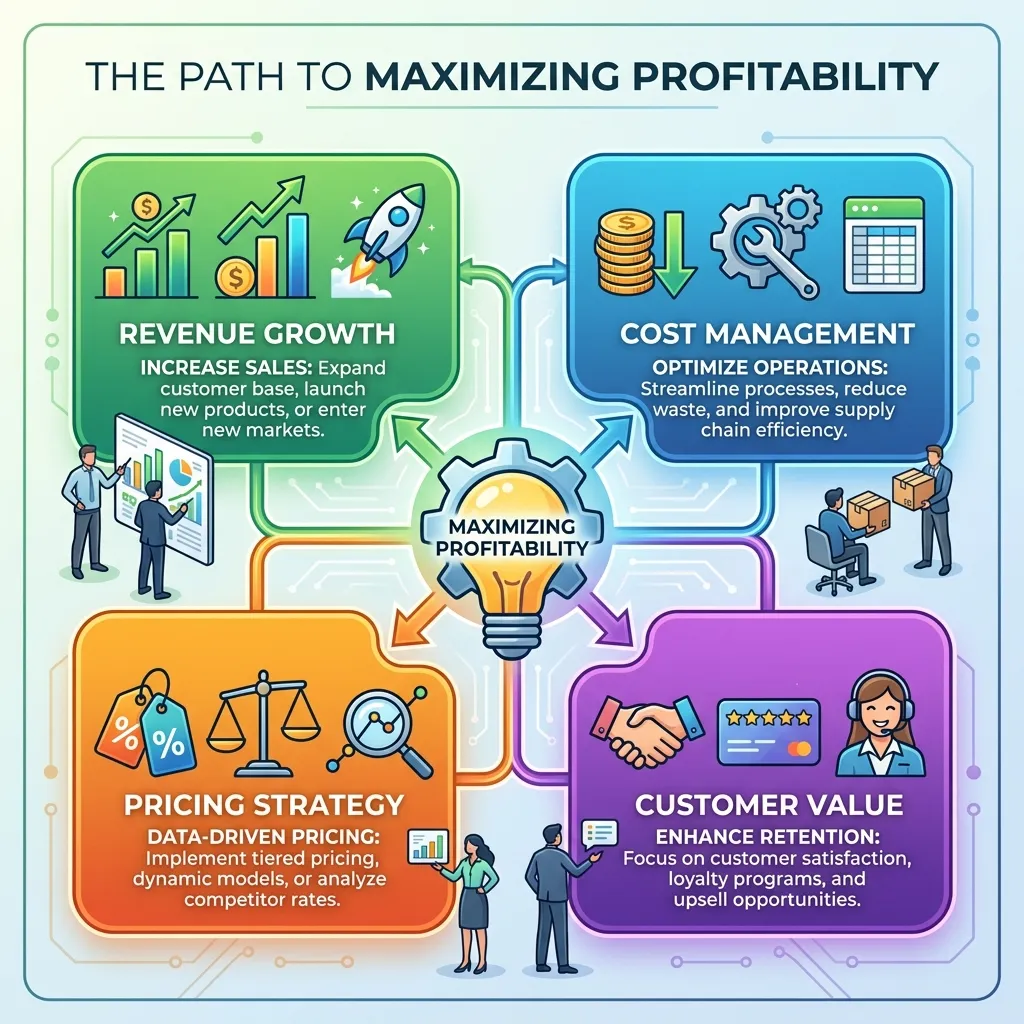
Earning more isn’t only about traffic—it’s about working smarter.
- Keep learning: The industry changes fast. Stay current with SEO, platforms, and consumer behavior.
- Build trust: Recommend only products you believe in. Trust is your most valuable asset.
- Stay compliant: Always disclose affiliate relationships and follow FTC guidelines. Ethical marketing protects your reputation and your income.
These habits separate marketers who earn steadily from those who flame out.
Conclusion
So, how much can you earn from affiliate marketing? The range is enormous—from nothing in the early months to life-changing income for those who stick with it. Your earnings depend on your niche, your traffic, your content, and your willingness to keep improving.
Start with a clear affiliate marketing roadmap. Avoid the common beginner mistakes. Build a thoughtful affiliate content strategy for beginners, and scale once you find what works. The marketers who succeed aren’t necessarily the most talented—they’re the most consistent.
Your next step is simple: pick a niche, choose one platform, and publish your first piece of helpful content this week. The sooner you start, the sooner your earnings can grow.
Frequently Asked Questions
How long does it take to start earning from affiliate marketing?
Most beginners see their first commissions within three to six months, though meaningful income often takes a full year of consistent effort. Speed depends on your niche, content quality, and traffic strategy.
Can you really get rich with affiliate marketing?
Yes, but it’s rare and takes time. Top affiliates earn six or seven figures annually, but they typically spend years building audiences, content libraries, and email lists before reaching that level.
What are the best affiliate programs for beginners?
Amazon Associates is beginner-friendly thanks to its huge product range. ShareASale, CJ Affiliate, and individual software programs with recurring commissions are also strong starting points.
How much does the average affiliate marketer make per month?
Earnings vary widely. Many beginners make under $1,000 per month, intermediate marketers earn $1,000 to $10,000, and advanced marketers can exceed $100,000 monthly in profitable niches.
What are the biggest challenges in affiliate marketing?
Generating consistent traffic, building audience trust, and staying patient during the slow early months are the biggest hurdles. Competition in popular niches adds another layer of difficulty.
Is affiliate marketing still profitable in 2024?
Yes. With affiliate spending continuing to grow, the model remains profitable. Success now depends more on quality content, trust, and search visibility than on quick tricks.
How do I track my affiliate earnings?
Most affiliate programs and networks provide dashboards that show clicks, conversions, and commissions. Pairing these with Google Analytics gives you a clearer picture of what content drives sales.
What is a good conversion rate for affiliate marketing?
A typical affiliate conversion rate falls between 0.5% and 5%, depending on niche and traffic quality. Rates above 5% are considered strong and usually reflect highly targeted traffic.
What are some common mistakes to avoid in affiliate marketing?
Avoid promoting too many products, ignoring SEO, skipping email list building, and writing overly salesy content. Reviewing the 10 affiliate marketing mistakes beginners make can help you steer clear of costly errors.
Do I need a website to do affiliate marketing?
No, but it helps. You can use YouTube, social media, or email instead. A website gives you more control and long-term SEO traffic, making it the most sustainable option.
What is the difference between an affiliate network and an affiliate program?
An affiliate program is run by a single company for its own products. An affiliate network is a marketplace—like ShareASale or CJ Affiliate—that connects you to many programs in one place.
How can I increase my affiliate income quickly?
Focus on high-converting content, promote products with recurring commissions, build an email list, and improve your existing pages. Optimizing what already gets traffic often delivers the fastest gains.