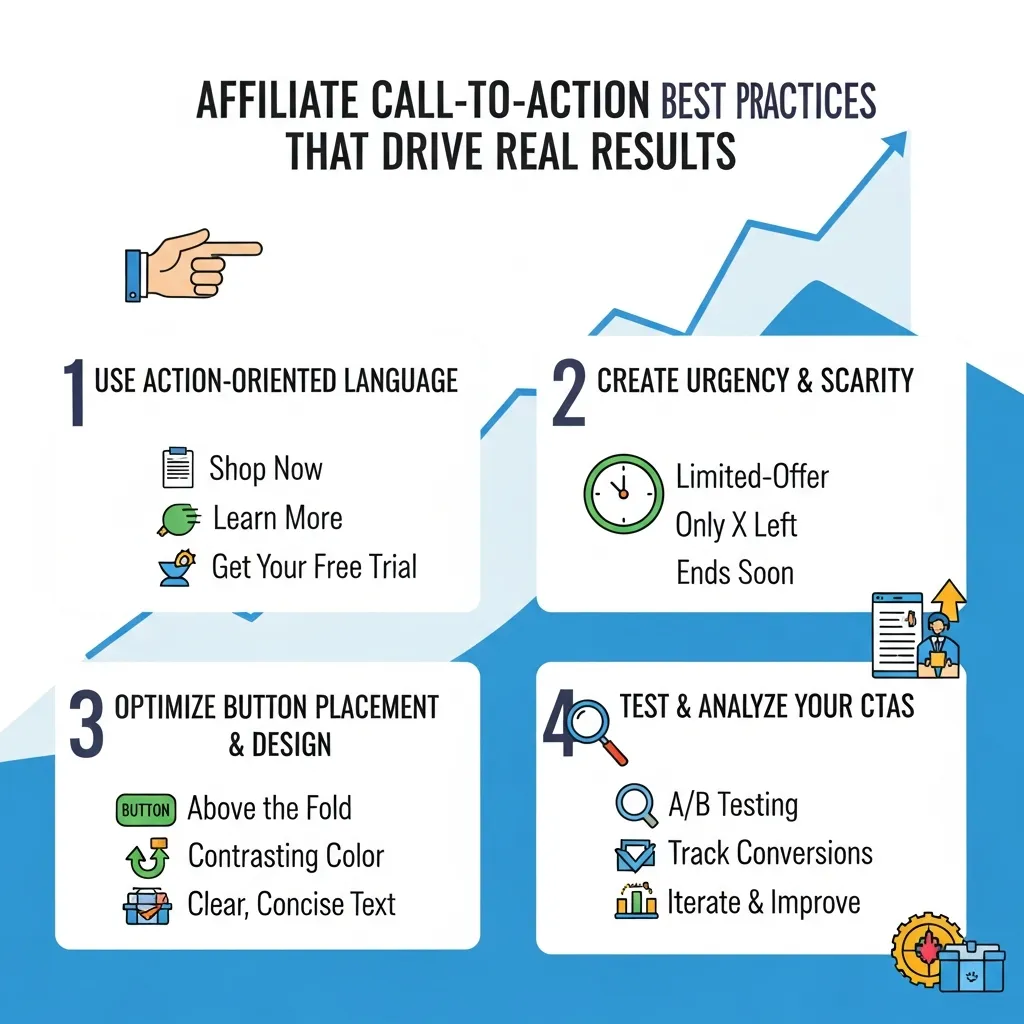
Affiliate Call-To-Action best practices involve crafting action-oriented copy, strategic visual design, and smart placement across landing pages and content. When paired with consistent A/B testing and audience alignment, optimized CTAs can dramatically improve your Affiliate Conversion Rate and move prospects efficiently through the Marketing Funnel in Digital Marketing.
Clicks don’t happen by accident. Behind every successful affiliate campaign is a call-to-action that was carefully written, thoughtfully designed, and precisely placed. Yet most affiliate marketers treat CTAs as an afterthought—a button slapped at the bottom of a page after the “real” work is done.
That’s a costly mistake.
Your CTA is the bridge between a reader’s interest and an actual conversion. Everything else on your page—the headline, the copy, the images—exists to get someone to that one moment. If the CTA fails, the entire funnel fails with it.
This guide covers Affiliate Call-To-Action best practices from the ground up. You’ll learn how to write copy that compels action, design buttons that stand out, place CTAs where they perform best, and avoid the Critical SEO Mistakes that quietly kill your rankings. Whether you’re just getting started or looking to sharpen an existing strategy, there’s something here for every stage of your affiliate journey.
What Is an Affiliate CTA and Why Does It Matter?

An affiliate CTA—or call-to-action—is a prompt that directs your audience toward a specific action, typically clicking an affiliate link to visit a merchant’s page. It can take the form of a button, hyperlinked text, a banner, or a pop-up. The goal is always the same: convert a visitor into a paying customer.
CTAs sit at the heart of the Marketing Funnel in Digital Marketing. At the awareness stage, they might invite someone to “Learn More.” At the decision stage, they push for “Buy Now” or “Claim Your Discount.” The CTA has to match where the user is in their journey. A mismatch here—say, pushing a hard sell to someone still in research mode—creates friction and kills conversions.
Effective Affiliate Call-To-Action best practices recognize that a well-placed, well-worded CTA isn’t just a tactical element. It’s a strategic one.
How Do Buyer Personas Shape Affiliate CTA Design?
Before writing a single word of CTA copy, you need to understand who you’re writing it for. A buyer persona is a semi-fictional profile of your ideal customer—their goals, pain points, objections, and motivations.
A 45-year-old homeowner searching for home security systems responds to very different language than a 22-year-old student looking for productivity apps. The former might respond to “Protect Your Family Today,” while the latter engages more with “Boost Your Focus for Free.”
Matching your CTA to the value proposition of the affiliate product reinforces trust. If you’re promoting a premium SaaS tool, your CTA should reflect the premium nature of the offer—something like “Start Your 14-Day Free Trial” outperforms the generic “Click Here” every single time. Affiliate Call-To-Action best practices always start with audience clarity.
How Do You Write High-Converting Affiliate CTA Copy?
Great CTA copy does four things well: it uses action-oriented language, creates a sense of urgency, highlights benefits over features, and stays concise.
Use strong verbs. “Get,” “Start,” “Claim,” “Unlock,” and “Discover” create momentum. Passive language like “Learn About Our Offer” does not.
Create urgency and scarcity—authentically. Phrases like “Limited Time Offer” or “Only 3 Spots Left” work, but only when they’re true. Manufactured urgency erodes trust quickly.
Lead with benefits, not features. “Save 40% on Your Monthly Bill” beats “See Our Pricing Plans.” The reader wants to know what’s in it for them, not what the product does.
Here are examples of high-converting affiliate CTAs:
- “Claim Your Free Trial – No Credit Card Required”
- “Get 50% Off Today Only”
- “Start Saving on [Product Category] Right Now”
- “See Why 10,000+ Users Trust [Brand]”
These follow Affiliate Call-To-Action best practices because they’re specific, benefit-driven, and easy to act on.
What Role Does Visual Design Play in CTA Effectiveness?
Copy alone doesn’t convert. The visual design of your CTA determines whether it even gets noticed.
Color psychology matters. High-contrast buttons—orange on white, green on dark backgrounds—draw the eye naturally. The goal is to make your CTA button the most visually prominent element on the page. Avoid blending it into the surrounding design.
Size and shape signal importance. Buttons should be large enough to tap on mobile but not so oversized they look spammy. Rounded corners tend to feel more inviting than sharp, angular shapes.
Whitespace is your ally. Surrounding your CTA with enough empty space gives it room to breathe and focuses attention. A cluttered page dilutes the impact of even the strongest CTA.
Following these visual Affiliate Call-To-Action best practices ensures your button gets seen before it gets clicked.
Where Should You Place CTAs in Affiliate Content?
Placement is one of the most debated aspects of CTA strategy—and for good reason. The “above the fold” rule (placing CTAs before users have to scroll) holds true for high-intent landing pages. But for content-driven affiliate pages like reviews and comparisons, CTAs placed within and at the end of content often outperform top-of-page placements.
Within content: Embedding CTAs naturally after addressing a key pain point works well because the reader’s interest is at its peak. This is where Affiliate Call-To-Action best practices align with content strategy.
End-of-post CTAs: Readers who reach the end of a post are your most engaged visitors. A strong closing CTA—backed by a summary of the benefits—converts these warm readers effectively.
Intrusive CTAs hurt conversions. Pop-ups and interstitials that appear too quickly or block content create a poor user experience and can contribute to Critical SEO Mistakes when Google factors page experience into rankings.
How Does Affiliate Landing Page Optimization Affect CTA Performance?
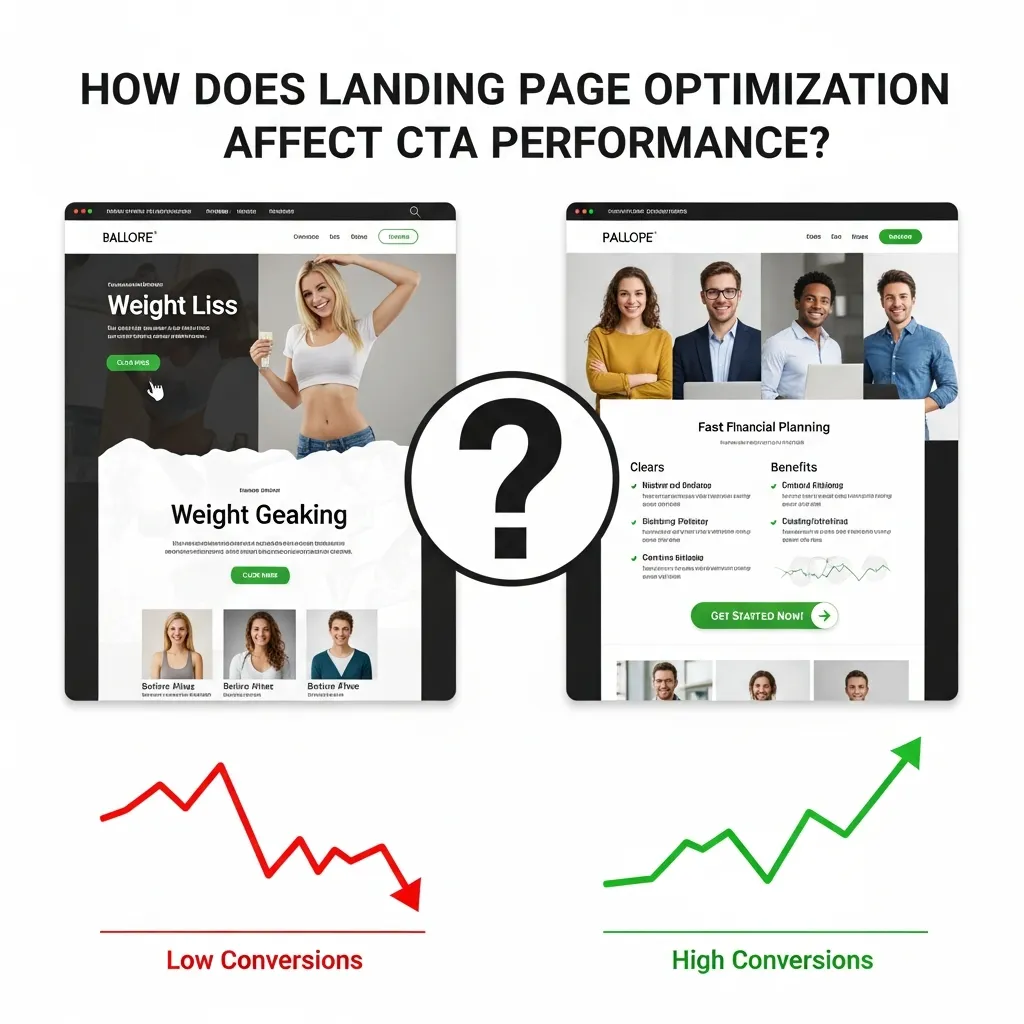
Affiliate Landing Page Optimization is the process of refining your landing page to remove friction and guide visitors toward converting. Your CTA plays a central role in this process.
Message match is critical. The language in your ad or promotional content must match the language on your landing page CTA. If your ad says “Get 30% Off,” but the landing page says “Shop Now,” the disconnect breaks trust and increases bounce rates.
Reduce friction at every step. Fewer form fields, clear trust signals (reviews, security badges), and a single, focused CTA all reduce the cognitive load on your visitor.
Mobile optimization is non-negotiable. More than 60% of web traffic comes from mobile devices (Statista, 2024). Affiliate Landing Page Optimization must include thumb-friendly button sizes, fast load times, and vertically stacked layouts that display cleanly on smaller screens.
What Are the Critical SEO Mistakes to Avoid with Affiliate CTAs?
CTAs can quietly damage your SEO if they’re not implemented correctly. These are the most common Critical SEO Mistakes affiliate marketers make:
Keyword stuffing in CTAs. Cramming keywords into your button text looks unnatural and can trigger spam filters. “Best Cheap SEO Tool Affiliate Buy Now” is not a CTA—it’s a red flag.
Non-crawlable CTA links. If your affiliate links are hidden inside JavaScript that search engine bots can’t read, you lose any potential SEO equity. Use clean HTML anchor tags wherever possible.
Missing alt text on image-based CTAs. If your CTA is an image rather than a text button, the alt text should describe the action clearly. “Click to claim your free trial” is far more useful than “button.jpg.”
Overlooking page speed. Heavy images and unoptimized scripts slow down your page. Google’s Core Web Vitals directly measure loading performance, and a slow page damages both rankings and conversions.
Avoiding these Critical SEO Mistakes protects your rankings while keeping your CTAs working at full capacity.
How Can You Improve Your Affiliate Conversion Rate Through Testing?
Your Affiliate Conversion Rate measures how many visitors complete the desired action—clicking your affiliate link or making a purchase. Improving it requires a structured testing and analytics approach.
A/B testing is the most reliable method. Test one variable at a time—CTA color, copy, placement, or button size—and measure the results over a statistically significant period. Tools like Google Optimize, VWO, and Optimizely make this straightforward.
Heatmaps (via tools like Hotjar or Crazy Egg) show you where users click and how far they scroll. If your CTA sits below where most users stop scrolling, that’s a placement problem you can fix immediately.
Key metrics to monitor:
- Click-Through Rate (CTR): The percentage of visitors who click your CTA
- Conversion Rate: The percentage who complete the affiliate action after clicking
- Bounce Rate: High bounce rates often signal a mismatch between content and CTA
Consistent testing is how Affiliate Call-To-Action best practices evolve from theory into measurable gains.
What Are Advanced Strategies for Affiliate CTAs?
Once the fundamentals are in place, these advanced tactics can push your Affiliate Conversion Rate even further.
Personalization and dynamic CTAs. Tools like HubSpot and Mutiny allow you to serve different CTA variations based on a user’s location, device, referral source, or behavior. A returning visitor who has already seen your intro CTA might respond better to a “Welcome Back – Claim Your Exclusive Offer” prompt.
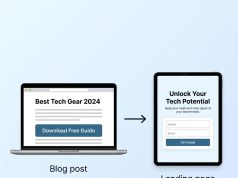
Multi-step CTAs and lead magnets. Instead of asking for a purchase immediately, use a two-step process: first capture an email with a free resource (a checklist, a guide, a webinar), then follow up with the affiliate offer. This warms leads before the final conversion ask.
Transparency and ethical disclosure. The FTC requires affiliate marketers to disclose paid relationships. Beyond compliance, transparency builds long-term trust. A simple “This post contains affiliate links” notice at the top of your content doesn’t hurt conversions—it often helps by demonstrating honesty. This is especially important for those pursuing legitimate Digital Marketing Jobs Legit career paths, where reputation matters.
How Will AI and Industry Trends Shape Affiliate CTAs in the Future?

AI and machine learning are already changing how CTAs are created and deployed. Platforms now use predictive analytics to determine the optimal CTA for each individual user, factoring in real-time behavioral data to serve the most relevant message at the most effective moment.
For those building careers in Digital Marketing Jobs Legit roles—affiliate managers, content strategists, conversion rate optimizers—staying current with these developments is no longer optional. AI-powered tools like Jasper, Persado, and Dynamic Yield are already being used by large affiliate programs to automate and personalize CTAs at scale.
The fundamentals of Affiliate Call-To-Action best practices won’t change—clarity, benefit-focus, and audience alignment will always matter. But the tools available to apply them are becoming faster and smarter every year.
Your Next Steps for Stronger Affiliate CTAs
Affiliate Call-To-Action best practices are not a set-and-forget checklist. They’re an ongoing process of refinement—testing copy, adjusting design, fixing Critical SEO Mistakes, and staying aligned with how your audience evolves.
Start with the fundamentals: know your audience, write benefit-driven copy, design for visibility, and place CTAs where they make contextual sense. Then layer in Affiliate Landing Page Optimization to reduce friction between click and conversion. Use data—CTR, Affiliate Conversion Rate, heatmaps—to guide every decision.
The affiliate marketers who consistently outperform their competition aren’t necessarily the ones with the biggest budgets. They’re the ones who treat every CTA as a hypothesis, test it rigorously, and iterate without ego. That mindset, combined with the strategies outlined here, is what separates average results from exceptional ones.