
The best affiliate tracking tools help marketers monitor clicks, conversions, and commissions in real time. Top options include Post Affiliate Pro, Voluum, Tapfiliate, ClickMeter, and Refersion—each suited to different business sizes and budgets. Choosing the right tool can significantly increase your affiliate conversion rate and overall ROI.
Affiliate marketing generates over $17 billion in revenue annually (Statista, 2023). Yet many marketers leave significant money on the table simply because they’re not tracking performance accurately. Without reliable data, scaling what works—or cutting what doesn’t—becomes a guessing game.
That’s where the best affiliate tracking tools change everything.
Affiliate tracking software gives marketers a clear view of every click, lead, and sale generated through their affiliate program. The right tool reveals which partners drive real value, which campaigns underperform, and how to fine-tune your affiliate conversion rate for maximum returns. As affiliate programs grow more complex—spanning multiple channels, devices, and geographies—tracking has shifted from a nice-to-have to an operational necessity.
This guide walks you through everything you need to know: how affiliate tracking works, what features matter most, and which tools stand out in a crowded market. Whether you’re launching your first affiliate program or optimizing an established one, you’ll find clear, actionable guidance here.
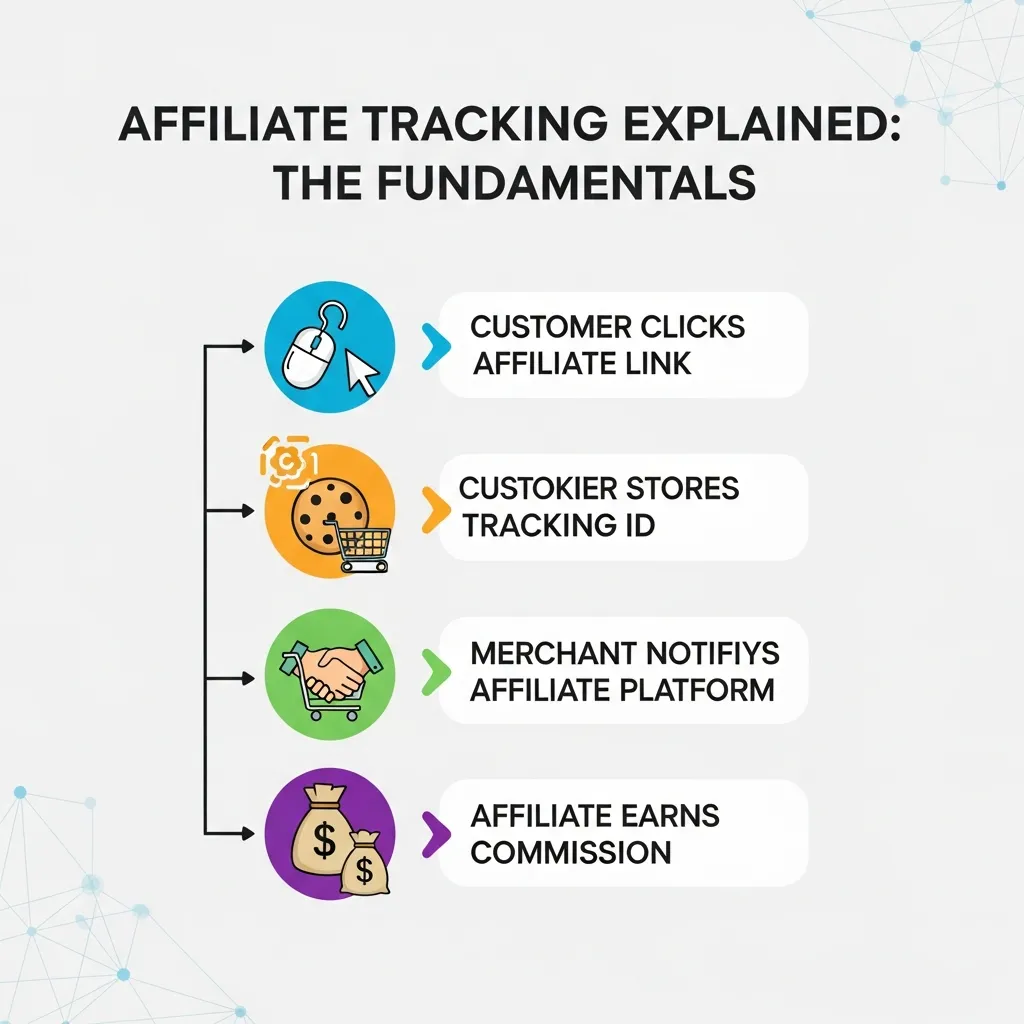
Affiliate Tracking Explained: The Fundamentals
What is affiliate tracking, and how does it work?
Affiliate tracking is the process of recording and attributing user actions—clicks, sign-ups, purchases—to specific affiliates or marketing channels. When a user clicks an affiliate link, a unique identifier is captured and stored, allowing the platform to credit the correct partner when a conversion happens.
Three primary tracking methods power most affiliate programs:
- Cookie-based tracking: A small file is placed in the user’s browser when they click an affiliate link. When the user converts, the cookie identifies which affiliate drove the action. Simple and widely supported, though it can be blocked by privacy browsers or ad blockers.
- Pixel tracking: A tiny invisible image embedded on a confirmation page fires when a user completes an action. Pixels work well for standard conversions but can miss mobile events.
- Server-to-server (S2S) tracking: Data is exchanged directly between servers, bypassing the browser entirely. This method is more reliable and less vulnerable to ad blockers, making it the preferred option for high-volume affiliate programs.
Key metrics every affiliate marketer should monitor
- Clicks: Total traffic driven through affiliate links.
- Conversions: The number of desired actions completed (purchases, sign-ups, downloads).
- Affiliate conversion rate: The percentage of clicks that result in a conversion. Industry averages typically sit between 0.5% and 1%, though high-performing programs often reach 3–5%.
- EPC (Earnings Per Click): Revenue generated per click, useful for comparing affiliate quality.
- Commissions paid vs. revenue generated: The core ROI measure for any program.
The Psychology of Affiliate Marketing and Tracking
Understanding the psychology of affiliate marketing helps explain why tracking matters beyond numbers alone. Consumers navigating affiliate funnels are often in a discovery or comparison mindset. They’ve clicked a link because a trusted source—a blogger, influencer, or review site—recommended something. That implicit trust is what makes affiliate marketing uniquely persuasive.
Tracking data sheds light on where that trust is most effective. If affiliates targeting mid-funnel audiences (those already comparing options) drive far higher conversion rates than top-of-funnel content creators, that’s a strategic insight your tracking tool surfaces clearly.
There’s also a trust dynamic between brands and affiliates. Transparent, accurate tracking builds affiliate confidence. When partners can log into a dashboard and verify their commissions in real time, they’re more likely to invest more effort into promoting your product. Opaque or delayed reporting, on the other hand, erodes that relationship quickly. The best affiliate tracking tools strengthen this trust loop by making data accessible, accurate, and verifiable for all parties.
Key Features of the Best Affiliate Tracking Tools
Not all affiliate tracking platforms are built the same. When evaluating the best affiliate tracking tools for your program, these features separate strong platforms from mediocre ones:
Real-time reporting and analytics
Delays in data mean delays in decisions. Top tools display clicks, conversions, and commissions as they happen, enabling fast optimization.
Customizable dashboards
Every program has different priorities. Dashboards that let you surface the metrics that matter most—without wading through irrelevant data—save time and improve decision-making.
Fraud detection
Click fraud is a real and growing problem in affiliate marketing. The best tools flag suspicious traffic patterns, such as unusually high click volumes from a single IP address, protecting your budget from fraudulent actors.
Multi-channel tracking
Affiliate traffic arrives from blogs, social media, email, and paid placements. Cross-channel tracking unifies performance data so you understand the full picture.
Integration capabilities
Your tracking tool should connect seamlessly with your CRM, eCommerce platform, email marketing software, and payment processor. Poor integrations create data silos and manual work.
Commission management
Flexible commission structures—tiered rates, performance bonuses, product-specific payouts—are essential for running competitive affiliate programs. Look for tools that handle complex commission rules without custom coding.
Top Contenders: Best Affiliate Tracking Tools Reviewed
1. Post Affiliate Pro
Overview: One of the most established affiliate tracking platforms on the market, Post Affiliate Pro serves businesses ranging from small eCommerce stores to enterprise-level programs.
Pros:
- Extensive integration library (over 200+ plugins and integrations)
- Advanced fraud protection features
- Highly customizable commission structures
- Supports multiple tracking methods including cookies, pixels, and IP tracking
Cons:
- Interface can feel dated compared to newer entrants
- Steeper learning curve for beginners
Best use cases: Mid-to-large businesses running complex affiliate programs that require granular commission rules and robust fraud prevention.
2. Voluum
Overview: Voluum is a performance-focused tracking platform built primarily for media buyers and affiliate marketers running paid traffic campaigns.
Pros:
- Industry-leading real-time analytics
- Advanced A/B testing for landing pages and offers
- Strong S2S tracking capabilities
- AI-powered traffic distribution to optimize campaigns automatically
Cons:
- Pricing is on the higher end, making it less accessible for beginners
- Feature depth can be overwhelming for simpler programs
Best use cases: Experienced affiliate marketers and agencies managing high-volume paid traffic campaigns across multiple channels.
3. Tapfiliate
Overview: Tapfiliate is a cloud-based affiliate tracking platform designed with simplicity and speed of setup in mind. It’s a strong contender among the best affiliate tracking tools for growing businesses.
Pros:
- Clean, intuitive interface
- Quick setup with strong eCommerce integrations (Shopify, WooCommerce, Stripe)
- White-label affiliate portal for brand consistency
- Good customer support
Cons:
- Reporting features less advanced than enterprise alternatives
- Limited fraud detection compared to specialized tools
Best use cases: Small-to-medium eCommerce businesses and SaaS companies launching their first structured affiliate program.
4. ClickMeter
Overview: ClickMeter focuses on link tracking and conversion monitoring, making it a flexible option for marketers who want to track affiliate links alongside other marketing campaigns.
Pros:
- Tracks affiliate, ad, and email links in one platform
- Strong link health monitoring (broken link alerts)
- Conversion funnel visualization
- Competitive pricing for smaller programs
Cons:
- Not purpose-built for affiliate program management
- Lacks built-in affiliate portal for partner management
Best use cases: Marketers who want unified link tracking across multiple channels, not just affiliate campaigns.
5. Refersion
Overview: Refersion is purpose-built for eCommerce brands, integrating directly with Shopify, BigCommerce, and WooCommerce to track affiliate sales with minimal setup.
Pros:
- Native eCommerce integrations are best-in-class
- Clean affiliate dashboard for partners
- Automated commission payments
- Marketplace to discover new affiliates
Cons:
- Limited functionality outside eCommerce environments
- Higher-tier plans required for advanced analytics
Best use cases: eCommerce brands selling physical or digital products who want deep platform integration and simplified affiliate management.
Implementing an Effective Affiliate Call-To-Action (CTA)

An affiliate call-to-action is the bridge between traffic and conversion. Even with perfect tracking in place, weak CTAs leak revenue at the final step.
Crafting compelling CTAs: The most effective affiliate call-to-action is specific, benefit-driven, and low-friction. “Get 30% off your first order” consistently outperforms generic phrases like “Click here” or “Learn more.” Clarity beats cleverness.
Placement and design: Above-the-fold CTAs capture users who don’t scroll. But in long-form content—reviews, comparisons, tutorials—repeated CTAs at logical pause points (after key benefit sections, after testimonials) outperform single placements. Contrasting button colors that don’t blend into the page background improve click-through rates measurably.
A/B testing CTAs to increase affiliate conversion rate: Run systematic tests on CTA copy, color, placement, and button size. Your best affiliate tracking tools should log these experiments and attribute conversion differences to specific variants, giving you statistically reliable results rather than assumptions.
Strategies to Increase Affiliate Conversion Rate
Tracking data is only valuable if it informs action. Here’s how to use insights from the best affiliate tracking tools to actively increase affiliate conversion rate:
Optimize landing pages: High traffic with low conversions often signals a landing page problem. Use heatmaps and session recordings alongside your tracking data to identify friction points—slow load times, confusing layouts, or mismatched messaging between the affiliate’s content and your landing page.
Improve traffic quality: Not all affiliate traffic converts equally. Segment your conversion data by affiliate source. Partners generating low-quality traffic (high clicks, near-zero conversions) should receive coaching, different materials, or in some cases, removal from your program.
Leverage segmentation: Use tracking data to identify which audience segments convert best. If affiliates targeting a specific demographic or interest group consistently outperform others, double down on recruiting similar partners.
Personalization techniques: Dynamic landing pages that reflect the affiliate’s branding or the specific promotion a user clicked on reduce the cognitive gap between the ad and the destination. Even simple personalization—mentioning the referring partner’s offer—can lift conversion rates meaningfully.
Advanced Analytics for a Higher Affiliate Conversion Rate
What is cohort analysis in affiliate marketing?
Cohort analysis groups users by a shared characteristic—typically the date they first clicked an affiliate link—and tracks their behavior over time. This reveals whether affiliates drive one-time buyers or long-term customers, a crucial distinction for calculating true affiliate ROI.
How does attribution modeling affect affiliate payouts?
Standard last-click attribution gives full credit to the final affiliate touchpoint before conversion. This penalizes affiliates who introduce customers early in the funnel. Multi-touch attribution models—linear, time-decay, or position-based—distribute credit more fairly across the customer journey, improving partner satisfaction and strategic accuracy.
Can predictive analytics improve affiliate program performance?
Yes. Some of the best affiliate tracking tools now incorporate predictive analytics, using historical conversion data to forecast which affiliates are likely to scale, which promotions will peak at specific times, and where budget reallocation will generate the highest returns.
Choosing the Best Affiliate Tracking Tools for Your Business
Factors to consider when selecting an affiliate tracking tool
Budget: Platforms range from under $50/month (Tapfiliate’s starter plan) to several hundred dollars monthly for enterprise tools like Voluum. Match your investment to your program’s current revenue and growth trajectory.
Scale: A tool built for 50 affiliates may buckle under 5,000. Check documented limits on affiliate accounts, conversion volume, and data retention before committing.
Features needed: Map your program’s requirements against each platform’s feature set. If fraud prevention is a priority, prioritize platforms with dedicated detection systems. If eCommerce integration matters most, Refersion or Tapfiliate likely fit better than a general-purpose tracker.
Integration with existing platforms: Audit your current tech stack—eCommerce platform, CRM, email provider, payment gateway—and confirm native integrations exist. Manual data exports between tools introduce errors and consume time.
Scalability and support: As your program grows, your tool needs to grow with it. Prioritize platforms with responsive support teams and documented upgrade paths.
Case Studies: Success Stories with Best Affiliate Tracking Tools
eCommerce brand reduces fraud by 40%: A mid-sized fashion retailer switched from basic cookie tracking to a platform with integrated fraud detection. Within 90 days, suspicious click activity dropped by 40%, and genuine conversions increased as budget shifted away from fraudulent sources.
SaaS company triples affiliate revenue with attribution modeling: A B2B SaaS company using last-click attribution discovered through multi-touch modeling that content affiliates—previously undervalued—introduced 60% of their converted customers. Redistributing commissions to reward top-of-funnel affiliates tripled total affiliate-driven revenue within six months.
Online course platform increases affiliate conversion rate by 28%: By using cohort analysis from their tracking platform, an online education brand identified that affiliates promoting a free trial offer converted at 3x the rate of those promoting paid plans directly. Shifting their affiliate CTA strategy to lead with the free trial increased the overall affiliate conversion rate by 28%.
Maximizing ROI with the Best Affiliate Tracking Tools

Affiliate marketing rewards precision. The brands and marketers who win consistently aren’t necessarily those with the largest budgets—they’re the ones who track meticulously, act on data quickly, and optimize every step of the funnel.
The best affiliate tracking tools give you the visibility to do exactly that. From understanding the psychology of affiliate marketing and consumer behavior to running advanced attribution models, the right platform transforms raw data into strategic advantage.
Start with the features your program genuinely needs today, choose a tool that scales, and build a culture of data-driven decision-making across your affiliate partnerships. The conversion rate improvements, fraud savings, and partner relationships you build will compound over time.
The data is there. The tools are available. The next step is choosing the right one and using it well.
Frequently Asked Questions
What makes an affiliate tracking tool the “best”?
The best affiliate tracking tools combine accurate, real-time data with features suited to your program’s scale and complexity. Key markers include reliable tracking methods (especially server-to-server), fraud detection, flexible commission management, strong integrations, and responsive support. The “best” tool is ultimately the one that matches your specific business needs and budget.
How does affiliate tracking handle different devices?
Cross-device tracking is one of the harder problems in affiliate marketing. The most reliable approach is server-to-server tracking combined with probabilistic matching—using behavioral signals like IP address and device fingerprints to link sessions across devices. Some platforms also support deterministic cross-device matching when users are logged into an account across devices.
Can the best affiliate tracking tools prevent fraud?
Yes, to a significant degree. Leading platforms monitor for suspicious patterns such as abnormally high click-to-conversion ratios, repeated clicks from single IP addresses, and bot traffic signatures. While no tool eliminates fraud entirely, platforms with dedicated fraud detection substantially reduce its impact on your program.
What is a good affiliate conversion rate?
A good affiliate conversion rate typically falls between 1% and 5%, depending on the industry and offer type. High-ticket items and subscription services often sit toward the lower end, while low-cost digital products or free-trial offers can exceed 5%. Benchmarking against your own historical data is more meaningful than industry averages alone.
How often should I check my affiliate tracking data?
For active campaigns, daily monitoring is advisable—particularly to catch fraud or technical tracking issues early. Weekly reviews of conversion trends and affiliate performance are sufficient for strategic decisions. Monthly deep dives into cohort analysis and attribution data support longer-term program optimization.
Is server-to-server tracking better than cookie-based tracking?
In most cases, yes. Server-to-server (S2S) tracking is more reliable because it operates independently of the user’s browser settings, making it immune to ad blockers and cookie restrictions. Cookie-based tracking is simpler to implement but increasingly limited by privacy regulations like GDPR and browser-level restrictions (such as Safari’s ITP). S2S is the preferred standard for high-volume and high-accuracy programs.
How do I integrate an affiliate tracking tool with my website?
Most platforms provide a tracking script or pixel you place in your website’s header or on your confirmation page. eCommerce-focused tools like Refersion and Tapfiliate offer one-click integrations with Shopify and WooCommerce. For custom setups, S2S integration requires coordinating postback URLs between your server and the tracking platform—most tools provide detailed documentation and support for this process.
What are the common pricing models for the best affiliate tracking tools?
Affiliate tracking platforms typically use one of three pricing models: flat monthly subscriptions (tiered by features or affiliate count), usage-based pricing (charged per click or conversion tracked), or revenue-share models (a percentage of affiliate-driven revenue). Flat subscriptions are most common and easiest to budget for. Usage-based pricing suits lower-volume programs, while revenue-share models are less common but occasionally offered by affiliate networks.
Can I track offline conversions with affiliate tracking tools?
Yes, some platforms support offline conversion tracking through methods like unique promo codes or custom phone numbers assigned to affiliates. When a customer uses a specific code in-store or via phone, the conversion is attributed to the corresponding affiliate. This is particularly useful for businesses combining online affiliate marketing with brick-and-mortar sales.
What role does an affiliate call-to-action play in tracking?
An affiliate call-to-action initiates the trackable event. When a user clicks a CTA embedded with an affiliate link, the tracking platform captures the click and begins monitoring the user’s journey toward conversion. The CTA’s placement, copy, and design directly affect click-through rates, which in turn influence the data your tracking tool collects. Poorly performing CTAs appear as high-traffic, low-conversion anomalies in your dashboard.
How can I use tracking data to improve affiliate partner relationships?
Transparent, accessible tracking data builds trust with affiliates. Sharing performance dashboards, conversion benchmarks, and earnings reports in real time shows partners that your program is credible and accurate. Use tracking insights to provide specific, data-backed feedback—showing an affiliate which content types or audience segments drive their best conversions gives them actionable information to grow alongside your program.
How do I know when it’s time to switch affiliate tracking tools?
Common signals include persistent tracking discrepancies, frequent downtime, lack of integrations with platforms you rely on, slow or unresponsive support, and features that no longer match your program’s scale. If your tracking tool requires constant manual workarounds or fails to surface insights that could drive optimization, the cost of switching is likely lower than the revenue you’re losing by staying.