Explore the diverse world of social media affiliate marketing types, learning strategies for profitable affiliate marketing and understanding affiliate payouts, specifically revenue share vs. fixed commission. This comprehensive guide will equip you with the knowledge to navigate and succeed in this dynamic digital landscape.
Social media networks have fundamentally transformed how brands and creators connect with audiences. For creators and marketers, these platforms provide massive opportunities to generate income by recommending products and services. Understanding the different social media affiliate marketing types is crucial for anyone looking to build a sustainable income stream online. By matching the right strategy to the right platform, marketers can turn casual followers into loyal customers.
Different networks require completely different approaches to promotion. What works seamlessly on a visually driven app like Instagram might fail completely on a text-heavy site like Reddit. Recognizing these nuances is the first step toward launching campaigns that actually convert.
The evolution of affiliate marketing on social platforms has moved away from spammy link-dropping. Modern strategies focus heavily on authenticity, trust-building, and offering genuine value. This guide will walk you through the most effective social media affiliate marketing types, helping you build a roadmap for long-term success.
Key Social Media Affiliate Marketing Types
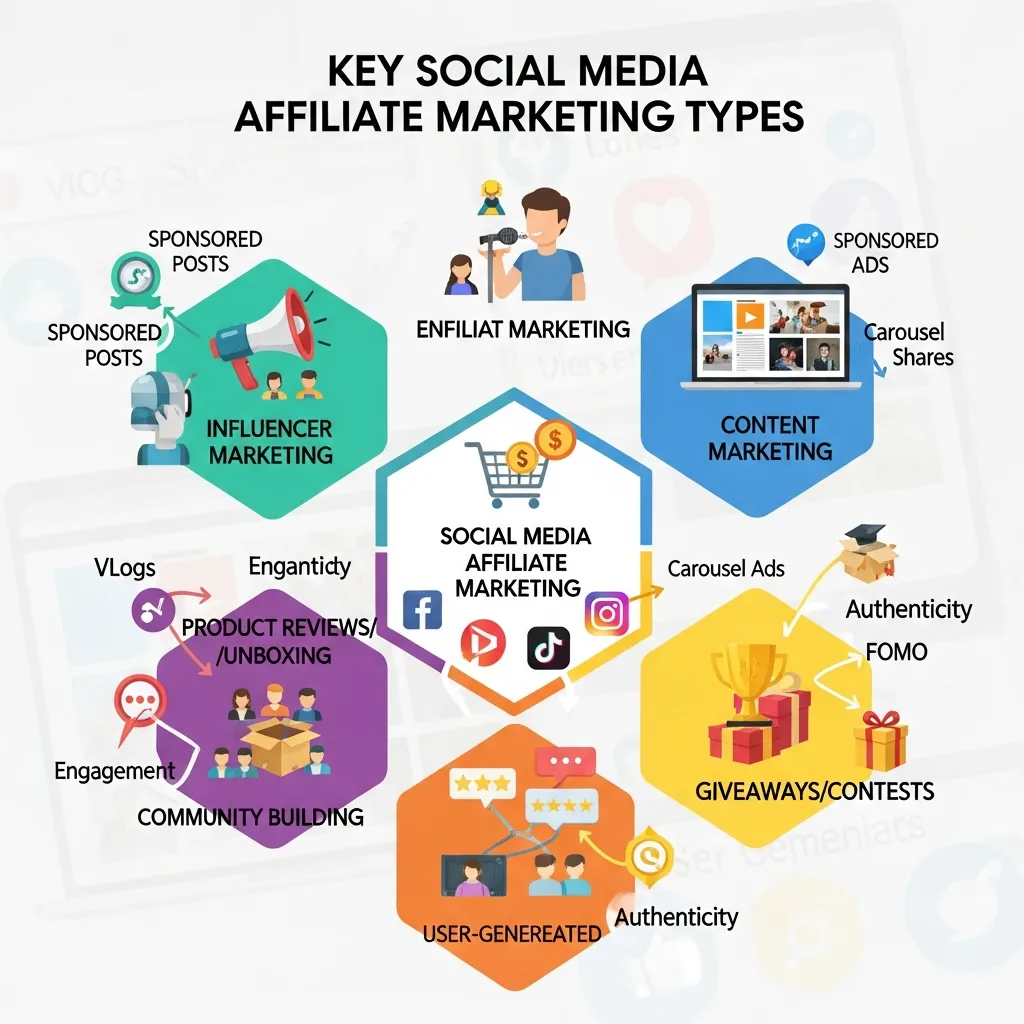
When planning your campaigns, it is essential to understand the various social media affiliate marketing types available to you. Each category offers unique benefits and requires specific tactics for execution.
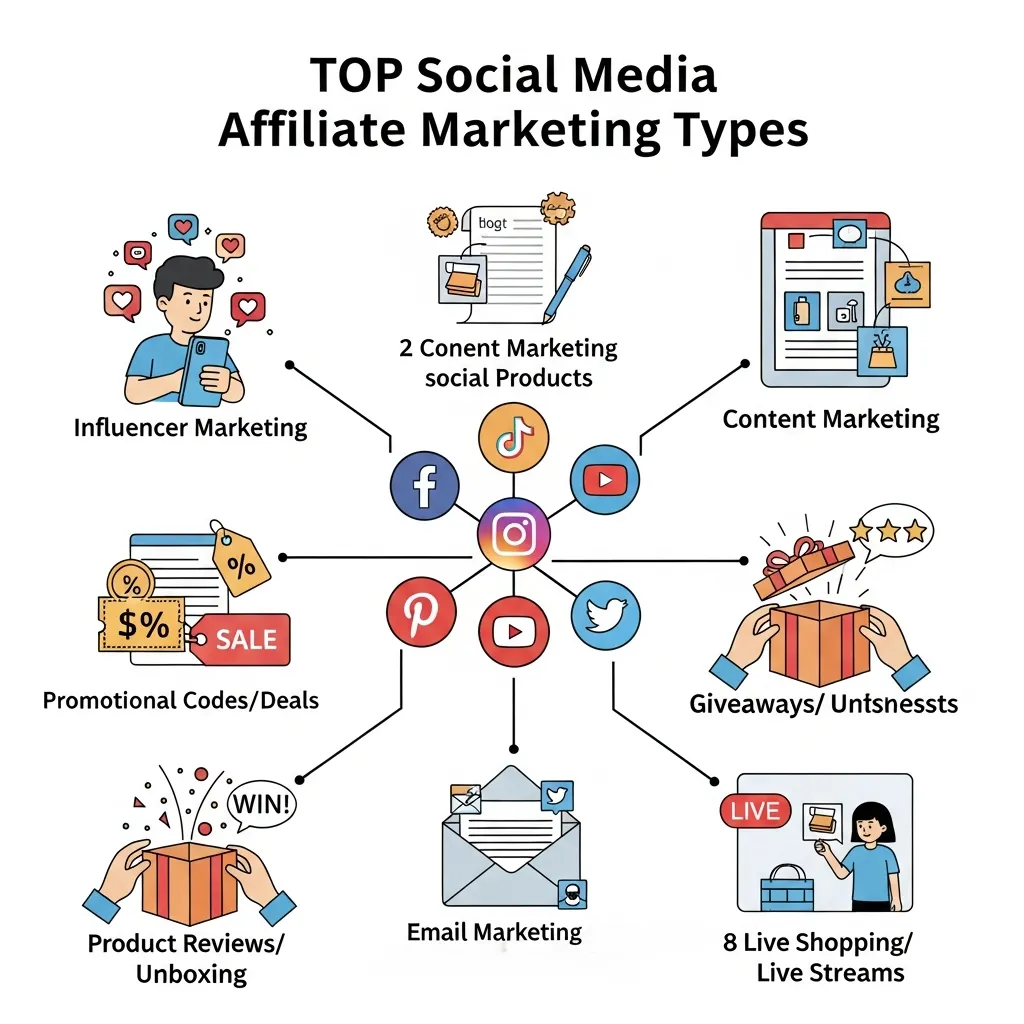
Influencer Marketing: Leveraging Reach and Authenticity
Influencer marketing remains one of the most prominent social media affiliate marketing types. Creators use their established credibility to recommend products directly to their audience.
- Macro-influencers vs. Micro-influencers: Macro-influencers offer massive reach, but micro-influencers often boast much higher engagement rates. Micro-influencers tend to have highly targeted audiences, making their affiliate recommendations incredibly effective.
- Platform-specific strategies: Instagram is perfect for visual lifestyle products and quick Stories with affiliate links. TikTok thrives on short, entertaining product demonstrations. YouTube remains the gold standard for long-form, detailed reviews with links conveniently placed in the video description.
- Disclosure guidelines and best practices: Honesty is critical. Marketers must clearly disclose affiliate relationships using tags like #ad or #sponsored to maintain audience trust and comply with regulatory guidelines.
Content Marketing: Value-Driven Promotion
Content marketing focuses on providing actionable information rather than a hard sell. This is one of the most reliable social media affiliate marketing types for long-term passive income.
- Blog posts and reviews: Creators often use social platforms like Pinterest or Twitter to drive traffic to comprehensive, SEO-optimized blog posts that feature affiliate links.
- How-to guides and tutorials: Teaching someone how to use a software tool or apply a beauty product naturally leads to an affiliate recommendation for that exact product.
- Comparison articles: Highlighting the pros and cons of competing products helps consumers make informed purchasing decisions while clicking through your specific affiliate links.
Paid Social Advertising: Targeted Reach
For those with a budget, paid social advertising represents one of the most scalable social media affiliate marketing types.
- Facebook and Instagram Ads: These platforms offer incredibly detailed targeting options, allowing you to show affiliate products directly to users based on their specific interests and behaviors.
- Pinterest Ads: Because users actively use Pinterest for shopping inspiration, promoted pins for visual affiliate products often see excellent conversion rates.
- LinkedIn Ads: This platform is ideal for B2B affiliate opportunities, such as promoting enterprise software, professional courses, or business services.
Community Engagement: Building Trust and Loyalty
Engaging directly with communities is a highly effective, though time-consuming, method.
- Facebook Groups and Reddit communities: Providing helpful answers and sharing expertise establishes you as a trusted authority. Once trust is built, careful and relevant affiliate recommendations are well-received.
- Forums and discussion boards: Niche forums are packed with highly targeted users looking for specific solutions.
- Q&A platforms: Answering relevant questions on Quora with thoughtful, detailed responses and a subtle link to an affiliate product or related blog post can drive consistent traffic.
Email Marketing Integration: Nurturing Leads
Combining social reach with direct inbox access is incredibly powerful.
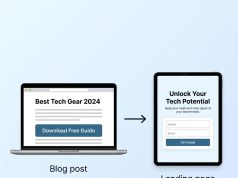
- Building an email list from social media: Use lead magnets on your social profiles to capture email addresses. This moves your audience off rented algorithms and onto a platform you control.
- Segmenting audiences: Group your subscribers based on their interests to ensure they only receive relevant affiliate offers.
- Automated email sequences: Set up an onboarding sequence that naturally introduces your top recommended affiliate products over time.
Live Streaming and Video Content: Real-Time Engagement
Live video creates urgency and allows for real-time interaction.
- Product demonstrations and unboxing: Showing a product in real-time builds instant credibility and excitement.
- Live Q&A sessions: Answering viewer questions live helps overcome purchasing objections right on the spot.
- Shoppable live streams: Many platforms now integrate direct purchasing options into live streams, making the transition from viewer to buyer seamless.
Strategies for Profitable Affiliate Marketing
Achieving profitable affiliate marketing requires a systematic approach rather than simply posting links and hoping for the best.
Niche Selection: Finding Your Target Audience
Profitable affiliate marketing starts with a highly specific niche. Broad topics are too competitive. Instead of “fitness,” target “postpartum home workouts.” A clear niche attracts a dedicated audience eager for specialized product recommendations.
Product Selection: Promoting Relevant and High-Quality Products
Your reputation is tied strictly to the products you promote. Only select items that genuinely solve your audience’s problems. High-quality products result in lower refund rates and higher trust, ensuring your recommendations remain effective.
Content Creation: Engaging and Conversion-Focused Content
Great content bridges the gap between a user’s problem and the affiliate product’s solution. Focus on storytelling, clear visuals, and addressing pain points. Every piece of content should have a clear, compelling call to action.
Audience Building: Growing Your Social Media Presence
Consistency is the foundation of audience growth. Post regularly, use relevant hashtags, and collaborate with other creators to expand your reach. A larger, engaged audience directly correlates with higher potential affiliate revenue.
Relationship Building: With Followers and Merchants
Engage with your followers by responding to comments and direct messages. Simultaneously, build relationships with affiliate managers. Good relationships with merchants can lead to higher commission rates and exclusive promotional codes.
Affiliate Payouts: Revenue Share vs Fixed Commission
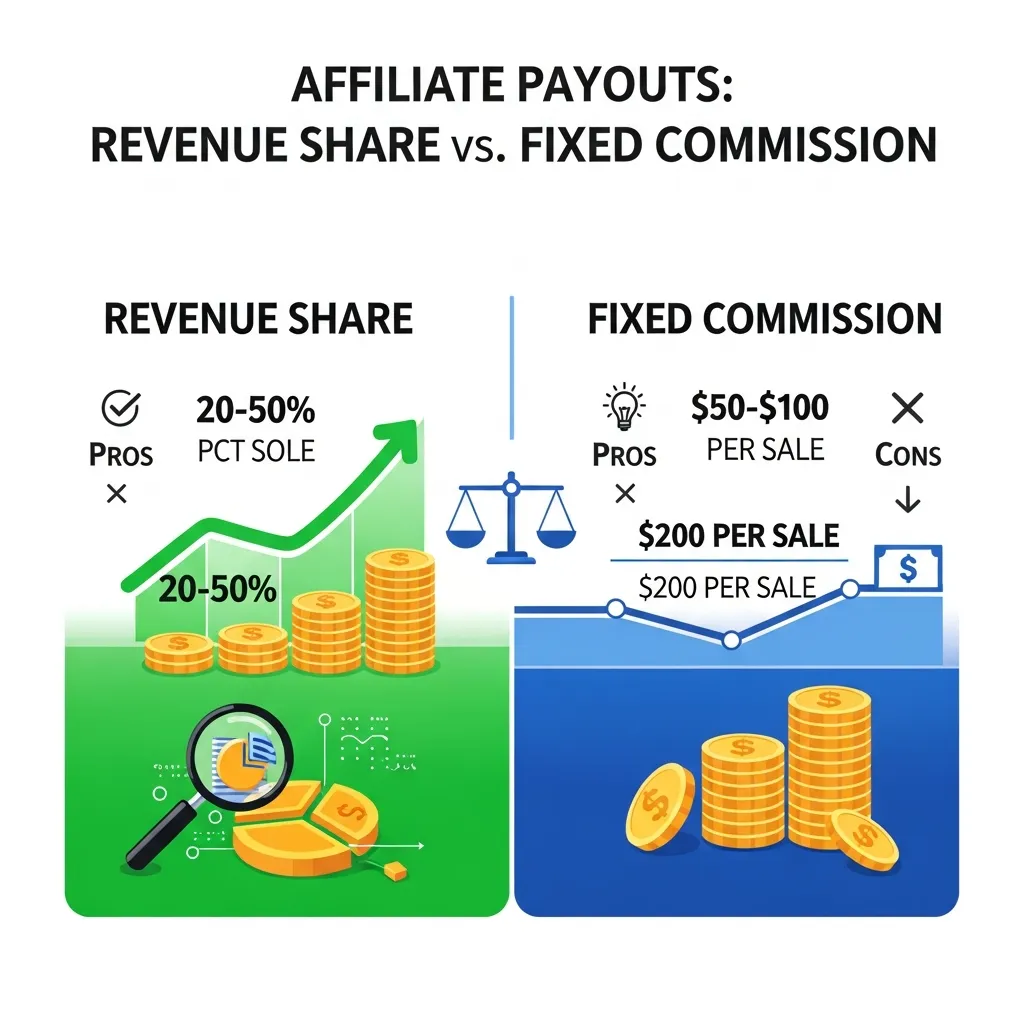
A major factor in maximizing your earnings involves understanding Affiliate Payouts: Revenue Share vs Fixed Commission. Choosing the right structure can dramatically impact your bottom line.
Revenue Share: The Percentage Model
Under a revenue share model, the affiliate earns a percentage of the total sale amount.
- Advantages and disadvantages: The main advantage is that higher-priced items yield massive payouts. The disadvantage is that low-ticket items require enormous volume to generate meaningful income.
- When is it most beneficial? Revenue share is excellent for high-ticket physical products, luxury items, or recurring software subscriptions where you earn a percentage every month the user remains active.
Fixed Commission: Per-Sale or Per-Lead Model
With a fixed commission, you earn a set dollar amount for every successful action, regardless of the customer’s total cart value.
- Advantages and disadvantages: Fixed commissions provide predictable income. However, if a customer makes a massive purchase, you do not capture any of that upside.
- When is it most beneficial? This model works perfectly for lead generation (like sign-ups for a free trial or financial service) or when promoting lower-cost physical goods where a percentage would be pennies.
Hybrid Models and Other Payout Structures
Some programs offer hybrid models, combining a small fixed fee for a lead with a percentage of any subsequent sale. Exploring these options helps diversify your income streams.
Negotiating Payouts: Tips for Maximizing Earnings
Once you prove your ability to drive consistent sales, do not hesitate to negotiate your payouts. Affiliate managers are often willing to increase commissions for top performers. Present your conversion data and ask for a structure that better reflects your value.
Measuring Success in Social Media Affiliate Marketing
To ensure you are running a profitable affiliate marketing business, you must track your data rigorously.
Key Performance Indicators (KPIs)
Monitor metrics like click-through rates (CTR), conversion rates, and earnings per click (EPC). These numbers reveal exactly how effectively your content persuades your audience to take action.
Tracking and Analytics Tools
Utilize platform-specific analytics alongside link trackers like Bitly or customized affiliate dashboards provided by the merchant. These tools show exactly which posts or platforms are driving the most revenue.
Optimizing Campaigns for Better Results
Use your data to make informed adjustments. If a specific type of Instagram Reel generates high clicks but low conversions, the product landing page might be the issue. Continuously A/B test your calls to action, visuals, and promotional angles.
Common Challenges and How to Overcome Them
Navigating the various social media affiliate marketing types comes with distinct hurdles.
Disclosure and Transparency
Failing to disclose affiliate links can result in account bans or legal trouble. Always use clear, unambiguous language. A simple “Affiliate link” or “#ad” tag protects you and builds trust with your audience.
Algorithm Changes
Social media algorithms change constantly, often tanking organic reach overnight. Diversify your traffic sources. Relying on multiple platforms and building an independent email list insulates your income from sudden algorithmic shifts.
Building Trust
Audiences are highly skeptical of overly promotional content. Overcome this by providing immense free value. Only promote products you have personally vetted and believe in.
Competition
The affiliate marketing space is crowded. Stand out by bringing a unique perspective to your reviews. Use personal stories, original photography, and highly detailed tutorials that competitors are too lazy to create.
Future Trends in Social Media Affiliate Marketing

The landscape of social media affiliate marketing types continues to evolve rapidly. AI tools are making it easier to generate content and analyze data. Shoppable videos will become even more integrated across all major platforms, reducing friction between product discovery and purchase. Creators who adapt to these interactive, highly personalized shopping experiences will dominate the next era of profitable affiliate marketing.
Mastering Your Affiliate Strategy
Succeeding in this space requires a deep understanding of the many social media affiliate marketing types at your disposal. By selecting the right platforms, focusing on profitable affiliate marketing strategies, and strategically choosing between Affiliate Payouts: Revenue Share vs Fixed Commission, you can build a highly lucrative digital business. Focus on authenticity, track your metrics diligently, and always put the needs of your audience first.
Frequently Asked Questions
1. What are the most common social media affiliate marketing types?
The most common social media affiliate marketing types include influencer marketing, content marketing, paid social advertising, community engagement, and live streaming. Each involves distinct strategies tailored to specific platforms and audience behaviors.
2. How can I start with profitable affiliate marketing on social media?
Start by choosing a specific niche and understanding your target audience’s problems. Select high-quality products that solve those issues, create valuable content around them, and consistently engage with your growing community.
3. What’s the difference between revenue share and fixed commission in affiliate marketing?
Revenue share pays you a percentage of the total sale price, which is great for expensive items or recurring subscriptions. Fixed commission pays a set flat rate per sale or lead, offering predictable income regardless of cart size.
4. Which social media platform is best for affiliate marketing?
The “best” platform depends entirely on your niche and content style. Instagram and Pinterest are excellent for highly visual products, YouTube is unbeatable for detailed tech reviews, and LinkedIn works best for B2B software and professional services.
5. How do I disclose affiliate links on social media?
You must clearly and conspicuously disclose your affiliate relationship before the user clicks the link. Use clear tags like #ad, #sponsored, or state directly, “This post contains affiliate links,” ensuring compliance with FTC or local guidelines.
6. Can I do affiliate marketing without a large following?
Absolutely. Micro-influencers with small but highly engaged and targeted audiences often see better conversion rates than massive accounts. Profitability comes from trust and relevance, not just raw follower counts.
7. What are some tips for choosing the right affiliate products?
Only promote products relevant to your specific niche. Ensure the products are high quality, solve a real problem for your audience, and offer a reliable affiliate tracking and payout system.
8. How important is building an email list for affiliate marketing?
Building an email list is incredibly important. It protects your business from sudden social media algorithm changes and allows you to communicate directly with your most engaged audience members whenever you want.
9. Should I use paid ads for my affiliate campaigns right away?
If you are a beginner, it is usually better to start organically to test what messaging resonates with your audience. Once you have a proven, converting offer, you can safely scale it using paid social advertising.
10. Can I use multiple social media affiliate marketing types at once?
Yes, successful marketers often combine types. For example, you might use influencer marketing on Instagram to build an audience, while using a YouTube review to capture detailed search traffic for the same product.
11. How long does it take to see results from social media affiliate marketing?
Organic affiliate marketing is a long-term game. It often takes several months of consistent content creation and audience building before you see a steady stream of significant income.
12. Are there hidden costs associated with affiliate marketing?
While joining programs is usually free, costs can arise from purchasing the products you want to review, investing in content creation tools (like cameras or editing software), or funding paid advertising campaigns.